Updated November 2026. English Cocker Spaniel Guide is an independent site, not affiliated with any breed club or kennel club. Some links are affiliate links: as an Amazon Associate we earn from qualifying purchases.
House training is usually the first big project with a new English Cocker Spaniel puppy. Cockers are clever and keen to please, and most learn quickly with a consistent routine, but they are also busy, easily distracted puppies with small bladders. This guide sets out a proven routine, explains how crate training helps, and covers accidents, night-time toileting and common setbacks.
How long does house training take?
Every puppy is different. Many cocker puppies are reliably house trained somewhere between four and six months of age, but some take longer, and occasional accidents are normal well into the first year, especially during adolescence, changes of routine or bad weather. Consistency matters far more than speed.
The basic routine
Puppies need to toilet frequently, and they usually go at predictable times. Take your puppy outside to the same spot:
- As soon as it wakes up, from overnight sleep and every nap
- Within a few minutes of eating or drinking
- After play or excitement
- Before bed and before being left alone
- At least every one to two hours while awake at first
Go out with your puppy every time, stand quietly, and wait. When it toilets, praise calmly and give a small treat right away, within a second or two, so it links the reward to the action. A short cue word such as “be quick”, said as it starts to go, can later help it toilet on request.
Using a crate to help
Dogs naturally avoid soiling where they sleep, so a correctly sized crate helps your puppy learn bladder control. Use a divider to keep the space just big enough to stand, turn and lie down; if it is too big, a puppy may toilet in one corner. Make the crate a comfortable, happy place with a bed and safe chews, and never use it as punishment.
Puppies should not be crated for long periods during the day. Young puppies can only hold on for a short time; a common guideline is roughly an hour per month of age plus one, up to a few hours, but every puppy is different. If you work long hours, arrange for someone to let your puppy out.
Night-time toileting
Most young puppies need to go out at least once during the night for the first weeks. Keep the crate near your bed so you hear your puppy stirring, and take it straight out when it wakes. Keep night trips calm and boring: no play, minimal talking, then straight back to bed. Gradually, your puppy will sleep through. Avoid big drinks late in the evening, but never restrict water during the day.
Dealing with accidents
- If you catch your puppy in the act, calmly interrupt it with a cheerful noise and take it outside straight away. Praise if it finishes outside.
- If you find an accident afterwards, simply clean it up. Never punish, scold or rub a puppy’s nose in it; this only teaches it to hide from you when toileting.
- Clean thoroughly with an enzyme cleaner made for pet accidents. Ordinary cleaners can leave scent that draws the puppy back to the same spot. Avoid ammonia-based products, which smell similar to urine.
- Ask yourself what you could change: more frequent trips outside, closer supervision or a smaller crate space.
Supervision is the secret
Most accidents happen when a puppy is out of sight. When your puppy is loose in the house, keep it in the same room as you, use baby gates, or attach a light lead to your belt. When you cannot supervise, use the crate or a puppy-proof pen. Watch for signals such as sniffing the floor, circling or heading for a corner, and take your puppy out immediately.
Should I use puppy pads?
Puppy pads can be useful if you live in an apartment high above the ground or cannot get outside quickly, but they can teach a puppy that toileting indoors is acceptable. If you use them, place them near the door and gradually move them outside. Where possible, go straight to outdoor training.
Common setbacks
Excitement or submissive urination
Some young cockers dribble urine when greeting people or when nervous. Keep greetings calm and low-key, greet outdoors, and avoid looming over the puppy. Most grow out of it. Never punish it.
Regression in adolescence
A previously reliable adolescent may have accidents, especially when distracted or stressed. Go back to the basics for a few weeks.
Accidents in an adult dog
Sudden house soiling in a previously reliable adult can signal a urinary tract infection, kidney problems or other health issues. See your vet. Our health guide explains why increased drinking and urination should be checked promptly.
Bad weather
Many cockers dislike rain or snow. Go out with your puppy, keep it brief, and reward quickly. A covered area near the door helps, and a drying coat or towel by the door makes muddy days easier.
Sample day for an 8- to 12-week-old puppy
| Time | Activity |
|---|---|
| On waking | Straight outside to toilet |
| Breakfast | Meal, then outside |
| Mid-morning | Play, toilet, nap in crate |
| Lunch | Meal, then outside |
| Afternoon | Short training, socialisation, toilet, nap |
| Dinner | Meal, then outside |
| Evening | Calm play, toilet, settle |
| Bedtime | Last toilet trip, then crate |
| Overnight | One or two calm toilet trips as needed |
Frequently asked questions
How do I know my puppy needs to go out?
Sniffing the floor, circling, whining, going to the door or suddenly leaving play are common signs.
Can I leave my puppy alone during the workday?
Young puppies cannot hold on for a full workday. Arrange for a friend, family member or dog walker to visit.
Why does my puppy toilet right after coming inside?
It probably did not finish outside. Stay out a little longer, wait quietly, and reward when it goes.
Are boys or girls easier to house train?
Both learn equally well. Consistency, routine and supervision matter far more than sex.
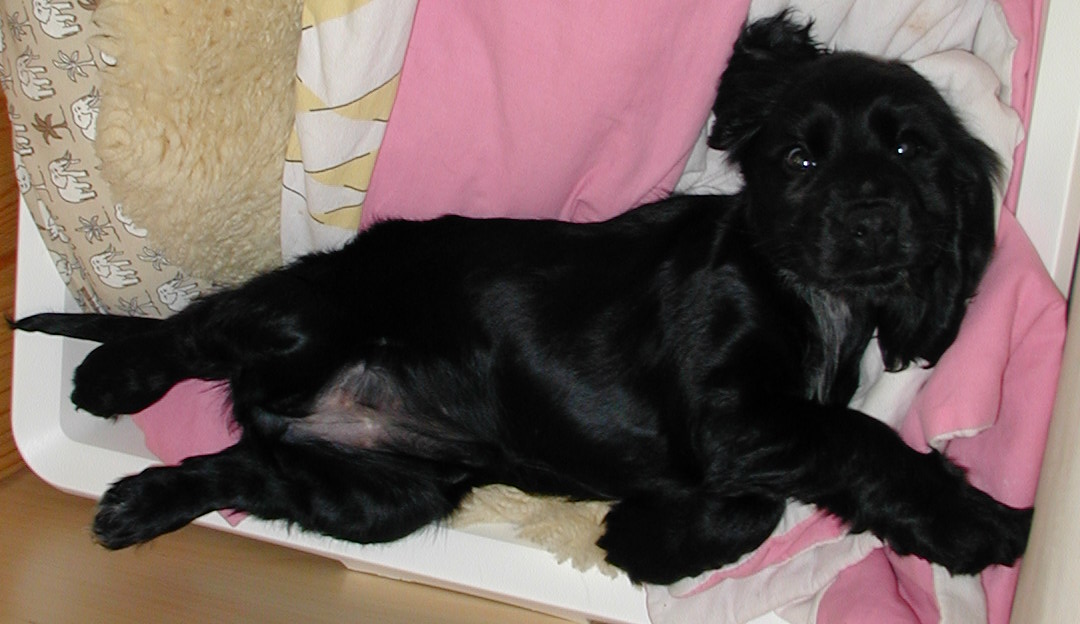
Featured photo: No machine-readable author provided. Kessa Ligerro~commonswiki assumed (based on, via Wikimedia Commons, CC BY-SA 3.0
Leave a Reply