Category: Breed Guide

Breed guides to the English Cocker Spaniel: history, temperament, colours, show vs working types, finding a breeder or rescue, and what owning one really costs.

  • The History of the English Cocker Spaniel

    The History of the English Cocker Spaniel

    Updated November 2026. English Cocker Spaniel Guide is an independent site, not affiliated with any breed club or kennel club. Some links are affiliate links: as an Amazon Associate we earn from qualifying purchases.

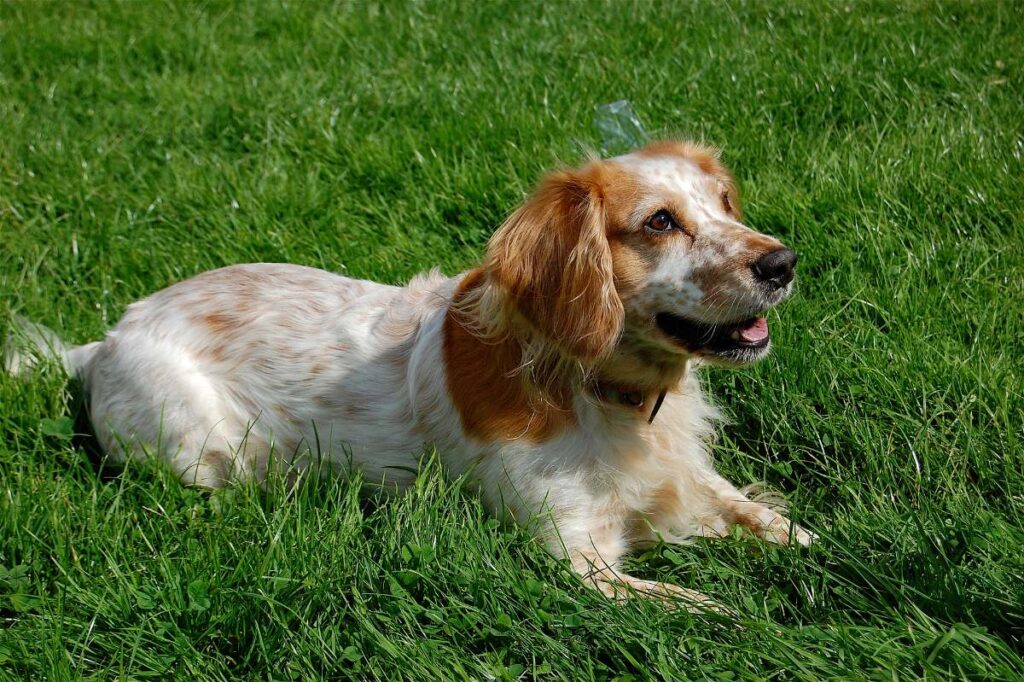
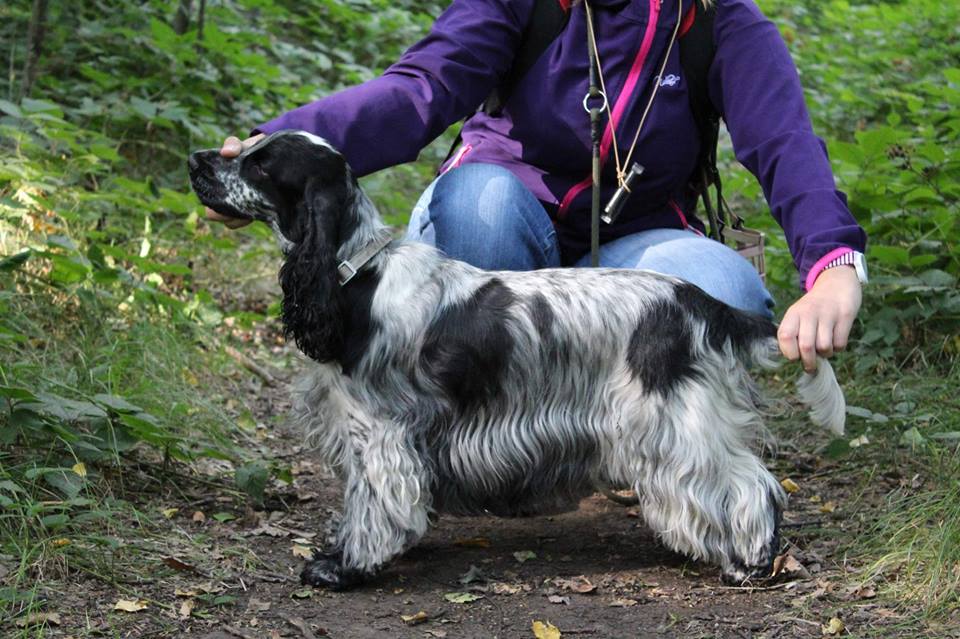
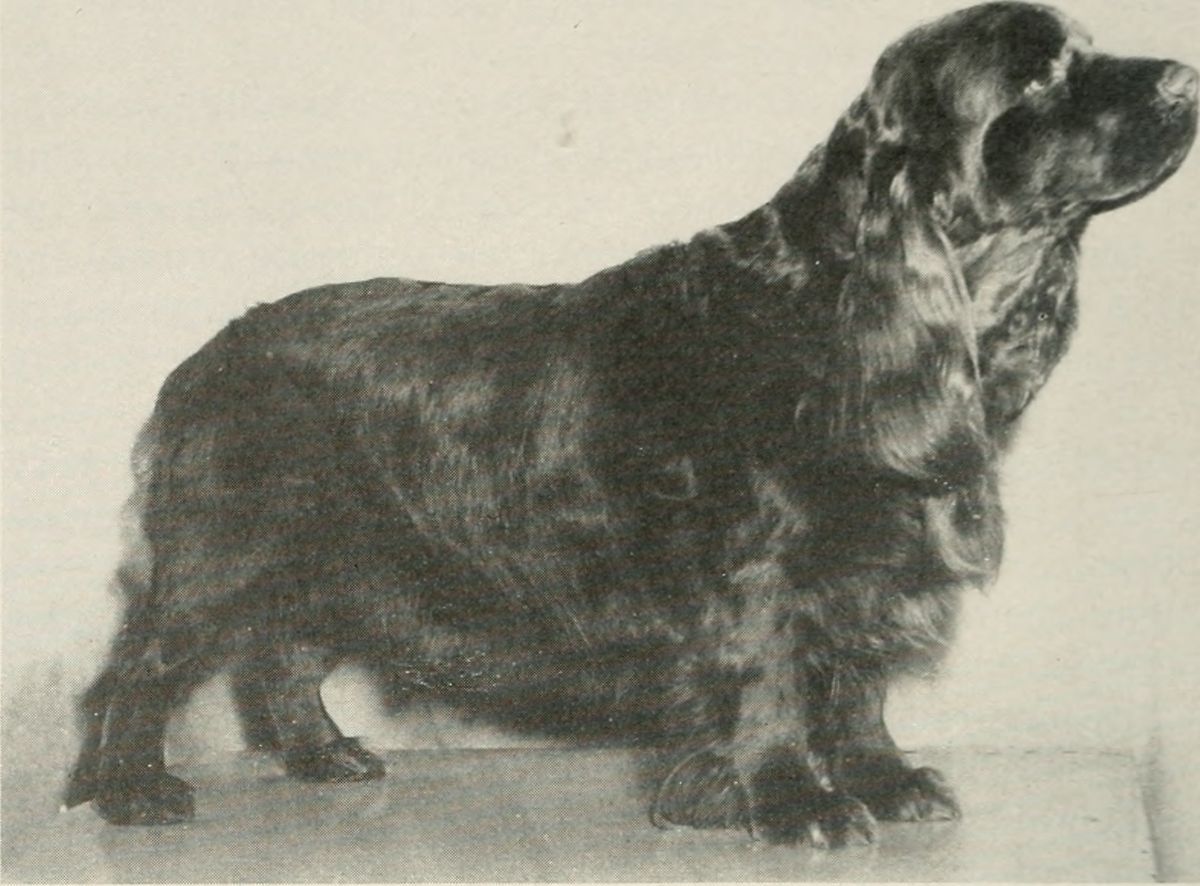
    The English Cocker Spaniel’s story stretches back centuries, from the general-purpose “spaniels” of medieval Britain to the distinct breed recognised by kennel clubs today. Along the way, the breed was shaped by hunters, early dog shows, famous foundation dogs and the separation of the English and American types. Understanding that history helps explain the cocker’s personality: its nose, its drive, its love of carrying things and its devotion to its people.

    Early spaniels

    Dogs described as spaniels appear in British writing for many centuries. The name is usually thought to come from an old word for “Spanish”, suggesting that the type may have arrived from or been associated with Spain, though the exact origin is debated. In the sixteenth century, the English physician John Caius described different kinds of hunting dogs in Britain, including spaniels used to find and spring game for hawks and nets. These early spaniels were working dogs first and foremost, valued for their noses and their willingness to work close to a hunter.

    Land spaniels and water spaniels

    Over time, spaniels were loosely divided into land spaniels and water spaniels, and then by size and job. Larger spaniels were used for springing game, while smaller spaniels were especially good at working thick cover for woodcock, a small game bird. These smaller dogs came to be called “cocking spaniels” or “cockers”, a name linked to the woodcock they hunted.
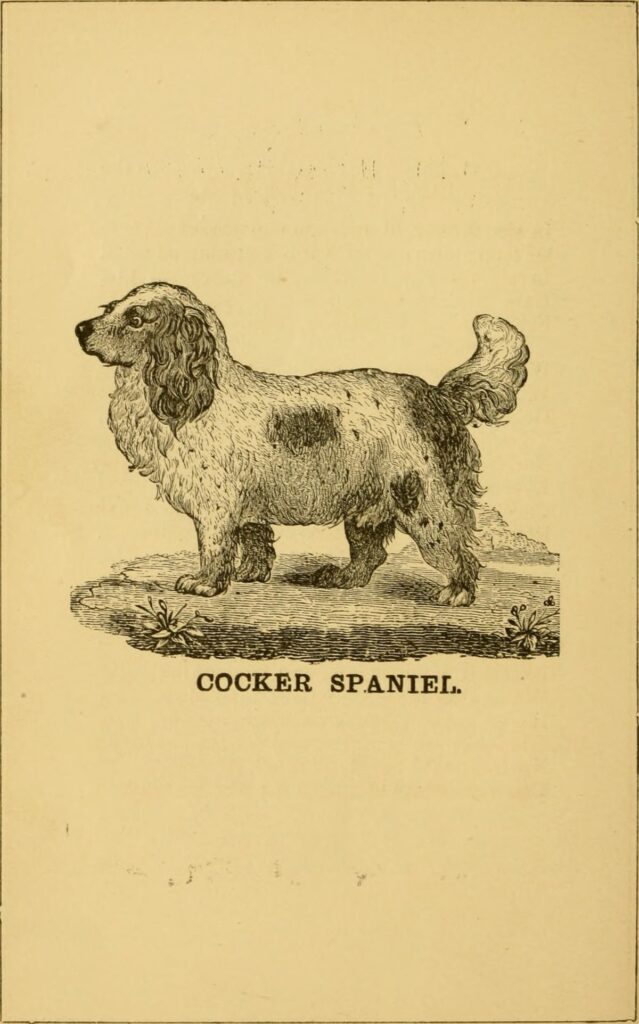
    A 19th-century engraving of a cocker spaniel
    A 19th-century engraving of a cocker spaniel. Photo: Internet Archive Book Images, via Wikimedia Commons, No restrictions

    The arrival of dog shows

    In the nineteenth century, dog shows and kennel clubs transformed the way breeds were defined. The Kennel Club in Britain was founded in 1873, and breeders began keeping pedigrees and writing breed standards. At first, spaniels from the same litter could be classed as different breeds depending on their weight. Gradually, the cocker was established as a breed in its own right, with its own standard and stud book entries, separate from the larger springers and field spaniels.

    A dog named Obo, born in England in the late 1870s, is often described as one of the foundation sires of the modern cocker. Obo and his descendants helped fix the type, and a son of Obo exported to North America is frequently mentioned in the history of cockers there as well.

    Cockers in North America

    Cocker spaniels became popular in North America in the late nineteenth and early twentieth centuries. Over the following decades, many North American breeders selected for a smaller dog with a rounder head, shorter muzzle and more abundant coat, creating what became the American Cocker Spaniel. Breeders who preferred the original British type formed their own breed club in the 1930s to protect and promote it, and the American Kennel Club recognised the English Cocker Spaniel as a separate breed in 1946. Today the two are distinct breeds in North America; see our guide to English vs American Cockers.
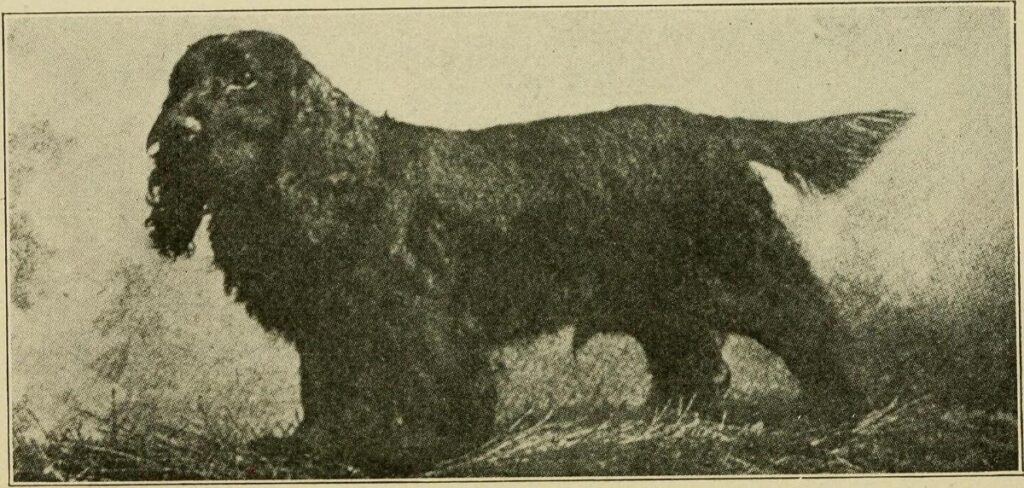
    A historical cocker spaniel illustration
    A historical cocker spaniel illustration. Photo: Internet Archive Book Images, via Wikimedia Commons, No restrictions

    The split between show and working lines

    Through the twentieth century, English Cockers increasingly divided into show-bred lines, selected for conformation in the ring, and working-bred lines, selected for performance in field trials and on shoots. Both remain English Cockers, but they now look and behave quite differently. Read more in our guide to show vs working cockers.

    Popularity

    In Britain and much of Europe, the cocker has long been among the most popular breeds, both as a family dog and as a gundog. Its compact size, affectionate nature and adaptability have made it a favourite of families, hunters, sniffer-dog programs and, increasingly, dog sport enthusiasts. In North America, the English Cocker is less common than the American Cocker but has a devoted following.

    Cockers at work today

    • Gundogs: working cockers remain popular on shoots for flushing and retrieving. See our guide to field work.
    • Detection dogs: spaniels, including cockers, are used to detect drugs, explosives and other substances thanks to their keen noses and drive.
    • Therapy and assistance: their gentle, people-focused nature suits therapy visits and some assistance roles.
    • Dog sports: agility, flyball, rally and scent work.
    • Family companions: by far the most common job today.

    How history shapes your cocker

    Many of the behaviours owners love, and some they find challenging, come straight from the breed’s working past. The constant sniffing, the zigzag pattern on walks, the love of carrying shoes, the excitement at birds, the soft mouth, the eagerness to please and the desire to stay close to their people all trace back to generations of spaniels bred to hunt cooperatively with humans. Giving your cocker outlets for these instincts, through exercise, retrieving and scent games, is the key to a happy dog.

    Coat colours through history

    Early cockers came in a wide variety of colours, including solids, parti-colours and roans, and debates about which colours were best have run through the breed’s history. Today’s English Cockers still come in a broad palette; see our guide to English Cocker colours.

    The wars and the breed

    Like many breeds, cockers were affected by the two World Wars, when breeding slowed sharply and food shortages made keeping dogs difficult. Dedicated breeders preserved key bloodlines through those years, and the breed recovered strongly afterwards, becoming one of the most popular breeds in Britain by the mid-twentieth century.

    Preserving the breed today

    Modern breeders face different challenges: keeping the breed healthy through DNA testing and careful selection, maintaining genetic diversity, and balancing appearance, temperament and working ability. Choosing a puppy from a breeder who health-tests and breeds thoughtfully is the best way for owners to support the breed’s future. See our guides to finding a responsible breeder and health testing.

    Frequently asked questions

    Where does the name “cocker spaniel” come from?

    “Cocker” is usually linked to the woodcock, the small game bird these spaniels were especially good at flushing. “Spaniel” is often thought to derive from an old word meaning Spanish, though the origin is debated.

    When was the English Cocker recognised as a separate breed in the US?

    The American Kennel Club recognised the English Cocker Spaniel as a separate breed in 1946.

    Who was Obo?

    Obo was a cocker born in England in the late 1870s, often cited as a foundation sire of the modern breed.

    Are English Cockers still used for hunting?

    Yes. Working-bred cockers are widely used as gundogs, especially in Britain and Europe.

    Featured photo: Internet Archive Book Images, via Wikimedia Commons, Public domain
  • How Much Does an English Cocker Spaniel Cost? A Realistic Budget

    How Much Does an English Cocker Spaniel Cost? A Realistic Budget

    Updated November 2026. English Cocker Spaniel Guide is an independent site, not affiliated with any breed club or kennel club. Some links are affiliate links: as an Amazon Associate we earn from qualifying purchases.

    An English Cocker Spaniel is a long-term commitment, often for 12 to 14 years or more, and the purchase price is only the beginning. Food, grooming, vet care, insurance, training and equipment add up over a lifetime. Budgeting realistically before you bring a cocker home helps you give it the care it needs without financial stress. The figures below are rough Canadian-dollar estimates to help you plan; actual costs vary a great deal by region, lifestyle and your individual dog.

    Upfront costs

    ItemRough estimate (CAD)Notes
    Puppy from a responsible, health-testing breederOften several thousand dollarsPrices vary by region and lines; very low prices are a red flag
    Adoption feeA few hundred dollarsUsually includes vaccinations, spay or neuter and microchip
    Crate, bed and bowls$150 to $400Buy adult-sized gear; see our puppy checklist
    Collar, harness, leads and ID$60 to $150
    Grooming tools$80 to $250Brush, comb, scissors, nail clippers
    Toys, chews and treats$50 to $150
    Initial vet visits and vaccinations$300 to $700Depends on what the breeder or rescue has already done
    Spay or neuter (if not included)$300 to $800+Varies widely by clinic and region
    Puppy classes$150 to $400Well worth it for socialisation and training

    Ongoing yearly costs

    CategoryRough yearly estimate (CAD)Notes
    Food$600 to $1,400Depends on the food you choose and your dog’s size and activity
    Treats and chews$150 to $400
    Routine vet care$400 to $1,000Annual check-up, vaccinations, parasite prevention
    Professional grooming$500 to $1,200A trim every 6 to 8 weeks; less if you groom at home
    Pet insurance$500 to $1,200Varies with age, coverage and deductible
    Toys, beds and replacements$100 to $300
    Licences and registration$20 to $100Many municipalities require a dog licence
    Boarding or pet sittingVariesBudget if you travel without your dog

    Many owners spend somewhere in the range of a couple of thousand dollars a year on a healthy adult cocker, more in the first year and in old age, and considerably more if unexpected health problems arise.

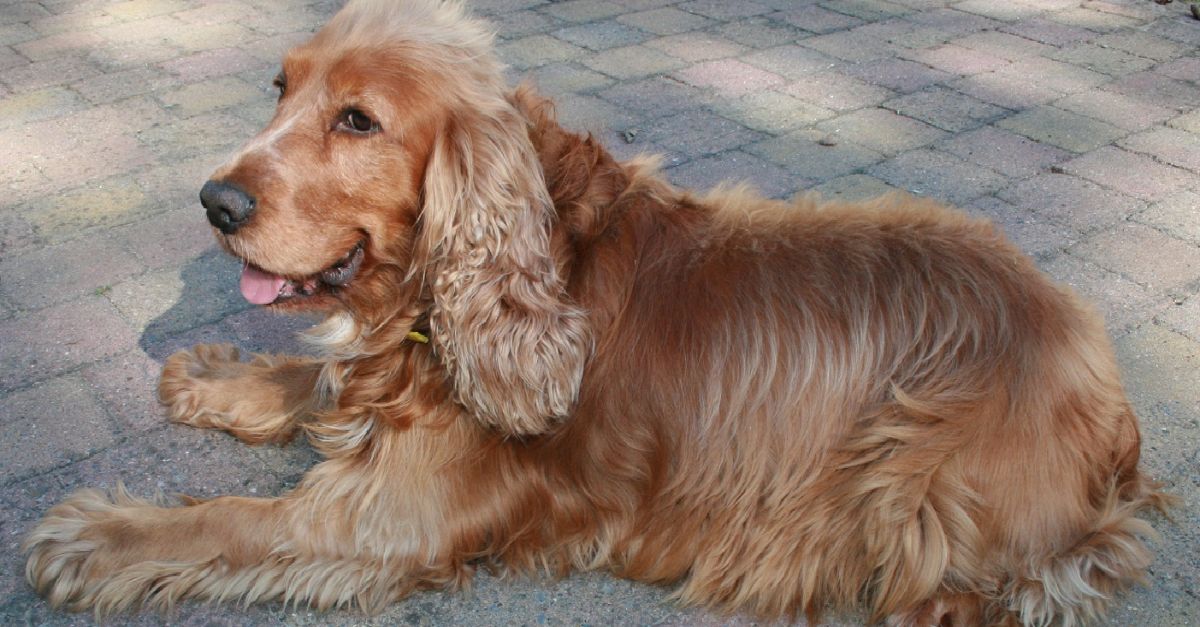
    A golden English Cocker Spaniel
    A golden English Cocker Spaniel. Photo: Pleple2000, via Wikimedia Commons, CC BY-SA 3.0

    Unexpected costs

    The biggest financial risk is an unexpected illness or injury. Emergency surgery, treatment for chronic ear infections, eye conditions, allergies or a swallowed sock can cost hundreds to thousands of dollars. Cockers are curious, food-motivated dogs, and ear problems are common in the breed, so plan for vet bills. See our health guide.

    Pet insurance vs a savings fund

    Pet insurance helps cover unexpected vet bills in exchange for a monthly premium. Policies vary widely: compare what is covered, waiting periods, annual and lifetime limits, deductibles, reimbursement percentage, and whether hereditary and chronic conditions are included. Ear infections and breed-related conditions are worth checking specifically. Some owners prefer to put a fixed amount into a dedicated savings account each month instead. Whichever you choose, start from day one, since pre-existing conditions are usually excluded.

    Ways to save without cutting corners

    • Learn to brush, bath and trim at home with good tools; see our grooming guide. A home grooming table pays for itself quickly.
    • Buy durable gear once rather than cheap gear repeatedly, especially crates, beds and chew toys.
    • Keep your dog at a healthy weight to reduce the risk of costly joint and health problems.
    • Brush teeth regularly to reduce the need for dental procedures; see our dental care guide.
    • Clean ears weekly with a vet-approved cleaner to help prevent infections.
    • Keep up with preventive vet care; catching problems early is usually cheaper.
    • Make your own enrichment: frozen KONGs, snuffle mats and scent games cost very little.
    A cocker spaniel on a boardwalk
    A cocker spaniel on a boardwalk. Photo: No machine-readable author provided. Diggler73 assumed (based on copyright claim, via Wikimedia Commons, CC BY-SA 3.0

    Lifetime cost

    Adding up purchase, first-year and ongoing costs over a 12- to 14-year lifespan, the lifetime cost of an English Cocker can easily reach tens of thousands of dollars, and more if your dog needs significant medical care. That is not meant to discourage you; it is simply the reality of giving any dog a good life. Most cocker owners will tell you every dollar is worth it.

    Don’t forget your time

    Beyond money, a cocker needs your time: at least an hour of exercise a day, training, grooming, companionship and care when it is ill or old. If your schedule is very full, factor in the cost of dog walkers or daycare. See our guides to exercise and temperament.

    First-year costs at a glance

    The first year is usually the most expensive. On top of the purchase or adoption price, you will be buying all the equipment, paying for the full puppy vaccination course, spay or neuter, microchipping and puppy classes, and probably replacing a few chewed items along the way. Puppies also need more frequent vet visits. Setting aside a larger budget for the first twelve months, and then a steady monthly amount after that, makes cocker ownership much more manageable.

    Costs that change with age

    Costs tend to fall after the first year and then rise again in the senior years, when dogs often need more frequent check-ups, blood tests, dental care, joint support and sometimes ongoing medication. Planning for these later costs early, through insurance or savings, means you can focus on your dog’s comfort rather than the bill. Our guide to senior cocker care explains what to expect.

    Budgeting tips

    • Set up a separate account for dog expenses and pay into it monthly.
    • Keep receipts and records; they help with insurance claims and tracking spending.
    • Ask your vet about wellness plans that spread routine care costs over the year.
    • Price-check food and supplies, and buy larger bags if you have storage space and your dog does well on the food.

    A little planning now means you can say yes to the care your cocker needs, when it needs it.

    Frequently asked questions

    How much does an English Cocker puppy cost in Canada?

    From responsible, health-testing breeders, puppies commonly cost several thousand dollars, depending on region and lines. Be wary of very cheap puppies.

    Is pet insurance worth it for a cocker?

    Many owners find it worthwhile, especially given the breed’s tendency to ear problems. Compare policies carefully, or set aside savings each month.

    How much does grooming a cocker cost?

    Professional trims typically cost from around $70 to well over $120 each, depending on the region and services. Home grooming saves money once you have the tools.

    What is the most expensive part of owning a cocker?

    For many owners, unexpected veterinary care is the biggest cost. Food and grooming are the largest predictable expenses.

    Featured photo: François SUEUR, via Wikimedia Commons, CC BY-SA 4.0

  • English Cocker Spaniel Rescue and Adoption: Where to Look and What to Expect

    English Cocker Spaniel Rescue and Adoption: Where to Look and What to Expect

    Updated November 2026. English Cocker Spaniel Guide is an independent site, not affiliated with any breed club or kennel club. Some links are affiliate links: as an Amazon Associate we earn from qualifying purchases.

    Not every English Cocker Spaniel starts life in the perfect home. Changes in owners’ circumstances, allergies, moves, divorce, illness and sometimes behaviour problems mean that cockers of all ages end up needing new families. Adopting a rescue cocker can be hugely rewarding: you give a dog a second chance and often skip the chaos of puppyhood. This guide explains where to find English Cockers for adoption, what to expect from the process, and how to help a rescue dog settle in.

    Why adopt an English Cocker?

    • Skip the puppy stage: many rescue cockers are already house trained and past the chewing phase.
    • Know what you are getting: an adult’s size, coat and personality are already formed, and foster carers can tell you a lot about the dog.
    • Give a dog a second chance: many surrendered cockers simply need a stable, loving home.
    • Support rescue work: adoption fees help rescues care for the next dog.

    Where to find English Cockers for adoption

    • Breed-specific rescues: regional cocker and spaniel rescue groups often place English and American Cockers and spaniel mixes, usually through foster homes. Search for spaniel rescues in your province or state.
    • Breed clubs: many national and regional breed clubs run or support rescue and rehoming programs.
    • Breeders: responsible breeders take back dogs they bred and sometimes have retired adults looking for pet homes.
    • Local shelters and humane societies: check regularly and ask to be notified if a cocker arrives.
    • Adoption websites: national listing sites let you search by breed and location.

    Be cautious of online “rehoming” ads that ask for large fees with little information, and never send money for a dog you have not met or confirmed exists.

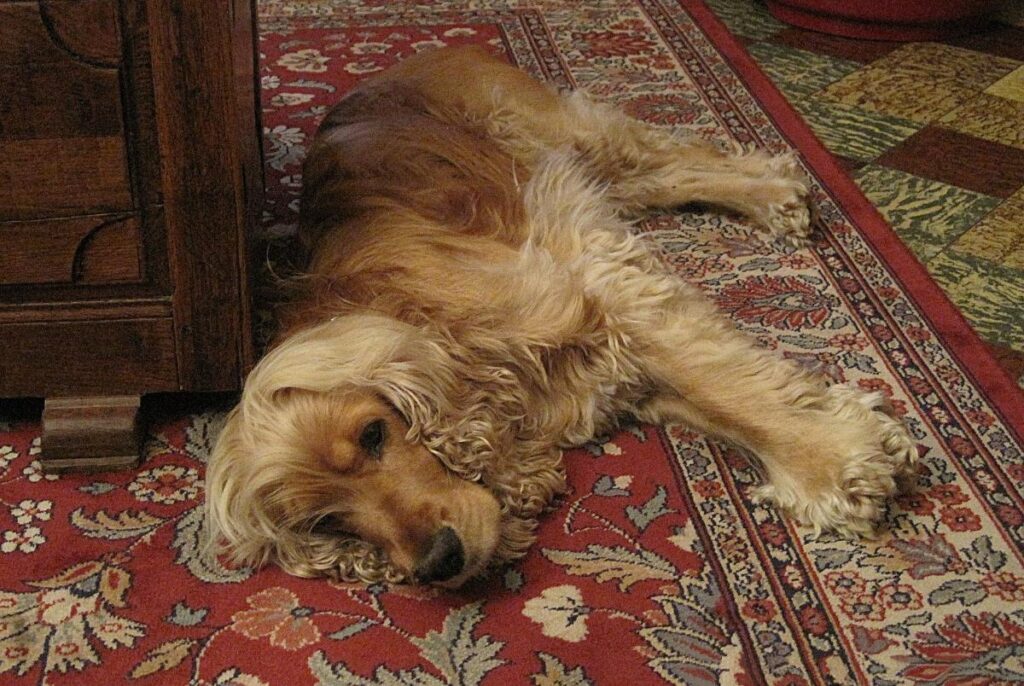
    A cocker spaniel resting on a rug
    A cocker spaniel resting on a rug. Photo: Jean-Pol GRANDMONT, via Wikimedia Commons, CC BY 4.0

    What the adoption process looks like

    1. Application: questions about your home, household, experience, work schedule and plans for exercise and training.
    2. Home check: many rescues visit, in person or by video, to make sure your home and garden are safe.
    3. Meeting the dog: often at a foster home, sometimes with your existing dog.
    4. Adoption contract and fee: usually covering vaccination, spay or neuter, microchipping and a vet check.
    5. Follow-up: good rescues stay in touch and help if problems arise.

    Rescues can seem strict, but their questions are about finding the right home and avoiding a dog being returned. Be honest about your situation; a good match benefits everyone.

    Questions to ask about a rescue cocker

    • Why was the dog surrendered, and what is known about its history?
    • How does it behave in the foster home with people, children, dogs and cats?
    • Is it house trained, crate trained and comfortable being left alone?
    • How does it react to grooming, nail trims and ear handling?
    • Does it have any health issues, especially ear, eye or skin problems?
    • Does it guard food, toys or resting places?
    • What kind of exercise and home would suit it best?

    Helping a rescue cocker settle in

    Many rescue organisations describe a rough “3-3-3” pattern: about three days for a dog to decompress, three weeks to learn the routine, and three months to feel truly at home. Every dog is different, so be patient.

    • Prepare a quiet space with a comfortable bed and, if the dog is used to one, a crate.
    • Keep the first days calm, with a predictable routine and few visitors.
    • Use a secure harness and lead on walks; newly adopted dogs can bolt if frightened.
    • Make sure the dog wears an ID tag from day one and update the microchip details.
    • Start gentle training with rewards; it builds trust and gives the dog structure.
    • Book a vet check, including ears, eyes, teeth and weight.
    A liver cocker spaniel in a garden
    A liver cocker spaniel in a garden. Photo: NicolasCoeurdelion, via Wikimedia Commons, CC BY-SA 4.0

    Common issues in rescue cockers

    Ear and skin problems

    Neglected cockers often arrive with ear infections, matted coats or skin problems. Your vet and groomer can help get them comfortable, and our ear care and grooming guides explain ongoing care.

    Anxiety and separation stress

    A dog that has lost its home may be clingy or anxious when left. Build up alone time gradually and use food puzzles and chews to create positive associations.

    Resource guarding

    Some rescue cockers guard food or toys. Give the dog space while eating, trade rather than take, and seek help from a reward-based trainer or behaviourist if needed.

    Adopting an older cocker

    Senior cockers are often overlooked, but many have years of love left to give and are calm, house-trained companions. If you are considering an older dog, read our guide to caring for a senior English Cocker.

    Fostering

    If you cannot commit to adoption, fostering is a wonderful way to help. Foster homes give rescue dogs a safe place to recover and learn household life, and rescues usually cover vet costs. Many people find fostering is also the perfect way to see whether a cocker suits their lifestyle.

    Introducing a rescue cocker to your other pets

    Introduce a new dog to a resident dog on neutral ground, such as a quiet park, with both dogs on loose leads. Walk them side by side before letting them greet, keep the first meeting short, and watch for relaxed body language. At home, pick up toys, chews and food bowls at first to avoid squabbles, and give each dog its own space to rest. With cats, keep the cocker on a lead or behind a baby gate at first, reward calm behaviour, and make sure the cat always has an escape route to high places. Go slowly; good introductions can take days or weeks.

    Frequently asked questions

    Are rescue English Cockers good with children?

    Many are, but it depends on the individual. Ask the rescue about the dog’s experience with children and arrange careful introductions.

    How much does it cost to adopt a cocker?

    Adoption fees vary by organisation and usually include vaccinations, spay or neuter and a microchip. Budget for ongoing costs too; see our cost guide.

    Can I adopt a cocker puppy?

    Occasionally, but most rescue cockers are adults. If you want a puppy, see our guide to finding a responsible breeder.

    What if the adoption does not work out?

    Reputable rescues ask you to return the dog to them rather than rehoming it yourself, so it can be placed safely.

    Featured photo: Vvsingh, via Wikimedia Commons, Public domain
  • English Cocker Spaniel Temperament: Personality, Pros and Challenges

    English Cocker Spaniel Temperament: Personality, Pros and Challenges

    Updated November 2026. English Cocker Spaniel Guide is an independent site, not affiliated with any breed club or kennel club. Some links are affiliate links: as an Amazon Associate we earn from qualifying purchases.

    Ask English Cocker owners to describe their dogs and you will hear the same words again and again: merry, affectionate, busy, clever, greedy and devoted. The breed standard calls for a merry, affectionate dog, and most English Cockers live up to it. But temperament is not one-size-fits-all, and the traits that make cockers so lovable can also bring challenges. This guide looks honestly at the English Cocker personality, so you can decide whether it suits your home.

    The classic cocker personality

    • Merry and optimistic: a happy outlook and a tail that rarely stops wagging.
    • Affectionate and people-focused: most want to be close to their family and follow them from room to room.
    • Sociable: usually friendly with visitors and other dogs when well socialised.
    • Busy and curious: bred to hunt, so they love to sniff, explore and carry things.
    • Sensitive: they respond best to kind, consistent handling and can shut down with harsh corrections.
    • Food-motivated: great for training, but they can be persuasive beggars and counter-surfers.
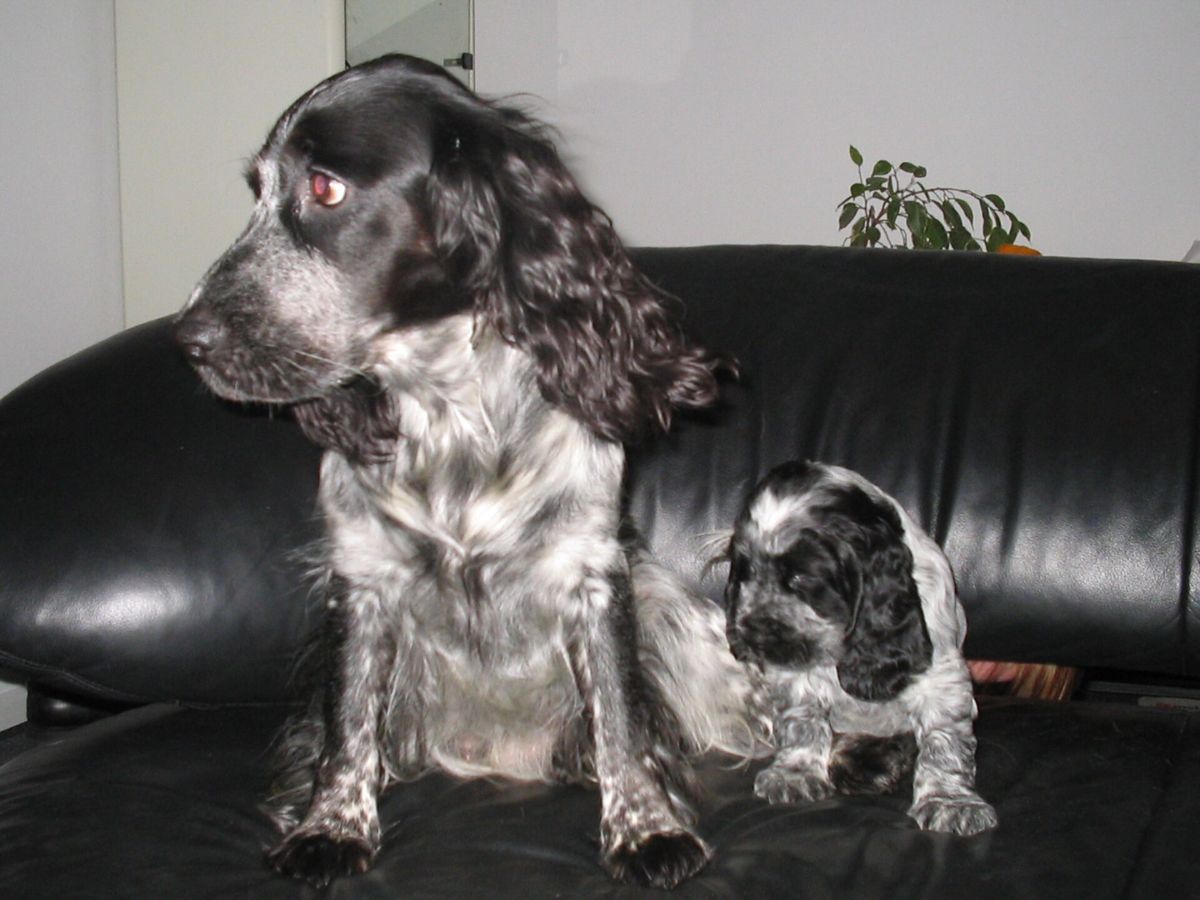
    Two cocker spaniels relaxing together
    Two cocker spaniels relaxing together. Photo: Bubamara, via Wikimedia Commons, CC BY 2.5

    With children

    A well-bred, well-socialised English Cocker is usually a wonderful family dog: gentle, playful and patient. Their medium size makes them sturdy enough for family life without being overwhelming. As with any dog, teach children to be gentle, not to disturb a dog that is eating or sleeping, and never leave young children and dogs unsupervised. Puppies can be mouthy and bouncy, so supervision is especially important in the first months.

    With other dogs and pets

    Most cockers enjoy the company of other dogs, and many live happily with cats they have been raised with. As gundogs, they have a natural interest in birds and may want to chase small animals, so introduce pets carefully and supervise around poultry, rabbits and pet birds.

    Energy and the need for a job

    English Cockers are active sporting dogs. A cocker that gets enough exercise and brain work is usually a calm, contented companion in the house; one that is bored may bark, dig, chew, steal things or bounce off the walls. Working-bred cockers in particular need a lot of activity. Plan on at least an hour of varied exercise a day, plus training games, puzzle toys and sniffing opportunities. See our exercise guide.

    Common behaviour challenges

    Resource guarding

    Some cockers become possessive of food, toys or stolen items. It helps to start early: teach “drop” and “leave it” with generous trades, never chase your dog to take things away, and give your puppy space while eating. If guarding develops, work with a qualified, reward-based trainer or behaviourist.

    Separation-related problems

    Because cockers are so attached to their people, some struggle when left alone. Build up alone time gradually from puppyhood, make the crate or a safe room a happy place, provide a long-lasting chew when you leave, and make departures and returns low-key.

    Barking

    Cockers can be vocal, especially when excited or bored. Meet their exercise needs, teach a calm “quiet” cue, and avoid accidentally rewarding barking with attention.

    Stealing and scavenging

    Their love of carrying things and their appetite make cockers expert thieves. Keep counters clear, bins secured and laundry put away, and teach a reliable “leave it”.

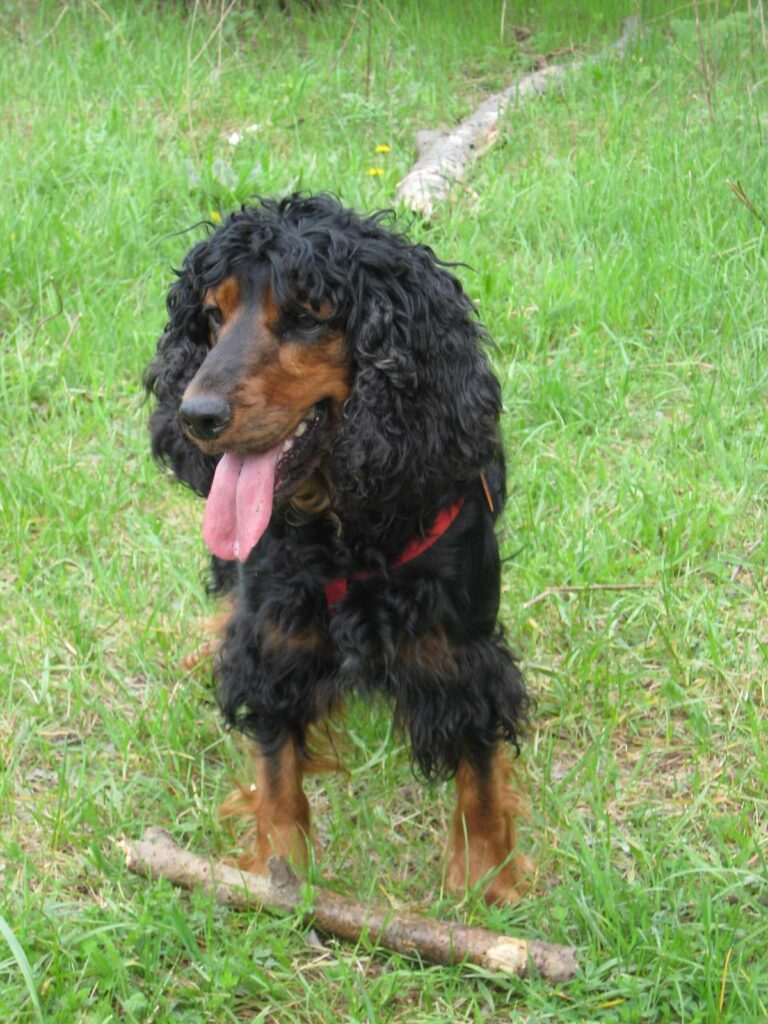
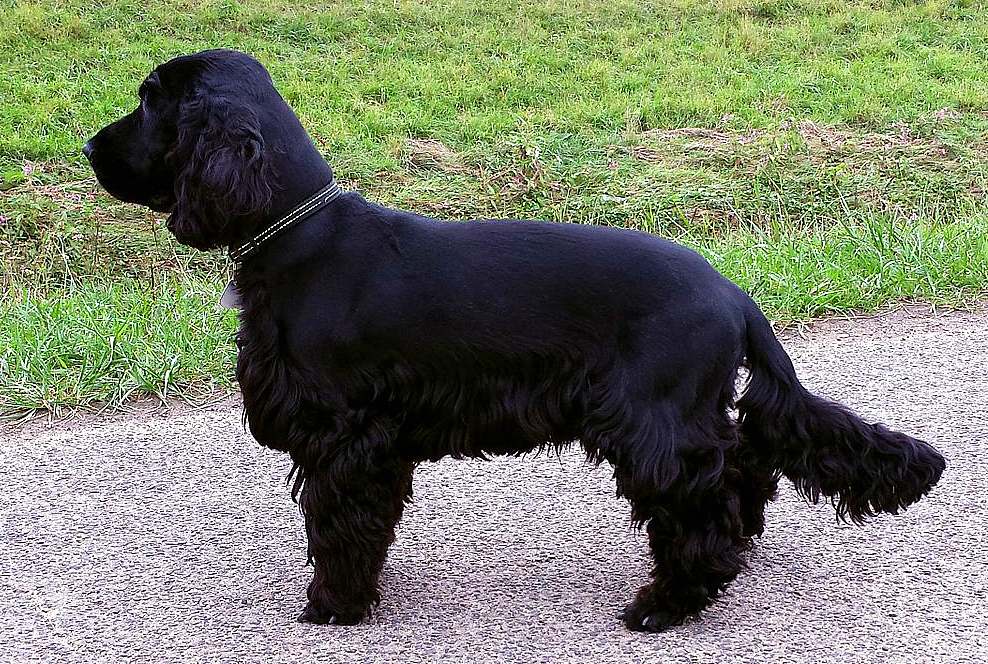
    A black English Cocker Spaniel
    A black English Cocker Spaniel. Photo: Kokeri com, via Wikimedia Commons, Public domain

    Is colour linked to temperament?

    You may hear that solid-coloured cockers have more behaviour problems than parti-colours. Some research has reported differences between colour groups, but breeding, early socialisation, training and environment matter far more than coat colour. Meet the parents and ask the breeder about temperament rather than choosing by colour. See our guide to coat colours.

    Show vs working temperament

    Show-bred cockers are often a little calmer and easier to settle at home, while working-bred cockers tend to be more driven and intense. Both should be friendly and biddable. Our guide to show vs working cockers explains the differences.

    Bringing out the best in your cocker

    1. Socialise thoroughly as a puppy, with positive experiences of people, dogs, places and handling.
    2. Use reward-based training; cockers are sensitive and food-motivated, so treats and praise work brilliantly.
    3. Give daily exercise that includes free running, sniffing and retrieving.
    4. Provide mental work: training games, scent work and food puzzles.
    5. Teach calm: reward settling on a mat and build a routine with plenty of rest.
    6. Handle ears, paws and mouth gently every day so grooming and vet visits are stress-free.

    Is an English Cocker right for you?

    An English Cocker is a great match for people who want a loving, sociable companion and enjoy being active, training and spending time with their dog. It may not be ideal if you want a very independent dog, will be away from home most of the day, or prefer a dog with low exercise and grooming needs. Read our breed guide for a complete overview.

    A day in the life

    Most adult English Cockers settle into a simple rhythm: a good morning walk with time to run and sniff, a quiet morning nap, a short training or puzzle session, an afternoon outing or play in the garden, and an evening curled up with the family. Cockers are adaptable, but they thrive on routine and company. A dog that gets its needs met in the morning is far more likely to rest calmly while you work.

    Expect your cocker to greet you as though you have been gone for a year, to bring you a “present” such as a shoe or toy, and to keep a close eye on the kitchen at mealtimes. Those habits are part of the breed’s charm, and with a little training they are easy to live with.

    Frequently asked questions

    Are English Cocker Spaniels aggressive?

    The breed is known for its friendly, affectionate nature. Aggression is uncommon and usually linked to fear, pain, resource guarding or poor breeding and socialisation. Any sudden change in behaviour warrants a vet visit.

    Are English Cockers clingy?

    Many love to be close to their people and may follow you around. Teaching your puppy to settle alone for short periods helps it cope when you go out.

    Are English Cockers easy to train?

    Yes, generally. They are clever and food-motivated, though distractions such as scents and birds mean recall needs consistent practice.

    Do English Cockers calm down with age?

    Most become calmer after adolescence, typically by around two to three years old, especially with enough exercise and training.

    Featured photo: Jean-Pol GRANDMONT, via Wikimedia Commons, CC BY 4.0

  • Show vs Working English Cocker Spaniels: Differences and Which to Choose

    Show vs Working English Cocker Spaniels: Differences and Which to Choose

    Updated November 2026. English Cocker Spaniel Guide is an independent site, not affiliated with any breed club or kennel club. Some links are affiliate links: as an Amazon Associate we earn from qualifying purchases.

    Look at a show-ring English Cocker Spaniel and a cocker working a hedgerow, and you might not believe they are the same breed. Over roughly a century, English Cockers have been bred along two increasingly separate paths: show lines, selected for looks and movement in conformation shows, and working lines, selected for performance in the field. Both are genuine English Cockers, and both can make wonderful companions, but they differ in appearance, energy and needs. Choosing the right type for your lifestyle is one of the most important decisions you will make.

    Quick comparison

    Show-bred English CockerWorking-bred English Cocker
    Selected forConformation to the breed standard, movement, temperamentHunting ability: drive, nose, stamina, retrieving, biddability
    BuildHeavier bone, deeper chest, more substanceLighter, leaner, often leggier
    HeadClassic domed head with defined stop and longer earsOften flatter skull, shorter ears, varied appearance
    CoatMore profuse coat and featheringShorter, lighter coat that sheds burrs more easily
    EnergyActive but often easier to settleVery high drive; needs lots of exercise and mental work
    Best forActive families and companion homesVery active owners, gundog work, dog sports

    Show-bred English Cockers

    Show-line dogs are bred by breeders who compete in conformation shows, where dogs are judged against the written breed standard for structure, movement, coat and temperament. They tend to have more coat, a more uniform appearance, and the classic cocker head and expression. Most show-bred cockers are lively and love walks and games, but they are generally easier to settle in the house and more content with an hour or so of exercise a day.

    Their fuller coat needs more grooming: regular brushing, trimming of the ears, feet and feathering, and a professional groom or careful home trim every six to eight weeks. See our grooming guide.

    A working cocker spaniel retrieving
    A working cocker spaniel retrieving. Photo: Xavier Laurent Lévy, via Wikimedia Commons, CC BY-SA 4.0

    Working-bred English Cockers

    Working cockers, often just called “working cockers”, are bred from dogs that hunt, compete in spaniel field trials and work as gundogs. Breeders select for drive, nose, stamina, a soft mouth for retrieving and willingness to work with a handler. Looks vary a lot, and many working cockers are smaller and lighter than show dogs, with shorter coats and a busier, more intense way of moving.

    A working cocker’s brain is always switched on. Many are happiest with a job to do, whether that is gundog work, scent work, agility, flyball or simply structured retrieving and searching games. Without enough physical and mental exercise, a working cocker can become frustrated, noisy or destructive. They are also exceptionally rewarding to train for people who enjoy it.

    Temperament differences

    Both types should be friendly, merry and affectionate. Working cockers are typically more driven, quicker to react and more focused on scent and birds, so a reliable recall takes dedicated work. Show-bred cockers often have a softer “off switch” in the house. These are generalisations; individuals vary, and good breeding and early socialisation matter as much as the line.

    Health

    Responsible breeders of both types use the same core health tests, including DNA tests for prcd-PRA, familial nephropathy and adult-onset neuropathy, hip evaluations and eye examinations. Working cockers may be less prone to some coat-related issues, and their shorter ears can be a little easier to keep healthy, but they still need regular ear care. Whichever type you choose, ask for health test results; see our health guide.

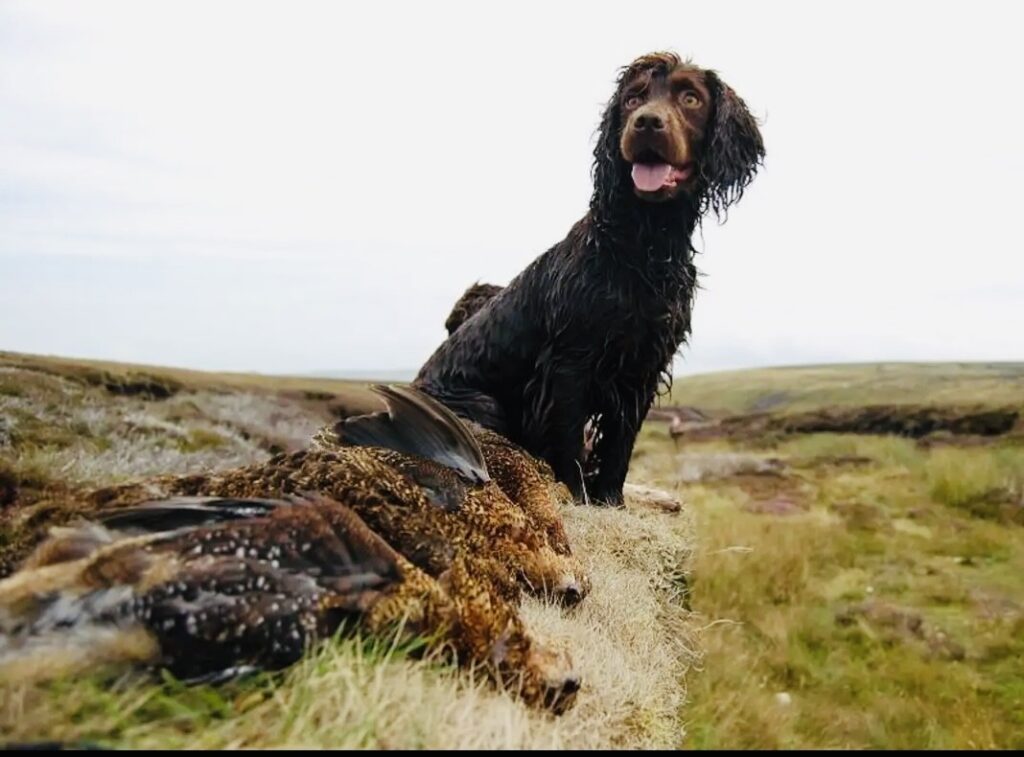
    A black cocker spaniel on moorland
    A black cocker spaniel on moorland. Photo: Xavier Laurent Lévy, via Wikimedia Commons, CC BY-SA 4.0

    Which type suits you?

    • Choose a show-bred cocker if you want an affectionate family companion, enjoy daily walks and some training, and are happy to keep up with grooming.
    • Choose a working-bred cocker if you hunt, want to compete in dog sports, or love long days outdoors and plenty of training, and can provide several hours of activity and mental work a day.
    • Not sure? Meet adult dogs from both types, talk to breeders and owners, and be honest about how much time you can give.

    Gundog work and field trials

    If you want to work your cocker in the field, a working-bred dog from proven hunting lines gives you the best start. Spaniels are trained to quarter ground in front of the handler, flush game, stop to flush and retrieve to hand. Joining a gundog club or training group is the best way to learn. Our guide to field work with an English Cocker explains how to get started, including at non-hunting events such as working tests.

    Can a show-bred cocker work?

    Many show-bred cockers retain strong instincts and enjoy hunting, scent work and retrieving, and some breeders actively aim for dual-purpose dogs. At a high competitive level, though, field trials are dominated by working-bred dogs. For fun, training and companionship in the field, a keen show-bred cocker can do very well.

    Grooming and coat care compared

    Working cockers usually need less coat care day to day, but feathering still picks up burrs, seeds and mud, so check them after every outing. Many owners of working cockers keep the feet, ears and belly trimmed short for practicality. Show-bred cockers need regular brushing with a slicker brush and comb and more frequent trimming. Both types benefit from a drying coat after wet walks.

    Frequently asked questions

    Are working cockers good family pets?

    They can be, in the right home. They need a lot of exercise, training and mental stimulation, so they suit very active families.

    Do show and working cockers look different?

    Often, yes. Show dogs tend to be heavier with more coat and a classic head; working dogs are usually lighter with shorter coats and more variable looks.

    Which is easier to train?

    Both are trainable and eager to please. Working cockers are often more focused and responsive but also more driven, which can make them more challenging for first-time owners.

    Can show and working cockers be bred together?

    Some breeders cross lines, but most keep them separate to preserve the qualities they are selecting for.

    Featured photo: Canarian, via Wikimedia Commons, CC BY-SA 4.0

  • English Cocker Spaniel Breed Guide: Size, Temperament, Care and Health

    English Cocker Spaniel Breed Guide: Size, Temperament, Care and Health

    Updated November 2026. English Cocker Spaniel Guide is an independent site, not affiliated with any breed club or kennel club. Some links are affiliate links: as an Amazon Associate we earn from qualifying purchases.

    The English Cocker Spaniel is a cheerful, compact sporting dog with a soft expression, a constantly wagging tail and a nose that never stops working. Bred in Britain to flush and retrieve game, it has become one of the most popular family dogs in the world, admired for its affectionate nature and adaptability. This guide covers everything you need to know before bringing one home: size, temperament, exercise, grooming, health and what daily life with an English Cocker is really like.

    Breed at a glance

    TraitEnglish Cocker Spaniel
    GroupSporting (gundog)
    HeightMales about 16 to 17 in; females about 15 to 16 in (AKC standard)
    WeightAbout 26 to 34 lb
    Life expectancyTypically around 12 to 14 years
    CoatSilky, medium length, with feathering
    ColoursSolids, parti-colours and roans, with or without tan
    EnergyHigh; needs daily exercise and mental work
    Good with childrenUsually, when well bred and socialised
    SheddingModerate
    GroomingRegular brushing, trimming and ear care

    Where the breed comes from

    Spaniels have been used in Britain for centuries to find birds and flush them for hunters. As the different spaniel types were separated in the nineteenth century, the smaller dogs that excelled at flushing woodcock became known as cockers. The breed developed in Britain and spread around the world, and in North America the English Cocker was eventually recognised as a separate breed from the American Cocker Spaniel. Read more in our history of the English Cocker and our comparison of English and American Cockers.

    An English Cocker Spaniel sitting in the grass
    An English Cocker Spaniel sitting in the grass. Photo: Jean-Pol GRANDMONT, via Wikimedia Commons, CC BY 4.0

    Temperament

    The breed is famous for its “merry” temperament, and the description fits: most English Cockers are happy, sociable dogs that love being involved in whatever their people are doing. They are typically affectionate with family, friendly with visitors and good with other dogs when socialised. Many are sensitive to harsh handling and respond far better to calm, reward-based training. Because they were bred to work closely with a handler, they want to be with you, and some can struggle if left alone for long periods. See our full guide to English Cocker temperament.

    Show and working lines

    Over the past century, English Cockers have been bred along two broad lines. Show-bred dogs are selected for appearance and movement in the ring and tend to have more coat, heavier bone and a slightly calmer manner. Working-bred dogs are selected for performance in the field and are usually lighter, faster, more driven and shorter-coated. Both can make excellent pets, but a working cocker generally needs more exercise and mental stimulation. Our guide to show vs working cockers compares them in detail.

    Exercise and activity

    An English Cocker is an athlete in a small body. Most need at least an hour of exercise a day, ideally including a chance to run free in a safe area, and they love games that use their noses, such as retrieving, scent work and hunting for hidden toys. Without enough to do, a bored cocker may bark, chew or invent its own entertainment. See how much exercise an English Cocker needs and our recall training guide.

    A black English Cocker Spaniel
    A black English Cocker Spaniel. Photo: BentaxGermany, via Wikimedia Commons, CC0

    Grooming

    The silky coat needs brushing a few times a week to keep feathering on the ears, legs and belly free of mats, plus a trim every six to eight weeks or so. Long ears also need weekly checks and regular cleaning, because spaniels are prone to ear infections. Many owners learn to trim at home with a pair of grooming scissors and a good slicker brush; others book a groomer. Our grooming guide walks through it.

    Health

    English Cockers are generally a healthy breed, but some inherited conditions occur, including progressive retinal atrophy, familial nephropathy, adult-onset neuropathy and hip dysplasia. Responsible breeders use DNA tests and screening to reduce these risks. Ear infections are the most common everyday problem. Read our English Cocker health guide and ear care guide.

    Living with an English Cocker

    • Homes: they adapt to houses or apartments, as long as they get enough exercise.
    • Families: usually wonderful with children who are taught to be gentle; supervise young kids with puppies.
    • Other pets: most get on well with other dogs; some have a strong interest in birds and small animals.
    • Being alone: they prefer company; build up time alone gradually and use a comfortable crate as a safe den.
    • Mess: expect muddy feathering after walks and a love of water; a drying coat or towel helps.

    Is an English Cocker right for you?

    An English Cocker is a great choice for people who enjoy daily walks, like training and want an affectionate, sociable companion of manageable size. It is less suited to homes where the dog would be alone all day, or to people who want a low-maintenance coat. If you decide to go ahead, start with our guides to finding a responsible breeder, adopting a rescue and preparing for a puppy, and estimate the cost of ownership.

    Training an English Cocker

    English Cockers are intelligent and eager to please, which makes them rewarding to train, but they are also easily distracted by interesting smells and birds. Short, upbeat sessions with food rewards and play work best. Start with the basics from the day your puppy comes home: name response, sit, down, a reliable recall and walking nicely on a lead. A well-fitted harness and a long training line make outdoor training much easier, and small, soft training treats keep motivation high.

    Many cockers love to carry things, which can be channelled into retrieving games and is a big help with “drop” and “give” training. Some are prone to resource guarding toys or food, so teach trading games early and never chase a dog to take things away. Puppy classes are a great way to socialise your dog and learn good habits together.

    Frequently asked questions

    Are English Cocker Spaniels good family dogs?

    Yes, typically. They are affectionate and playful, and well-bred, well-socialised dogs are usually excellent with children.

    Do English Cockers bark a lot?

    They can be vocal, especially when bored or excited. Enough exercise and training keeps barking manageable.

    Do English Cocker Spaniels shed?

    Yes, moderately. Regular brushing removes loose hair and keeps the coat in good condition.

    How long do English Cocker Spaniels live?

    Many live around 12 to 14 years, and some longer, with good care.

    Featured photo: Jean-Pol GRANDMONT, via Wikimedia Commons, CC BY 4.0

  • English Cocker Spaniel Colours: Solids, Parti-Colours and Roans Explained

    English Cocker Spaniel Colours: Solids, Parti-Colours and Roans Explained

    Updated November 2026. English Cocker Spaniel Guide is an independent site, not affiliated with any breed club or kennel club. Some links are affiliate links: as an Amazon Associate we earn from qualifying purchases.

    Few breeds come in as many attractive colours as the English Cocker Spaniel. Glossy black, rich golden and chocolate liver solids, crisp parti-colours, and the speckled roans that many people think of as the classic cocker look all belong to the same breed. This guide explains each colour group, the patterns within them, how colours can change as puppies grow, and what colour does and does not tell you about a dog.

    The three main colour groups

    English Cocker colours fall into three broad families: solid (self) colours, parti-colours and roans. Each can also come with tan markings. Breed standards describe these colours slightly differently in different countries, so if you plan to show, check the current standard of your kennel club.

    GroupWhat it looks likeExamples
    Solid (self) coloursOne colour all over; a small amount of white on the chest is generally tolerated in many standardsBlack, liver, red, golden
    Parti-coloursClearly defined patches of colour on a white backgroundBlack and white, liver and white, orange and white, lemon and white
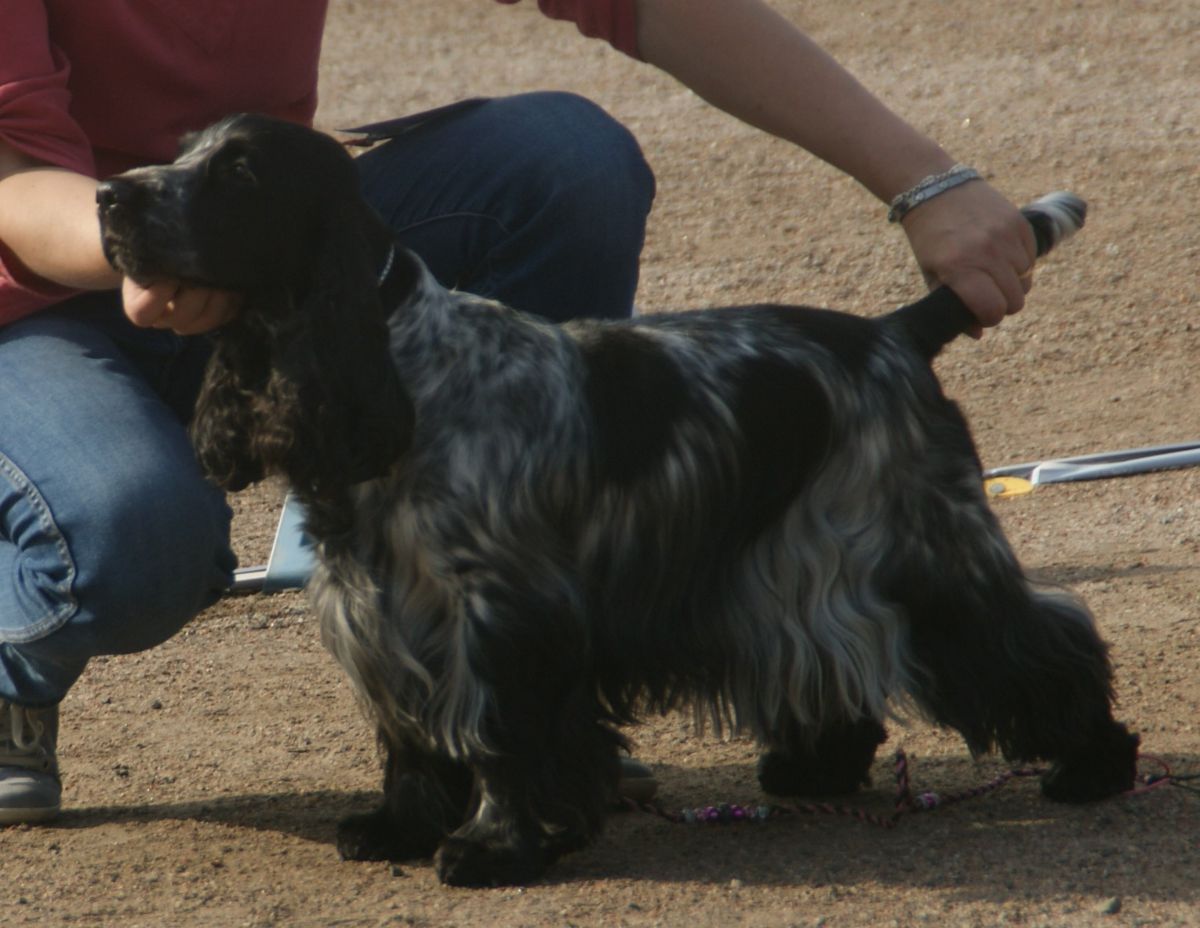
    RoansColoured hairs evenly intermingled with white, giving a speckled or blended lookBlue roan, liver roan, orange roan, lemon roan
    With tanAny of the above with tan points on the eyebrows, muzzle, chest and legsBlack and tan, blue roan and tan, black, white and tan

    Solid colours

    Black

    Solid black English Cockers have a deep, glossy coat and are one of the most popular colours. They may show a little white on the chest.

    Golden and red

    Golden ranges from pale lemon through to deep red. Solid red and golden cockers are especially popular as family pets and are often what people picture when they think of a cocker spaniel. The shade can deepen or lighten with age and season.

    Liver

    Liver is the breed term for chocolate brown. Liver dogs have brown noses, lips and eye rims to match, and their eyes are often a lighter hazel.

    Black and tan, liver and tan

    Tan points appear in the same places as on a Dobermann: over the eyes, on the cheeks and muzzle, on the chest, on the legs and under the tail.

    A liver English Cocker Spaniel
    A liver English Cocker Spaniel. Photo: Michelangelo at Polish Wikipedia, via Wikimedia Commons, CC BY-SA 3.0

    Parti-colours

    Parti-colours have clear, distinct patches of colour on a white background. Black and white, liver and white, orange and white and lemon and white are all seen, and any of them can have tan markings, which makes a tricolour such as black, white and tan. The amount of white varies a great deal from dog to dog; some are mostly white with a few patches, others mostly coloured with white on the face and chest.

    Roans

    Roans are the signature colour of the English Cocker. In a roan, coloured and white hairs are mixed together over the white areas of the coat, so the dog looks speckled or blended rather than patched. The roan colour is named after the base colour mixed with the white:

    • Blue roan: black mixed with white, giving a smoky blue-grey look.
    • Liver roan: brown mixed with white.
    • Orange roan: orange mixed with white.
    • Lemon roan: pale yellow mixed with white.
    • Roan and tan: any roan with tan points, for example blue roan and tan.

    Roan puppies are often born looking almost white with coloured patches, and the roaning appears and deepens over the first weeks and months. Many owners are surprised by how much a roan puppy changes as it grows.

    An orange roan English Cocker Spaniel
    An orange roan English Cocker Spaniel. Photo: eNil, via Wikimedia Commons, CC BY 2.0
    A black and white English Cocker Spaniel
    A black and white English Cocker Spaniel. Photo: SheltieBoy, via Wikimedia Commons, CC BY 2.0

    Do colours change as puppies grow?

    Yes, often. Roaning develops over the first months, golden puppies can darken or lighten, and coats can look different after the puppy coat is replaced by the adult coat. Clipping can also make a coat look lighter or darker, because the undercoat may be a different shade from the longer feathering. Ask the breeder what the parents looked like as puppies and as adults if you want an idea of how a puppy may turn out.

    Does colour affect temperament or health?

    There is a lot of folklore about cocker colours, including the long-standing claim that solid-coloured cockers are more prone to behaviour problems than parti-colours. Studies have reported differences between colour groups, but temperament depends far more on breeding, early socialisation and training than on colour. Choose a puppy based on the health and temperament of the parents, not on coat colour alone.

    One genuine colour-related issue is deafness. As in many breeds, congenital deafness is linked to extensive white in the coat, so many breeders of parti-colours and roans have puppies hearing-tested (BAER tested). Ask about this if you are buying a puppy with a lot of white. See our health guide for other recommended tests.

    Grooming different colours

    Colour makes little difference to grooming, but a few practical points help. Dark coats can fade or turn reddish in strong sun; light coats show tear stains and mud more; roans can look patchy straight after clipping until the coat grows back. A good brush and comb and regular trims keep any colour looking its best. Our grooming guide explains the full routine.

    English Cocker colours vs American Cocker colours

    American Cocker Spaniels are grouped differently, into black, ASCOB (any solid colour other than black) and parti-colours, and roans are far less common in the breed. If you are trying to tell the two breeds apart, head shape and size are more reliable clues than colour. See English vs American Cocker Spaniel.

    Frequently asked questions

    What is the most common English Cocker colour?

    Solid golden or red, solid black and blue roan are among the colours seen most often, though popularity varies by country and by show or working lines.

    What is a blue roan cocker spaniel?

    A dog with black and white hairs mixed together over the white areas of the coat, which looks blue-grey from a distance. Many blue roans also have tan markings.

    Is a tricolour cocker spaniel rare?

    No. Tricolours, such as black, white and tan, are a recognised and fairly common colour combination.

    Should I choose a puppy by colour?

    Colour is a fine way to choose between equally healthy, well-bred puppies, but health testing and the temperament of the parents matter far more.

    Featured photo: M.Minderhoud, via Wikimedia Commons, CC BY-SA 3.0

  • English Cocker Spaniel vs American Cocker Spaniel: What’s the Difference?

    English Cocker Spaniel vs American Cocker Spaniel: What’s the Difference?

    Updated November 2026. English Cocker Spaniel Guide is an independent site, not affiliated with any breed club or kennel club. Some links are affiliate links: as an Amazon Associate we earn from qualifying purchases.

    English Cocker Spaniels and American Cocker Spaniels share a name, a common ancestry and a famously affectionate nature, so it is no surprise that people mix them up. In North America they are two separate breeds, each with its own breed standard, and the differences go well beyond looks. If you are deciding which one suits your home, or trying to work out which one you already have, this guide sets out how they compare.

    A shared history, then two paths

    Both breeds descend from the small flushing spaniels used in Britain to find and flush woodcock and other game. In the late 1800s, spaniels were divided by size, and the smaller ones became known as cockers. Cockers taken to North America were gradually bred toward a smaller, rounder-headed dog with a more profuse coat, and that line became the American Cocker Spaniel. Breeders who wanted to preserve the original British type kept the two apart, and the American Kennel Club recognised the English Cocker Spaniel as a separate breed in 1946.

    In the United Kingdom and most of the world, the English dog is simply called the “Cocker Spaniel”, while the North American dog is the “American Cocker Spaniel”. That is why British and European books and breeders rarely use the word “English” at all.

    At a glance

    English Cocker SpanielAmerican Cocker Spaniel
    Height (AKC standard)Males about 16 to 17 in; females about 15 to 16 inMales about 15 in; females about 14 in
    Typical weightAbout 26 to 34 lbAbout 20 to 30 lb
    HeadLonger muzzle, flatter skull, moderate stopShorter muzzle, rounded domed skull, pronounced stop
    CoatSilky, moderate featheringProfuse, longer feathering, especially in show dogs
    BuildAthletic, compact sporting dogSmaller, more compact, sloping topline
    Common coloursSolids, parti-colours and roansBlack, ASCOB (any solid colour other than black) and parti-colours
    GroomingModerateHigh, especially for a full coat

    Breed standards set out ideals; individual dogs vary, and working-bred English Cockers are often lighter and leggier than show-bred dogs.

    Head and expression

    The head is usually the quickest way to tell the breeds apart. The English Cocker has a longer, squarer muzzle and a flatter skull, with a gentle slope from forehead to nose. The American Cocker has a shorter muzzle, a domed skull and a more pronounced stop, which gives it a rounder, more baby-like face and larger-looking eyes. Both breeds should have a soft, melting expression.

    Body and movement

    The English Cocker is a sporting dog built to work through cover all day. It stands a little taller, with more leg under it, and moves with drive. The American Cocker is smaller and more compact, often with a sloping topline in the show ring. Both should be sound, balanced movers, but the English dog tends to look more like a small field spaniel and the American more like an elegant companion.

    A parti-colour American Cocker Spaniel
    A parti-colour American Cocker Spaniel. Photo: ItsWolfeh, via Wikimedia Commons, CC BY-SA 3.0

    Coat, colours and grooming

    Both breeds have silky, medium-length coats with feathering on the ears, chest, belly and legs. The American Cocker’s show coat is far more profuse and needs regular professional grooming to keep it from matting, while the English Cocker’s coat is more moderate. Pet owners of either breed often keep a shorter, practical trim.

    Colours differ too. Roan coats, such as blue roan and orange roan, are a classic English Cocker look, alongside solids like black, liver and red, and parti-colours. American Cockers are grouped into black, ASCOB (any solid colour other than black, including buff and chocolate) and parti-colours. See our full guide to English Cocker Spaniel coat colours.

    Temperament and energy

    Both are affectionate, people-focused dogs that do best as part of family life. The English Cocker is often described as merrier and more active, and it usually keeps more of its hunting instinct: it loves to use its nose, carry things and work alongside its people. The American Cocker is generally a little calmer and is more often kept purely as a companion. Individual temperament depends heavily on breeding, socialisation and training, so meet the parents whenever you can. Our guide to English Cocker temperament goes into more detail.

    Exercise needs

    An English Cocker typically needs at least an hour of exercise a day, including off-lead running where it is safe and some sniffing and retrieving games. Working-bred lines can need even more. American Cockers need daily walks and play too, but usually a bit less. Neither breed is a couch potato, and both can become bored and noisy without enough to do. See how much exercise an English Cocker needs.

    A red American Cocker Spaniel
    A red American Cocker Spaniel. Photo: AKS.9955, via Wikimedia Commons, CC BY-SA 3.0

    Health

    The two breeds share some concerns, especially ear infections from their long, heavy ears, and inherited eye conditions. English Cocker breeders commonly screen for progressive retinal atrophy (PRA), familial nephropathy, adult-onset neuropathy and hip dysplasia, as well as eye examinations. American Cocker breeders screen for their breed’s own list of conditions. Always ask a breeder for health test results on both parents. Our English Cocker health guide explains the main tests.

    Which breed is right for you?

    • Choose an English Cocker if you want an active, outdoorsy companion that enjoys long walks, training and games, and you like a more natural, moderate look.
    • Choose an American Cocker if you want a smaller, slightly calmer companion and are happy to keep up with more grooming.
    • Either way, choose a responsible breeder or a reputable rescue; see our guides to finding a breeder and rescue and adoption.

    Frequently asked questions

    Is an English Cocker Spaniel the same as a Cocker Spaniel?

    Outside North America, yes: “Cocker Spaniel” means the English Cocker. In Canada and the United States, “Cocker Spaniel” usually means the American breed, so the word “English” is added to tell them apart.

    Which is bigger, the English or American Cocker?

    The English Cocker is generally taller and a little heavier, with more leg and a longer muzzle.

    Can the two breeds be registered together?

    No. They are registered as separate breeds with their own standards in North America.

    Which breed is easier to groom?

    The English Cocker, in most cases. Its coat is more moderate, though it still needs regular brushing and ear care.

    Featured photo: Vaneska88, via Wikimedia Commons, CC BY-SA 4.0