Updated November 2026. English Cocker Spaniel Guide is an independent site, not affiliated with any breed club or kennel club. Some links are affiliate links: as an Amazon Associate we earn from qualifying purchases.
English Cocker Spaniels were bred to spend all day pushing through cover, following scent and retrieving game. That heritage lives on in today’s pet cockers: they are energetic, curious dogs that need both physical exercise and mental work to be happy and well behaved. This guide explains how much exercise an English Cocker needs at each life stage, the best kinds of activity for the breed, and how to exercise safely in all weathers.
How much exercise does an English Cocker need?
As a general guide, most healthy adult English Cockers need at least an hour of exercise a day, and many enjoy considerably more. Working-bred cockers often need two hours or more, plus mental work. What matters is not just the time but the quality: a cocker that only walks on a lead around the block will be far less satisfied than one that gets to run, sniff, search and retrieve.
| Life stage | Typical needs | Focus |
|---|---|---|
| Puppy (to about 6 months) | Several short play and exploration sessions | Free play, socialisation, gentle training; avoid long forced walks |
| Adolescent (6 to 18 months) | Gradually building to an hour or more | Training, recall practice, building fitness |
| Adult | At least an hour a day; more for working lines | Mix of free running, sniffing, retrieving and training |
| Senior | Shorter, gentler, more frequent outings | Low-impact walks, sniffing, joint-friendly activities |
The best types of exercise for cockers
Free running and sniffing
Off-lead time in a safe, legal area lets a cocker do what it was bred for: quarter the ground and investigate scents. If your dog’s recall is not yet reliable, use a long training line so it can explore while you stay in control. Our recall training guide explains how to build a dependable recall.
Retrieving games
Many cockers are natural retrievers. A ball launcher such as the Chuckit! saves your arm, but mix fetch with calmer games so your dog does not become over-excited or obsessive. Hiding a toy and sending your dog to “find it” combines exercise and nose work.
Scent work
Scent games tire a cocker out far more than an equivalent amount of running. Start by hiding treats around a room, then progress to hiding a scented toy in the garden or on walks. Formal scent work classes are widely available and great fun for the breed.
Swimming
Most cockers love water. Swimming is excellent low-impact exercise, but always dry the ears afterwards to reduce the risk of infection, and consider a dog life jacket for boating or strong water. Rinse off salt or lake water and towel dry; a drying coat is a big help.
Dog sports
Agility, flyball, rally obedience, working tests and scent work all suit the breed’s energy and intelligence, and they strengthen the bond between dog and handler.
Exercising a puppy
Puppies need plenty of play and exploration, but their joints are still developing, so avoid long, forced walks, repeated jumping, and running alongside a bike. Short outings, free play on soft ground, and lots of rest are ideal. Many owners follow loose rules of thumb such as a few minutes of structured walking per month of age, but there is no exact formula; let your puppy set the pace and ask your vet for advice. See our puppy checklist.
Mental exercise matters too
A cocker that has run for an hour but done nothing with its brain may still be restless. Add ten or fifteen minutes of mental work each day:
- Short training sessions teaching new cues and tricks
- Puzzle toys and snuffle mats for meals
- Stuffed, frozen KONG toys
- Hide-and-seek games with toys or people
- Calm chewing on a suitable chew toy
Exercise in hot and cold weather
In hot weather, walk early and late, carry water, choose shady routes and watch for heavy panting, drooling or weakness, which can signal heatstroke. Hot pavement can burn paws. In winter, cockers usually cope well with cold but can get ice balls in their feathering and salt on their paws. Trim the hair between the pads, rinse paws after walks and consider a paw balm. A reflective collar or light helps on dark evenings.
Signs your cocker needs more exercise
- Restlessness and inability to settle in the evening
- Barking, whining or attention-seeking
- Destructive chewing or digging
- Pulling hard on the lead at the start of every walk
- Weight gain
Signs of too much
Lameness, stiffness after rest, reluctance to keep going, excessive panting or a dog that is exhausted for the rest of the day all suggest you are overdoing it. Build fitness gradually, especially for puppies, seniors and dogs returning from injury, and ask your vet if you are unsure.
A sample weekly plan for an adult cocker
| Day | Morning | Afternoon or evening |
|---|---|---|
| Monday | 45-minute walk with off-lead running | 15-minute training session and puzzle feeder |
| Tuesday | Long sniffy walk on a long line | Retrieve games in the garden |
| Wednesday | Swim or beach walk (dry ears after) | Calm chew and rest |
| Thursday | 45-minute walk | Scent game: hide toys around the house |
| Friday | Run or brisk walk | Trick training |
| Saturday | Long hike or dog sport class | Easy evening stroll |
| Sunday | Relaxed walk somewhere new | Grooming session and rest |
Adjust the plan to your dog’s age, fitness, line and the weather. Rest days with gentle walks and enrichment are just as important as busy days, especially for young dogs that are still growing.
Frequently asked questions
Can an English Cocker live in an apartment?
Yes, if it gets enough daily exercise and mental stimulation outside. Access to safe off-lead areas is a big advantage.
Can I take my English Cocker running?
Once fully grown, many healthy adult cockers make good running companions. Build distance gradually and avoid hot weather.
Do working cockers need more exercise?
Usually, yes. Working-bred cockers often need two hours or more of activity a day, plus training and mental work.
Is fetch good exercise for a cocker?
It is great in moderation. Mix it with sniffing and searching games so your dog does not become over-excited.
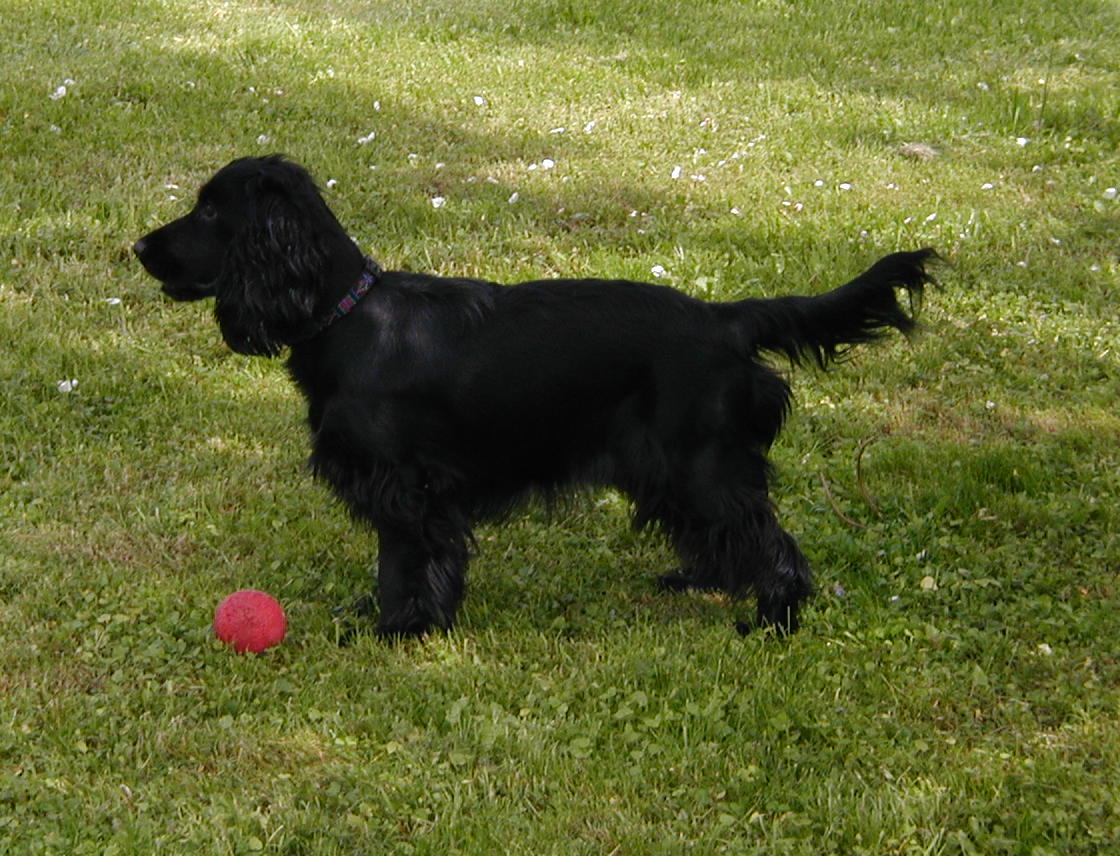
Featured photo: No machine-readable author provided. Kessa Ligerro~commonswiki assumed (based on, via Wikimedia Commons, CC BY-SA 3.0
Leave a Reply