Updated November 2026. English Cocker Spaniel Guide is an independent site, not affiliated with any breed club or kennel club. Some links are affiliate links: as an Amazon Associate we earn from qualifying purchases.
Bringing home an English Cocker Spaniel puppy is exciting, and a little preparation makes the first weeks much smoother for everyone. This checklist covers what to buy before the big day, how to puppy-proof your home, what the first night and first week look like, and the routines that set a young cocker up for life. We link to our detailed gear guides where it helps, so you can choose products that suit a growing spaniel.
Before your puppy comes home
- Find a veterinarian and book a check-up for the first few days
- Book a puppy class that uses reward-based training
- Choose a name and agree on house rules and cue words with everyone at home
- Ask the breeder what food the puppy is eating and buy the same to start
- Set up a quiet sleeping area with a crate and bed
- Puppy-proof the rooms your puppy will use
Shopping checklist
| Item | Why you need it | Our pick |
|---|---|---|
| Crate | A safe den for sleep and house training | MidWest 30-inch crate with divider |
| Bed | Comfort in the crate and around the house | EHEYCIGA orthopedic bed |
| Bowls | Narrow-topped bowls keep long ears out of food and water | Trixie long-ear bowl |
| Harness and lead | Comfortable walking and training | rabbitgoo harness |
| Collar and ID tag | ID tag with your phone number | Reflective collar |
| Training treats | Small, soft rewards for training | Crumps’ Naturals Mini Trainers |
| Chew toys | Teething relief and an outlet for chewing | KONG Classic |
| Brush and comb | Daily handling and gentle grooming | Wahl slicker brush |
| Nail clippers | Short, regular nail trims | Candure nail clippers |
| Ear cleaner | Getting puppy used to ear care | Virbac Epi-Otic |
| Enzyme cleaner | Removes accident odours so puppy does not return to the spot | Any pet-safe enzyme cleaner |
See our full guides to the best crates, beds, spaniel bowls, harnesses and chew toys for more options.
Puppy-proofing your home
- Move electrical cords, cables and chargers out of reach
- Store shoes, socks, children’s toys and remote controls away; cockers love to carry things
- Lock away cleaning products, medications and anything toxic, including chocolate, grapes, raisins and xylitol
- Use baby gates to keep puppy in safe areas
- Check the yard for gaps in fences, toxic plants and anything sharp
- Keep bins lidded and out of reach
The first day and night
Bring your puppy home early in the day if you can, so it has time to explore before bedtime. Keep things calm: a few family members, gentle introductions to the house and garden, and lots of chances to sleep. Show the puppy where to toilet and praise it quietly when it goes in the right place.
At night, many puppies settle better with the crate beside your bed at first, so they can hear and smell you. Expect to take your puppy out to toilet during the night for the first weeks. Keep night outings boring: out, toilet, praise, back to bed.
The first week
- Vet visit: a health check, vaccination plan and parasite control.
- Routine: regular meals, toilet trips after sleeping, eating and playing, and plenty of naps. Puppies need a lot of sleep.
- House training: start straight away; see our house training guide.
- Handling: gently touch ears, paws and mouth every day with treats, so grooming and vet visits are easy later.
- Short training sessions: name, sit and coming when called, a few minutes at a time.
- Alone time: start with very short periods so your puppy learns to settle without you.
Socialisation: the most important job
Between roughly three and fourteen weeks of age, puppies are especially open to new experiences. Gentle, positive exposure to different people, friendly vaccinated dogs, sounds, surfaces, car rides, grooming and household life during this window helps produce a confident adult. Go at your puppy’s pace, pair new things with treats and play, and avoid overwhelming situations. Your vet can advise on when it is safe to visit public places based on your puppy’s vaccinations.
Feeding your puppy
Keep feeding the breeder’s food at first, then change gradually if you want to switch. Puppies usually need three or four small meals a day, reducing as they grow. Use part of the daily food allowance for training rewards so your puppy does not gain too much weight. Our feeding guide covers this in more detail.
Exercise for a growing cocker
Puppies need play and exploration, but not long, forced walks. Short outings, free play in a safe area and sniffing games are ideal. Build up exercise gradually as your puppy grows; see our exercise guide.
Common puppy challenges
Mouthing and nipping
Cocker puppies explore with their mouths. Redirect nipping onto a chew toy, pause play if teeth touch skin, and make sure your puppy gets enough sleep; overtired puppies bite more. Avoid rough hand games.
Stealing and carrying
Many cockers love to pick up socks and shoes. Instead of chasing, teach a trade: offer a treat for the item, then give it back sometimes so your puppy learns that giving things up is rewarding. This helps prevent resource guarding later.
Crying in the crate
Make the crate a happy place with meals, chews and short practice sessions during the day. At night, settle your puppy beside you at first and gradually move the crate if you wish. If your puppy cries in the night, it may need the toilet; take it out calmly, then straight back to bed.
Frequently asked questions
What size crate does an English Cocker puppy need?
A crate around 30 to 36 inches long suits most adult English Cockers. Buy the adult size and use a divider to make it smaller while your puppy is young.
When can my puppy go for walks?
Ask your vet. Many advise waiting until a set time after the final puppy vaccinations before walking in public areas, while still socialising your puppy safely before then.
How often does a puppy need to go out to toilet?
Very often: after waking, eating, drinking and playing, and every hour or two when awake at first.
When should I start grooming my puppy?
From the first week, with gentle brushing, handling of ears and paws, and short sessions rewarded with treats.
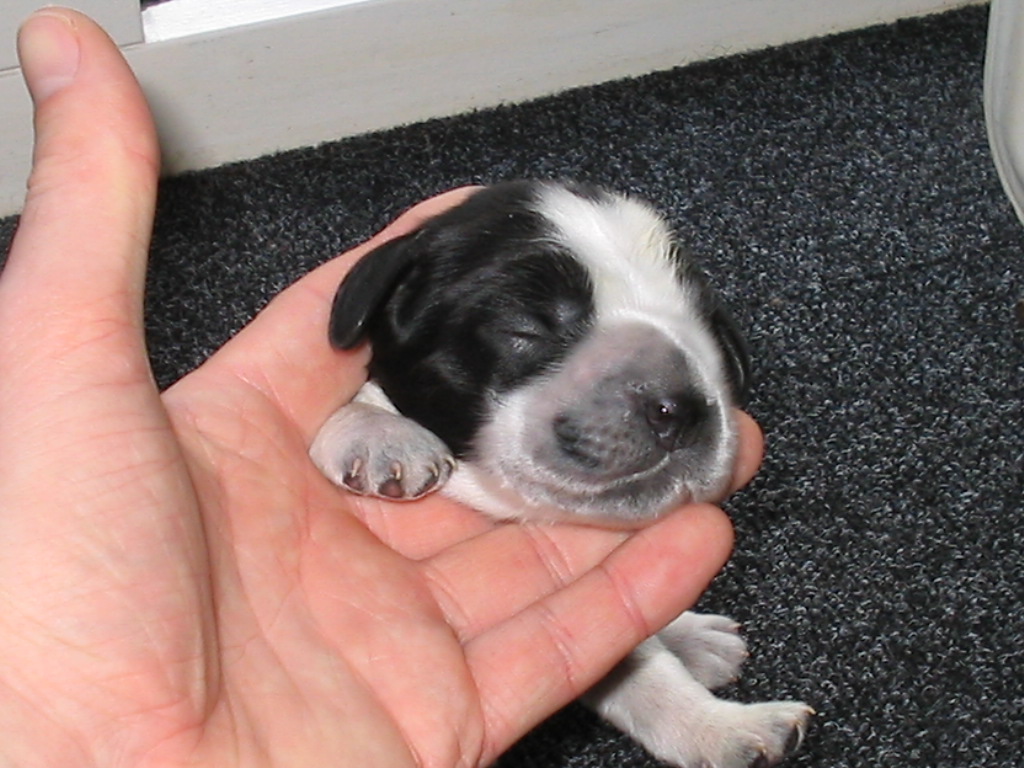
Featured photo: No machine-readable author provided. Michiel1972 assumed (based on copyright cla, via Wikimedia Commons, CC BY-SA 3.0
Leave a Reply