Updated November 2026. English Cocker Spaniel Guide is an independent site, not affiliated with any breed club or kennel club. Some links are affiliate links: as an Amazon Associate we earn from qualifying purchases.
Winter is hard on a spaniel’s feet. English Cockers grow a lot of hair between their pads, and in snow that hair collects painful balls of ice. Road salt and grit can crack and burn the pads, frozen ground is rough, and repeated soaking in cold, muddy water dries the skin. Meanwhile, a wet cocker loses heat quickly on a long, cold walk, particularly if it is old, young or clipped short.
This guide covers the two simplest ways to protect your dog in cold weather: a good paw balm and, for dogs that feel the cold, a waterproof coat. Here are our picks from Amazon.ca and a winter care routine that works.
Quick picks
- Best paw balm: Tinioey natural paw balm
- Best lick-safe balm: PawSono lick-safe paw balm
- Best winter coat: AOFITEE full-body waterproof dog coat
These are our picks from Amazon.ca, chosen on design, materials, suitability for a medium-sized spaniel, and the volume and consistency of buyer reviews. We have not lab-tested them ourselves.
Our winter picks for spaniels
1. Tinioey Natural Paw Balm: best paw balm
A wax-based balm that forms a light protective layer on the pads before a walk and soothes dry, cracked pads afterwards. Natural waxes and oils help repel snow and slush and reduce the irritation from salted pavements.
- Good for: salted roads, dry or cracked pads, snow
- Watch for: apply sparingly and let it soak in so your dog does not slide on hard floors
Check the Tinioey Natural Paw Balm on Amazon.ca →
2. PawSono Lick-Safe Paw Balm: best lick-safe
Spaniels lick their feet, so a balm made from ingredients that are safe if licked is a sensible choice. It is useful for nose and elbow dryness as well as paws.
- Good for: dogs that lick their feet, everyday moisturising
- Watch for: even lick-safe products work better if you distract your dog for a few minutes after applying
Check the PawSono Lick-Safe Paw Balm on Amazon.ca →
3. AOFITEE Full-Body Waterproof Dog Coat: best winter coat
A waterproof coat that covers the back, chest and belly, keeping your dog warmer and much cleaner on cold, wet walks. Full-body cover is particularly useful for spaniels because so much mud collects on the belly and chest feathering.
- Good for: older dogs, clipped coats, wet winter walks
- Watch for: measure back length carefully; coats that are too long can rub when your dog runs
Check the AOFITEE Full-Body Waterproof Dog Coat on Amazon.ca →
Comparison
| Product | Type | Best for |
|---|---|---|
| Tinioey | Paw balm | Salt, snow and cracked pads |
| PawSono | Lick-safe balm | Dogs that lick their paws |
| AOFITEE | Waterproof coat | Cold, wet walks |
A winter paw care routine
- Trim the hair between the pads level with the pad surface. This is the most effective way to stop ice balls forming. Our guide to grooming scissors shows how.
- Rub a thin layer of balm into the pads before you go out on snowy or salted ground.
- After the walk, rinse your dog’s feet in lukewarm water to remove salt, grit and de-icer.
- Dry the feet thoroughly, including between the toes.
- Check the pads for cuts, cracks or redness, and apply balm again if they are dry.
Does a cocker spaniel need a coat?
Many healthy adult English Cockers with a full coat are fine without one in an ordinary winter, especially if they keep moving. A coat is worth having for older dogs, puppies, dogs that have been clipped short, dogs with health problems, and for cold, wet weather when your dog will be standing around, such as at a training class or watching a match. A waterproof coat also saves a lot of time drying and cleaning a cocker after a muddy walk, which our drying coat guide covers in more detail.
What about dog boots?
Boots can protect feet from salt and ice, but many dogs find them strange and walk awkwardly at first, and boots that fit badly can rub. If you want to try them, choose a size based on paw width, introduce them slowly at home with treats, and use them for short periods. For most spaniels, trimmed feet, a good balm and rinsing after walks are enough.
Signs of cold or paw trouble
- Lifting paws, limping or refusing to walk on icy ground
- Licking or chewing the feet after walks
- Cracked, bleeding or red pads
- Shivering, slowing down or trying to turn for home
If your dog has a cut pad that keeps bleeding, a limp that does not improve, or redness and swelling between the toes, see your vet. Grass seeds lodged between the toes are another common spaniel problem, although they are more of a summer issue.
Older spaniels in winter
Older cockers often feel the cold more and may be stiff on chilly mornings. Shorter, more frequent walks, a warm coat, a supportive bed out of draughts and a gentle warm-up before exercise all help. Read our guide to the senior English Cocker for more tips.
Frequently asked questions
How do I stop snowballs forming on my spaniel’s feet?
Trim the hair between the pads short and apply a wax-based paw balm before walks.
Is road salt bad for dogs’ paws?
Salt and de-icers can dry and irritate pads, and they are harmful if licked. Rinse your dog’s feet after walks on treated roads.
Do English Cockers feel the cold?
Healthy adults with a full coat cope well, but older dogs, puppies and clipped dogs may need a coat in cold, wet weather.
Can I use human moisturiser on my dog’s paws?
It is better to use a product made for dogs, because many human creams contain ingredients that are not safe to lick.
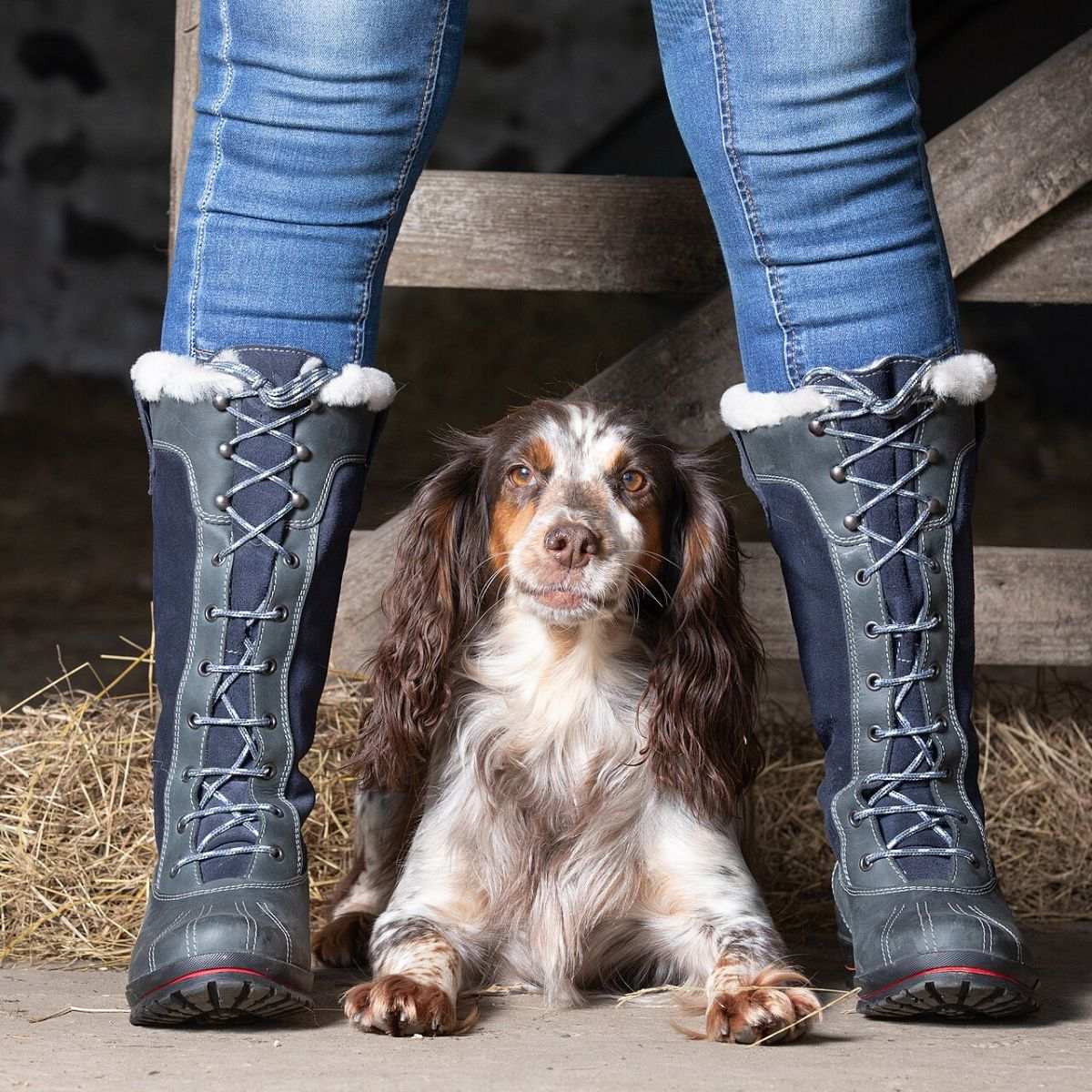
Featured photo: Bareback Footwear, via Wikimedia Commons, CC BY-SA 4.0
Leave a Reply