Category: Puppies

Bringing home an English Cocker Spaniel puppy: puppy checklists, crate training, house training, chew toys and the first weeks at home.

  • The Best Chew Toys for Spaniels (2026)

    The Best Chew Toys for Spaniels (2026)

    Updated November 2026. English Cocker Spaniel Guide is an independent site, not affiliated with any breed club or kennel club. Some links are affiliate links: as an Amazon Associate we earn from qualifying purchases.

    Spaniels are gundogs, bred to carry things in their mouths, and most English Cockers love to hold, carry and chew. A puppy going through teething will chew almost anything it can reach, and many adult cockers chew to relax or when they are bored. Giving your dog safe, durable things to chew protects your shoes and furniture, and it satisfies a genuine need rather than fighting it.

    Below are the chew and play toys we would buy from Amazon.ca for a cocker, followed by a guide to choosing safe chews and what to avoid.
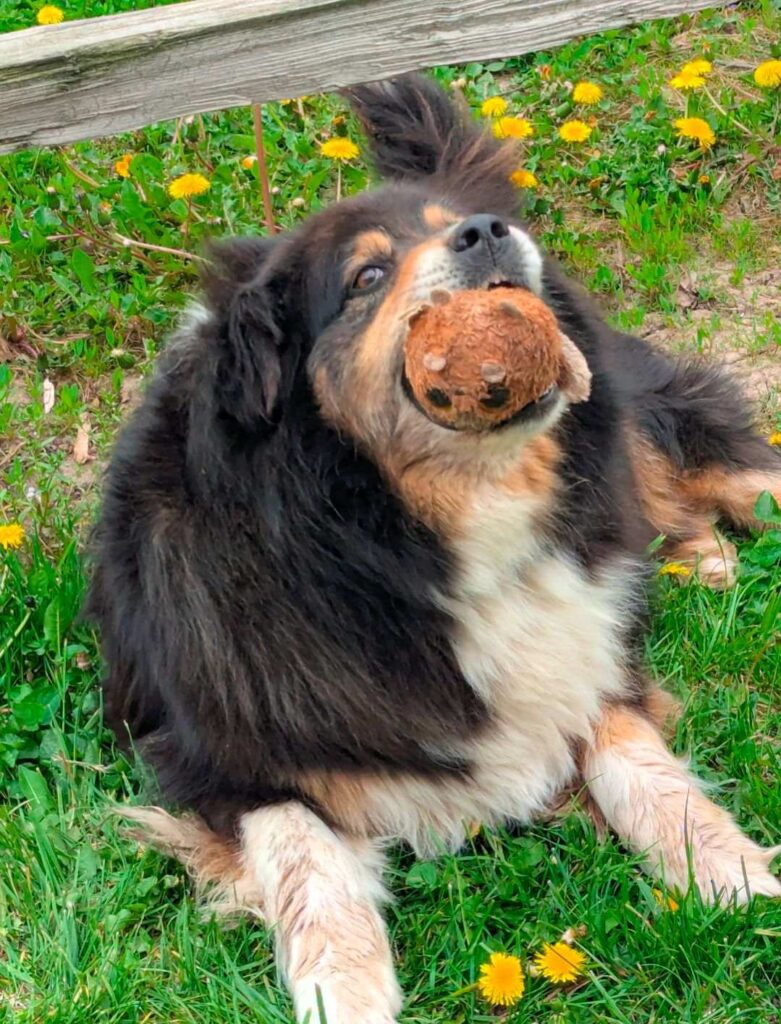
    A dog with a chew toy
    A dog with a chew toy. Our pick: Benebone chew toys on Amazon.ca. Photo: Phlashphoenixluvr17, via Wikimedia Commons, CC BY-SA 4.0

    Quick picks

    These are our picks from Amazon.ca, chosen on design, materials, suitability for a medium-sized spaniel, and the volume and consistency of buyer reviews. We have not lab-tested them ourselves.

    The best chew toys for spaniels

    1. Benebone Chew Toy 4-Pack: best long-lasting

    Benebone chews are made from tough nylon with real flavour baked in, and their curved shape lets a dog hold the chew between its paws at an angle that is comfortable for a medium-sized dog. A multi-pack gives you different shapes to rotate so your cocker does not get bored.

    • Good for: adult dogs that chew a lot, settling time
    • Watch for: choose the right size for your dog and replace the chew when it becomes worn or sharp; not ideal for very young puppies

    Check the Benebone Chew Toy 4-Pack on Amazon.ca →

    2. KONG Classic: best stuffable

    The KONG is the most useful toy a spaniel owner can have. Its hollow rubber shape can be stuffed with kibble, wet food or a little dog-safe peanut butter, then frozen to last longer. It keeps a puppy busy in its crate, helps adult dogs settle when left alone, and bounces unpredictably for games.

    • Good for: crate time, alone time, puppies and adults
    • Watch for: buy the right size so it cannot be swallowed; medium suits most cockers

    Check the KONG Classic on Amazon.ca →

    3. Chuckit! Ball: best fetch toy

    Retrieving is in a cocker’s blood. Chuckit! balls are made from tough rubber, float in water and are a safer size and shape than tennis balls, whose fuzzy covers can wear down teeth. They are perfect for beach and field games.

    • Good for: fetch, swimming, retrieving games
    • Watch for: use a ball for play, not as an unsupervised chew; limit repetitive ball-chasing in young dogs

    Check the Chuckit! Ball on Amazon.ca →

    A dog with a toy ball
    A dog with a toy ball. Our pick: KONG Classic on Amazon.ca. Photo: Funkiestfarter, via Wikimedia Commons, CC BY-SA 4.0

    Comparison

    ToyUseDurabilityBest for
    BeneboneChewHighStrong adult chewers
    KONG ClassicStuff and chewHighPuppies, alone time
    Chuckit! ballFetchMediumRetrieving, swimming

    Choosing a safe chew for a cocker

    • Size: The chew should be too big to swallow whole, and longer than your dog’s mouth is wide.
    • Hardness: A good test is whether you can press a fingernail into it. Very hard items such as antlers, hooves and cooked bones can crack teeth.
    • Condition: Throw away any chew that has broken into pieces, become small enough to swallow or developed sharp edges.
    • Supervision: Watch your dog with any new chew until you know how it uses it.

    Chewing and teething puppies

    Cocker puppies teethe from around three to six months old, and their gums can be sore. Softer rubber toys, a frozen KONG or a cold, damp knotted cloth can help. Puppy teeth and jaws are not ready for very hard nylon chews. Redirect your puppy from furniture or hands to a toy every time, and praise it for chewing the right thing. Our puppy checklist covers everything else you need for the first weeks.

    Chews to avoid

    Avoid cooked bones of any kind, which can splinter, and be cautious with rawhide, which can swell and cause blockages if swallowed in large pieces. Very hard chews such as antlers and some compressed bones are a common cause of broken teeth in dogs. Tennis balls are fine for supervised play but are not designed as chews. If your cocker swallows something it should not have, or seems to be in pain, contact your vet straight away.

    Chewing as an outlet for boredom

    A cocker that suddenly starts chewing furniture is often telling you it needs more to do. Make sure it is getting enough exercise, add some puzzle toys and scent games, and offer a stuffed KONG or chew at times when it is most likely to look for trouble, such as when you are working or cooking. Rotating toys so that a different selection comes out each day also keeps them interesting.

    Cleaning toys

    Rubber toys like KONGs should be washed after every use with food, with a bottle brush to reach inside. Most can go in the top rack of a dishwasher. Rinse fetch toys after a day at the beach or in a pond. Nylon chews can be scrubbed with warm soapy water.

    Frequently asked questions

    What are the safest chew toys for cocker spaniels?

    Durable rubber toys such as a KONG, and appropriately sized nylon chews that are replaced when worn, are a good starting point. Always supervise.

    How do I stop my cocker chewing furniture?

    Provide plenty of appropriate chews, manage the environment while your dog is young, and increase exercise and mental stimulation.

    Are tennis balls bad for dogs?

    Tennis balls are fine for supervised fetch, but their felt is abrasive and can wear teeth if a dog chews them for long periods.

    What size KONG does an English Cocker need?

    A medium suits most adults. Puppies may start with a puppy KONG in a small or medium size.

    Featured photo: Shane Adams, via Wikimedia Commons, CC BY 2.0
  • The Best Crate for an English Cocker Spaniel (2026)

    The Best Crate for an English Cocker Spaniel (2026)

    Updated November 2026. English Cocker Spaniel Guide is an independent site, not affiliated with any breed club or kennel club. Some links are affiliate links: as an Amazon Associate we earn from qualifying purchases.

    A crate is one of the most useful things you can buy for an English Cocker Spaniel puppy. Used kindly, it gives your dog a safe den to sleep in, speeds up house training, keeps a curious puppy away from electrical cables and shoes when you cannot watch, and makes travel and vet stays far less stressful later in life. Most adult cockers that were crate trained as puppies happily take themselves off to their crate for a nap with the door open.

    The key is buying the right size. English Cockers typically stand around 38 to 41 cm at the shoulder and weigh roughly 12 to 15 kg, which puts them comfortably in a 30-inch (medium) crate. Below are two crates from Amazon.ca we would choose, followed by sizing advice and a crate training plan.

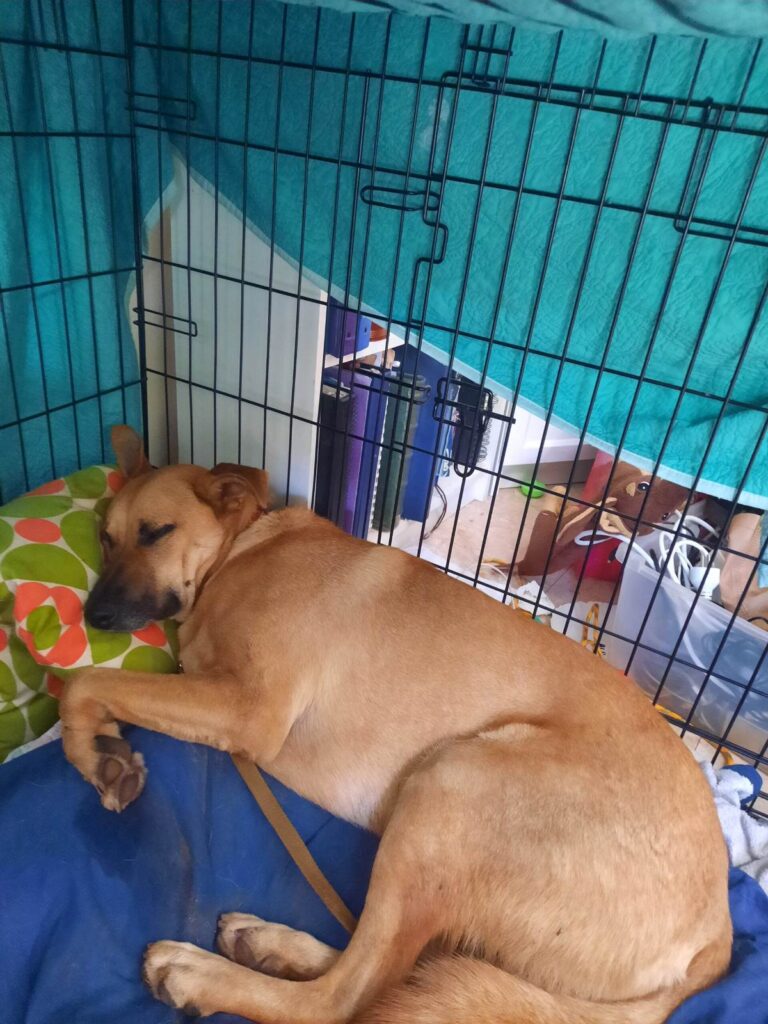
    A dog sleeping in a crate
    A dog sleeping in a crate. Our pick: MidWest 30-inch crate on Amazon.ca. Photo: IsraeliEditor54, via Wikimedia Commons, CC0

    Quick picks

    These are our picks from Amazon.ca, chosen on design, materials, suitability for a medium-sized spaniel, and the volume and consistency of buyer reviews. We have not lab-tested them ourselves.

    The best crates for cocker spaniels

    1. MidWest iCrate 30-inch: best overall

    The MidWest iCrate is the crate most trainers recommend for medium breeds, and the 30-inch size fits an adult English Cocker well. It comes with a divider panel, which is the feature that matters most for a puppy: you can make the space smaller during house training and move the panel back as your puppy grows, so one crate lasts a lifetime. It folds flat for the car, has a removable plastic tray for easy cleaning, and comes with a carry handle.

    • Good for: puppies, house training, home and travel
    • Watch for: some dogs chew the plastic tray edges; supervise early on

    Check the MidWest iCrate 30-inch on Amazon.ca →

    2. Amazon Basics folding metal crate: best value

    A simple, sturdy wire crate at a lower price. Choose the 30-inch size for an adult cocker. It folds quickly for storage and the wire sides give good airflow and visibility, which many spaniels prefer to a closed crate because they can see what is going on.

    • Good for: budget buyers, a second crate for the car or a relative’s house
    • Watch for: check which size and door configuration you are ordering

    Check the Amazon Basics folding metal crate on Amazon.ca →

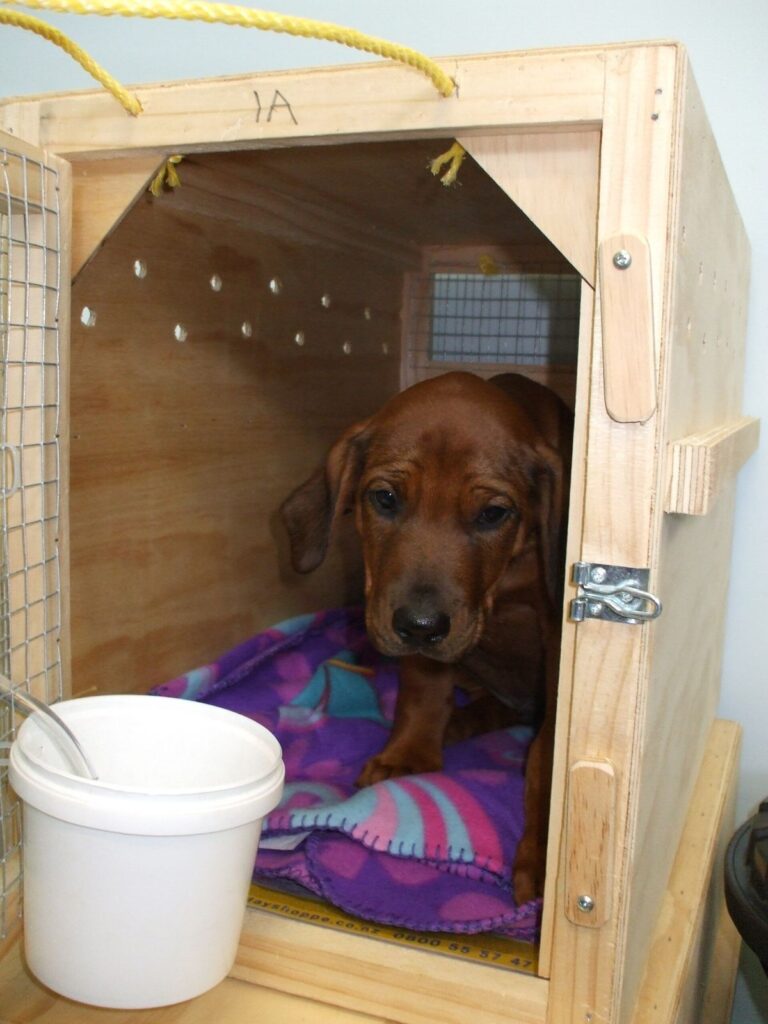
    A dog in a wooden crate
    A dog in a wooden crate. Our pick: Amazon Basics folding crate on Amazon.ca. Photo: Chachacha369, via Wikimedia Commons, CC BY-SA 3.0

    Comparison

    CrateSize for adult cockerDividerFolds flat
    MidWest iCrate30 inchYesYes
    Amazon Basics30 inchDepends on modelYes

    What size crate does an English Cocker need?

    Your dog should be able to stand up without ducking, turn around easily and lie flat on its side with its legs stretched out. For most English Cockers that means a crate about 30 inches long. Working-type cockers are often a little smaller and lighter, while some show-bred males are bigger; if your dog is at the top of the range, measure from nose to base of tail and add 10 cm.

    For a puppy, a crate that is too big defeats the purpose during house training, because a puppy will happily sleep at one end and toilet at the other. That is why a divider panel is worth having. Start with a space just big enough to lie down in and extend it as your puppy grows. Our house training guide explains how crate time fits into a toilet routine.

    How to crate train a cocker spaniel puppy

    1. Put the crate somewhere your puppy can see and hear the family, such as a corner of the kitchen.
    2. Add a washable bed or vet bedding and a safe chew. See our picks for the best dog bed.
    3. Throw treats into the crate and let your puppy walk in and out with the door open. Feed meals in the crate.
    4. Close the door for a few seconds while your puppy eats or chews, then open it before there is any fuss.
    5. Gradually build up the time, staying in the room at first, then leaving for short periods.
    6. Use the crate for naps and overnight, with a toilet break last thing at night and first thing in the morning.

    How long can a cocker stay in a crate?

    A young puppy needs toilet breaks every couple of hours in the day and may need one in the night at first. Adult dogs can sleep in their crate overnight, but daytime crating should be limited to a few hours at a time. English Cockers are active, sociable dogs bred to work alongside people, and a dog left for long stretches will become bored and frustrated. If you work long hours, a dog walker or daycare is a better answer than a longer crate stay. Read our exercise guide for how much activity they really need.

    Crate mistakes to avoid

    • Never use the crate as a punishment. It should always be a good place to be.
    • Do not leave collars or harnesses on in the crate, as they can catch on the wire.
    • Avoid releasing your puppy while it is crying; wait for a moment of quiet so it learns calm gets the door open.
    • Keep the crate out of direct sun and away from radiators.

    Wire or plastic crate?

    Wire crates fold flat, offer good ventilation and let your dog see out, which suits most spaniels at home. Covering three sides with a blanket creates a den feel for dogs that like more privacy. Plastic airline-style crates are better for air travel and feel more enclosed, but they are bulkier and hotter in summer. For car travel, a crash-tested crate or harness is the safest option; see our guide to car seat covers and car travel.

    Frequently asked questions

    What size crate for an English Cocker puppy?

    Buy the adult size (about 30 inches) with a divider panel and use the divider to keep the space small while your puppy is house training.

    Should I put a crate in the bedroom?

    Many owners find a puppy settles faster at night with the crate next to the bed for the first week or two. You can move it gradually to its permanent spot.

    Do cocker spaniels like crates?

    Most do when they are introduced slowly and the crate is linked with food, chews and rest. Many adults choose to nap in theirs with the door open.

    Should I cover my dog’s crate?

    A light cover over the top and three sides helps some dogs settle. Make sure there is plenty of airflow and that your dog cannot pull the fabric in and chew it.

    Featured photo: Chaoticfluffy, via Wikimedia Commons, CC BY-SA 3.0

  • How to House Train an English Cocker Spaniel Puppy

    How to House Train an English Cocker Spaniel Puppy

    Updated November 2026. English Cocker Spaniel Guide is an independent site, not affiliated with any breed club or kennel club. Some links are affiliate links: as an Amazon Associate we earn from qualifying purchases.

    House training is usually the first big project with a new English Cocker Spaniel puppy. Cockers are clever and keen to please, and most learn quickly with a consistent routine, but they are also busy, easily distracted puppies with small bladders. This guide sets out a proven routine, explains how crate training helps, and covers accidents, night-time toileting and common setbacks.

    How long does house training take?

    Every puppy is different. Many cocker puppies are reliably house trained somewhere between four and six months of age, but some take longer, and occasional accidents are normal well into the first year, especially during adolescence, changes of routine or bad weather. Consistency matters far more than speed.

    The basic routine

    Puppies need to toilet frequently, and they usually go at predictable times. Take your puppy outside to the same spot:

    • As soon as it wakes up, from overnight sleep and every nap
    • Within a few minutes of eating or drinking
    • After play or excitement
    • Before bed and before being left alone
    • At least every one to two hours while awake at first

    Go out with your puppy every time, stand quietly, and wait. When it toilets, praise calmly and give a small treat right away, within a second or two, so it links the reward to the action. A short cue word such as “be quick”, said as it starts to go, can later help it toilet on request.

    A black and white cocker spaniel puppy
    A black and white cocker spaniel puppy. Our pick: MidWest crate on Amazon.ca. Photo: Carlulu, via Wikimedia Commons, Public domain

    Using a crate to help

    Dogs naturally avoid soiling where they sleep, so a correctly sized crate helps your puppy learn bladder control. Use a divider to keep the space just big enough to stand, turn and lie down; if it is too big, a puppy may toilet in one corner. Make the crate a comfortable, happy place with a bed and safe chews, and never use it as punishment.

    Puppies should not be crated for long periods during the day. Young puppies can only hold on for a short time; a common guideline is roughly an hour per month of age plus one, up to a few hours, but every puppy is different. If you work long hours, arrange for someone to let your puppy out.

    Night-time toileting

    Most young puppies need to go out at least once during the night for the first weeks. Keep the crate near your bed so you hear your puppy stirring, and take it straight out when it wakes. Keep night trips calm and boring: no play, minimal talking, then straight back to bed. Gradually, your puppy will sleep through. Avoid big drinks late in the evening, but never restrict water during the day.

    Dealing with accidents

    1. If you catch your puppy in the act, calmly interrupt it with a cheerful noise and take it outside straight away. Praise if it finishes outside.
    2. If you find an accident afterwards, simply clean it up. Never punish, scold or rub a puppy’s nose in it; this only teaches it to hide from you when toileting.
    3. Clean thoroughly with an enzyme cleaner made for pet accidents. Ordinary cleaners can leave scent that draws the puppy back to the same spot. Avoid ammonia-based products, which smell similar to urine.
    4. Ask yourself what you could change: more frequent trips outside, closer supervision or a smaller crate space.

    Supervision is the secret

    Most accidents happen when a puppy is out of sight. When your puppy is loose in the house, keep it in the same room as you, use baby gates, or attach a light lead to your belt. When you cannot supervise, use the crate or a puppy-proof pen. Watch for signals such as sniffing the floor, circling or heading for a corner, and take your puppy out immediately.

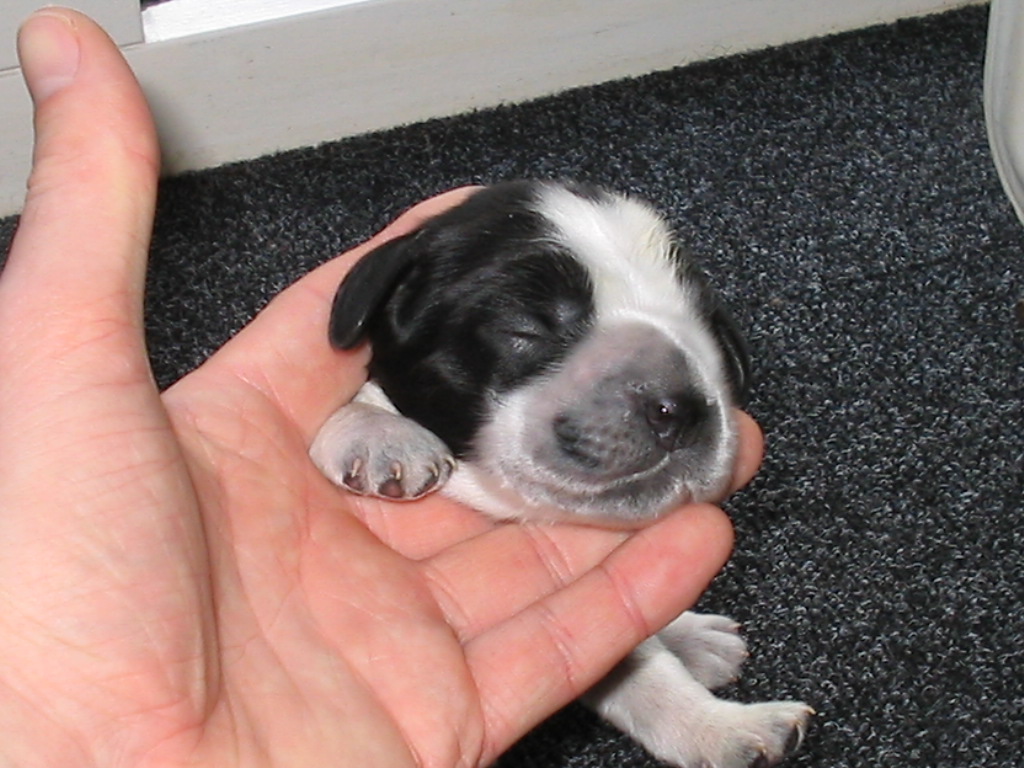
    A roan cocker spaniel puppy
    A roan cocker spaniel puppy. Photo: Michiel1972 at Dutch Wikipedia, via Wikimedia Commons, CC BY-SA 3.0

    Should I use puppy pads?

    Puppy pads can be useful if you live in an apartment high above the ground or cannot get outside quickly, but they can teach a puppy that toileting indoors is acceptable. If you use them, place them near the door and gradually move them outside. Where possible, go straight to outdoor training.

    Common setbacks

    Excitement or submissive urination

    Some young cockers dribble urine when greeting people or when nervous. Keep greetings calm and low-key, greet outdoors, and avoid looming over the puppy. Most grow out of it. Never punish it.

    Regression in adolescence

    A previously reliable adolescent may have accidents, especially when distracted or stressed. Go back to the basics for a few weeks.

    Accidents in an adult dog

    Sudden house soiling in a previously reliable adult can signal a urinary tract infection, kidney problems or other health issues. See your vet. Our health guide explains why increased drinking and urination should be checked promptly.

    Bad weather

    Many cockers dislike rain or snow. Go out with your puppy, keep it brief, and reward quickly. A covered area near the door helps, and a drying coat or towel by the door makes muddy days easier.

    Sample day for an 8- to 12-week-old puppy

    TimeActivity
    On wakingStraight outside to toilet
    BreakfastMeal, then outside
    Mid-morningPlay, toilet, nap in crate
    LunchMeal, then outside
    AfternoonShort training, socialisation, toilet, nap
    DinnerMeal, then outside
    EveningCalm play, toilet, settle
    BedtimeLast toilet trip, then crate
    OvernightOne or two calm toilet trips as needed

    Frequently asked questions

    How do I know my puppy needs to go out?

    Sniffing the floor, circling, whining, going to the door or suddenly leaving play are common signs.

    Can I leave my puppy alone during the workday?

    Young puppies cannot hold on for a full workday. Arrange for a friend, family member or dog walker to visit.

    Why does my puppy toilet right after coming inside?

    It probably did not finish outside. Stay out a little longer, wait quietly, and reward when it goes.

    Are boys or girls easier to house train?

    Both learn equally well. Consistency, routine and supervision matter far more than sex.

    Featured photo: No machine-readable author provided. Kessa Ligerro~commonswiki assumed (based on, via Wikimedia Commons, CC BY-SA 3.0

  • English Cocker Spaniel Puppy Checklist: What You Need and the First Weeks

    English Cocker Spaniel Puppy Checklist: What You Need and the First Weeks

    Updated November 2026. English Cocker Spaniel Guide is an independent site, not affiliated with any breed club or kennel club. Some links are affiliate links: as an Amazon Associate we earn from qualifying purchases.

    Bringing home an English Cocker Spaniel puppy is exciting, and a little preparation makes the first weeks much smoother for everyone. This checklist covers what to buy before the big day, how to puppy-proof your home, what the first night and first week look like, and the routines that set a young cocker up for life. We link to our detailed gear guides where it helps, so you can choose products that suit a growing spaniel.

    Before your puppy comes home

    • Find a veterinarian and book a check-up for the first few days
    • Book a puppy class that uses reward-based training
    • Choose a name and agree on house rules and cue words with everyone at home
    • Ask the breeder what food the puppy is eating and buy the same to start
    • Set up a quiet sleeping area with a crate and bed
    • Puppy-proof the rooms your puppy will use

    Shopping checklist

    ItemWhy you need itOur pick
    CrateA safe den for sleep and house trainingMidWest 30-inch crate with divider
    BedComfort in the crate and around the houseEHEYCIGA orthopedic bed
    BowlsNarrow-topped bowls keep long ears out of food and waterTrixie long-ear bowl
    Harness and leadComfortable walking and trainingrabbitgoo harness
    Collar and ID tagID tag with your phone numberReflective collar
    Training treatsSmall, soft rewards for trainingCrumps’ Naturals Mini Trainers
    Chew toysTeething relief and an outlet for chewingKONG Classic
    Brush and combDaily handling and gentle groomingWahl slicker brush
    Nail clippersShort, regular nail trimsCandure nail clippers
    Ear cleanerGetting puppy used to ear careVirbac Epi-Otic
    Enzyme cleanerRemoves accident odours so puppy does not return to the spotAny pet-safe enzyme cleaner

    See our full guides to the best crates, beds, spaniel bowls, harnesses and chew toys for more options.

    A golden English Cocker Spaniel puppy
    A golden English Cocker Spaniel puppy. Our pick: MidWest crate on Amazon.ca. Photo: Lobubo, via Wikimedia Commons, Public domain

    Puppy-proofing your home

    • Move electrical cords, cables and chargers out of reach
    • Store shoes, socks, children’s toys and remote controls away; cockers love to carry things
    • Lock away cleaning products, medications and anything toxic, including chocolate, grapes, raisins and xylitol
    • Use baby gates to keep puppy in safe areas
    • Check the yard for gaps in fences, toxic plants and anything sharp
    • Keep bins lidded and out of reach

    The first day and night

    Bring your puppy home early in the day if you can, so it has time to explore before bedtime. Keep things calm: a few family members, gentle introductions to the house and garden, and lots of chances to sleep. Show the puppy where to toilet and praise it quietly when it goes in the right place.

    At night, many puppies settle better with the crate beside your bed at first, so they can hear and smell you. Expect to take your puppy out to toilet during the night for the first weeks. Keep night outings boring: out, toilet, praise, back to bed.

    The first week

    1. Vet visit: a health check, vaccination plan and parasite control.
    2. Routine: regular meals, toilet trips after sleeping, eating and playing, and plenty of naps. Puppies need a lot of sleep.
    3. House training: start straight away; see our house training guide.
    4. Handling: gently touch ears, paws and mouth every day with treats, so grooming and vet visits are easy later.
    5. Short training sessions: name, sit and coming when called, a few minutes at a time.
    6. Alone time: start with very short periods so your puppy learns to settle without you.
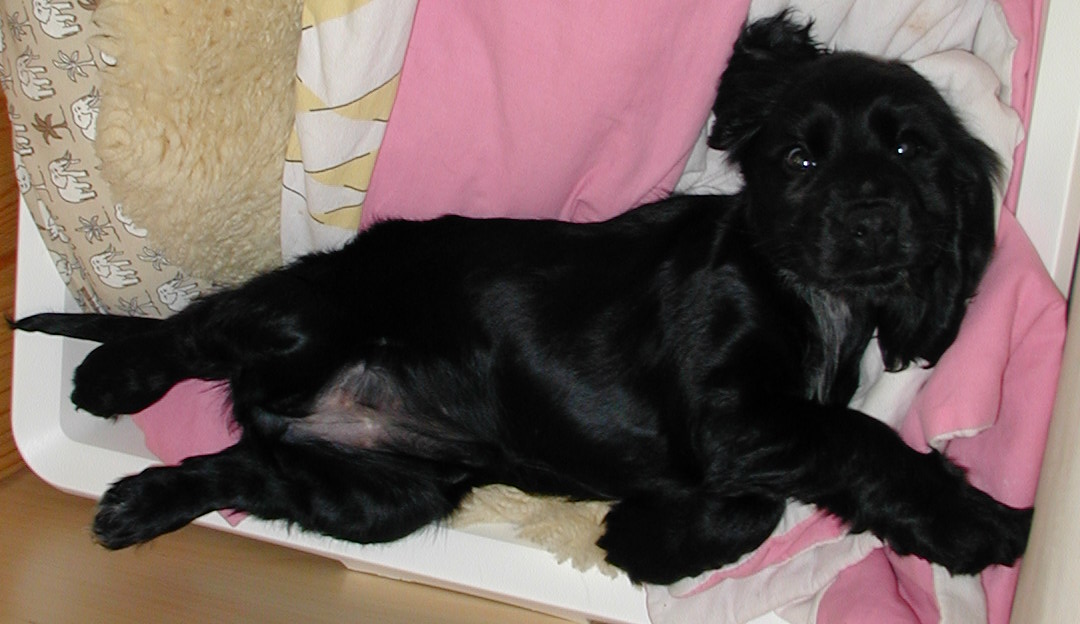
    A black English Cocker Spaniel puppy
    A black English Cocker Spaniel puppy. Our pick: KONG Classic on Amazon.ca. Photo: Unknown, via Wikimedia Commons, CC BY-SA 3.0

    Socialisation: the most important job

    Between roughly three and fourteen weeks of age, puppies are especially open to new experiences. Gentle, positive exposure to different people, friendly vaccinated dogs, sounds, surfaces, car rides, grooming and household life during this window helps produce a confident adult. Go at your puppy’s pace, pair new things with treats and play, and avoid overwhelming situations. Your vet can advise on when it is safe to visit public places based on your puppy’s vaccinations.

    Feeding your puppy

    Keep feeding the breeder’s food at first, then change gradually if you want to switch. Puppies usually need three or four small meals a day, reducing as they grow. Use part of the daily food allowance for training rewards so your puppy does not gain too much weight. Our feeding guide covers this in more detail.

    Exercise for a growing cocker

    Puppies need play and exploration, but not long, forced walks. Short outings, free play in a safe area and sniffing games are ideal. Build up exercise gradually as your puppy grows; see our exercise guide.

    Common puppy challenges

    Mouthing and nipping

    Cocker puppies explore with their mouths. Redirect nipping onto a chew toy, pause play if teeth touch skin, and make sure your puppy gets enough sleep; overtired puppies bite more. Avoid rough hand games.

    Stealing and carrying

    Many cockers love to pick up socks and shoes. Instead of chasing, teach a trade: offer a treat for the item, then give it back sometimes so your puppy learns that giving things up is rewarding. This helps prevent resource guarding later.

    Crying in the crate

    Make the crate a happy place with meals, chews and short practice sessions during the day. At night, settle your puppy beside you at first and gradually move the crate if you wish. If your puppy cries in the night, it may need the toilet; take it out calmly, then straight back to bed.

    Frequently asked questions

    What size crate does an English Cocker puppy need?

    A crate around 30 to 36 inches long suits most adult English Cockers. Buy the adult size and use a divider to make it smaller while your puppy is young.

    When can my puppy go for walks?

    Ask your vet. Many advise waiting until a set time after the final puppy vaccinations before walking in public areas, while still socialising your puppy safely before then.

    How often does a puppy need to go out to toilet?

    Very often: after waking, eating, drinking and playing, and every hour or two when awake at first.

    When should I start grooming my puppy?

    From the first week, with gentle brushing, handling of ears and paws, and short sessions rewarded with treats.

    Featured photo: No machine-readable author provided. Michiel1972 assumed (based on copyright cla, via Wikimedia Commons, CC BY-SA 3.0

  • How to Find a Responsible English Cocker Spaniel Breeder

    How to Find a Responsible English Cocker Spaniel Breeder

    Updated November 2026. English Cocker Spaniel Guide is an independent site, not affiliated with any breed club or kennel club. Some links are affiliate links: as an Amazon Associate we earn from qualifying purchases.

    Where your puppy comes from is the single biggest factor in how healthy and well-adjusted it will be. A responsible breeder health-tests the parents, raises puppies in a home environment, socialises them carefully and stays in touch for the life of the dog. A puppy mill or casual backyard breeder does none of that, and the difference often shows up later as health problems, anxiety or behaviour issues. This guide explains how to find a good English Cocker Spaniel breeder, the questions to ask, and the warning signs to walk away from.

    What a responsible breeder does

    • Health-tests both parents for the conditions relevant to the breed and shows you the certificates
    • Breeds only a small number of litters, and plans each one carefully
    • Raises puppies in the home, with exposure to everyday sights, sounds and people
    • Lets you meet the mother, and often the father or his details, and see where the puppies live
    • Asks you as many questions as you ask them, because they care where their puppies go
    • Provides a written contract, registration papers, vaccination and deworming records, and a health guarantee
    • Will take the dog back at any point in its life if you can no longer keep it
    Black English Cocker Spaniel puppies
    Black English Cocker Spaniel puppies. Photo: Unknown, via Wikimedia Commons, CC BY-SA 3.0

    Health testing: what to ask for

    Ask to see results for both parents, not just a verbal reassurance. For English Cockers, commonly used tests include DNA tests for progressive retinal atrophy (prcd-PRA), familial nephropathy (FN) and adult-onset neuropathy (AON), hip evaluations, and regular eye examinations by a veterinary ophthalmologist. Breeders of parti-colours and roans often have puppies hearing-tested. Recommendations change over time, so check the current advice of your national kennel club. Our health guide explains each test.

    Many results can be checked independently in public databases such as the Orthopedic Foundation for Animals (OFA) in North America, using the dog’s registered name or number.

    Questions to ask a breeder

    1. How long have you been breeding English Cockers, and why this breed?
    2. Are these show or working lines, and what are the parents like at home?
    3. Which health tests have the parents had, and can I see the results?
    4. How have the puppies been socialised so far?
    5. At what age do puppies go home? (Usually around eight weeks or older.)
    6. What food are they eating, and what vaccinations and deworming have they had?
    7. What does your contract include, and will you take the dog back if needed?
    8. Can I contact people who have bought puppies from you before?

    A good breeder will also want to know about your home, your schedule, your experience with dogs and how you plan to exercise and train a lively spaniel. If they ask nothing at all, be cautious.

    English Cocker Spaniel puppies with toys
    English Cocker Spaniel puppies with toys. Photo: Joseywales1961, via Wikimedia Commons, CC BY-SA 4.0

    Red flags

    • Several breeds available, or puppies always available with no waiting list
    • Reluctance to show you the mother or where the puppies are raised
    • Meeting in a parking lot or offering to deliver a puppy you have not seen
    • No health test results, or vague answers such as “the vet checked them”
    • Puppies going home before eight weeks
    • Pressure to pay a deposit immediately
    • Prices that seem unusually low, or advertisements with stock photos

    Avoiding online scams

    Puppy scams are common: fake websites and social media accounts advertise puppies that do not exist, take deposits and “shipping fees”, then disappear. Protect yourself by visiting in person or holding a live video call with the breeder and puppies, searching the breeder’s name and photos online, paying by a traceable method, and never paying for a puppy you have not confirmed exists. If a deal seems too good to be true, it is.

    Show line or working line?

    Decide which type suits your lifestyle before you contact breeders. Show-bred English Cockers tend to have more coat and a slightly calmer temperament; working-bred cockers are usually more driven and need more exercise and training. Our guide to show vs working cockers explains the differences.

    Where to find good breeders

    • Your national kennel club’s breeder listings (in Canada, the Canadian Kennel Club)
    • Regional and national breed clubs, which often keep breeder directories and codes of ethics
    • Dog shows, field trials and working tests, where you can meet dogs and breeders in person
    • Recommendations from owners whose dogs you like

    Being listed in a directory is a starting point, not a guarantee. Still ask every question above.

    Waiting lists and timing

    Good breeders often have a waiting list, sometimes of many months, because they breed only a few litters. Use the wait to prepare: research training, find a vet and a puppy class, and get your puppy supplies ready.

    Consider adoption too

    Adult English Cockers and cocker mixes sometimes need new homes through breed rescues and shelters. An adult dog can be a wonderful choice, especially if you would rather skip the puppy stage. See our guide to English Cocker rescue and adoption.

    Visiting the litter

    When you visit, notice how the puppies and their mother behave. Puppies should be clean, curious and confident, approaching visitors happily, and the mother should be friendly and relaxed. The area should be clean and the puppies should have toys, different surfaces and household noise around them. Watch how the breeder handles the dogs: calm, kind handling is a good sign. Do not be surprised if a breeder asks you to wash your hands or limits handling of very young puppies; that is about protecting them from infection.

    Frequently asked questions

    How much does an English Cocker puppy cost?

    Prices vary widely by region, lines and breeder. Well-bred, health-tested puppies cost more than puppies from untested parents, but they are far more likely to be healthy. See our guide to the cost of ownership.

    Should I choose a male or a female?

    Both make great pets. Males are often slightly larger; individual temperament matters more than sex. Ask the breeder to help match a puppy to your home.

    At what age should a puppy go home?

    Usually around eight weeks or a little older, once it has had time with its mother and littermates.

    What should come with my puppy?

    Registration papers, a written contract, vaccination and deworming records, health test results for the parents, and information on diet and care.

    Featured photo: User:Michiel1972, via Wikimedia Commons, CC BY-SA 3.0