Updated November 2026. English Cocker Spaniel Guide is an independent site, not affiliated with any breed club or kennel club. Some links are affiliate links: as an Amazon Associate we earn from qualifying purchases.
Few breeds come in as many attractive colours as the English Cocker Spaniel. Glossy black, rich golden and chocolate liver solids, crisp parti-colours, and the speckled roans that many people think of as the classic cocker look all belong to the same breed. This guide explains each colour group, the patterns within them, how colours can change as puppies grow, and what colour does and does not tell you about a dog.
The three main colour groups
English Cocker colours fall into three broad families: solid (self) colours, parti-colours and roans. Each can also come with tan markings. Breed standards describe these colours slightly differently in different countries, so if you plan to show, check the current standard of your kennel club.
| Group | What it looks like | Examples |
|---|---|---|
| Solid (self) colours | One colour all over; a small amount of white on the chest is generally tolerated in many standards | Black, liver, red, golden |
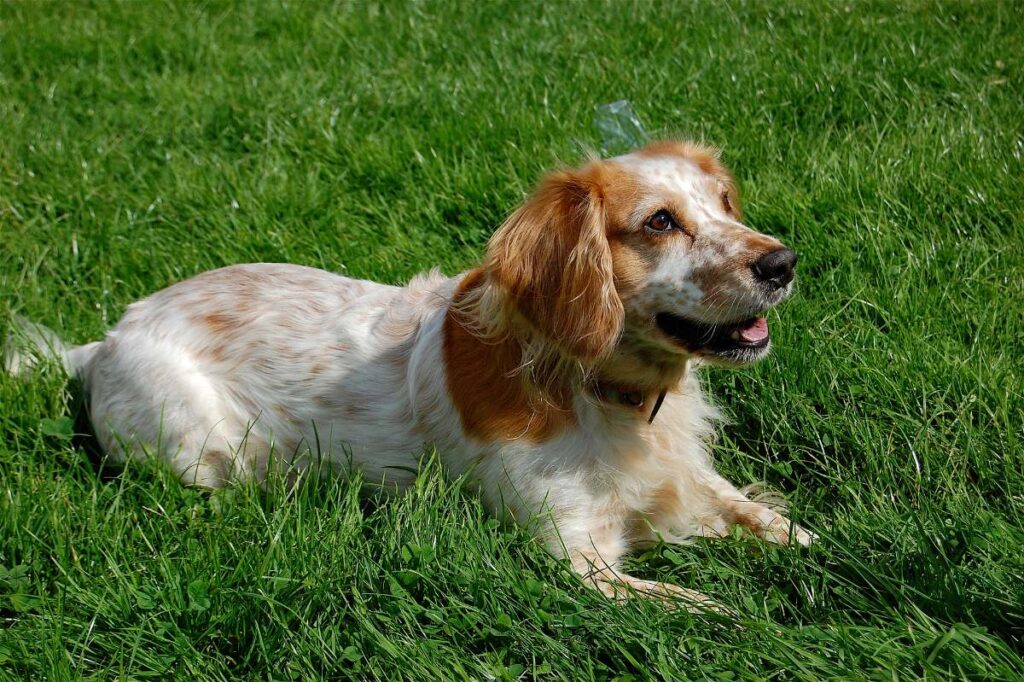
| Parti-colours | Clearly defined patches of colour on a white background | Black and white, liver and white, orange and white, lemon and white |
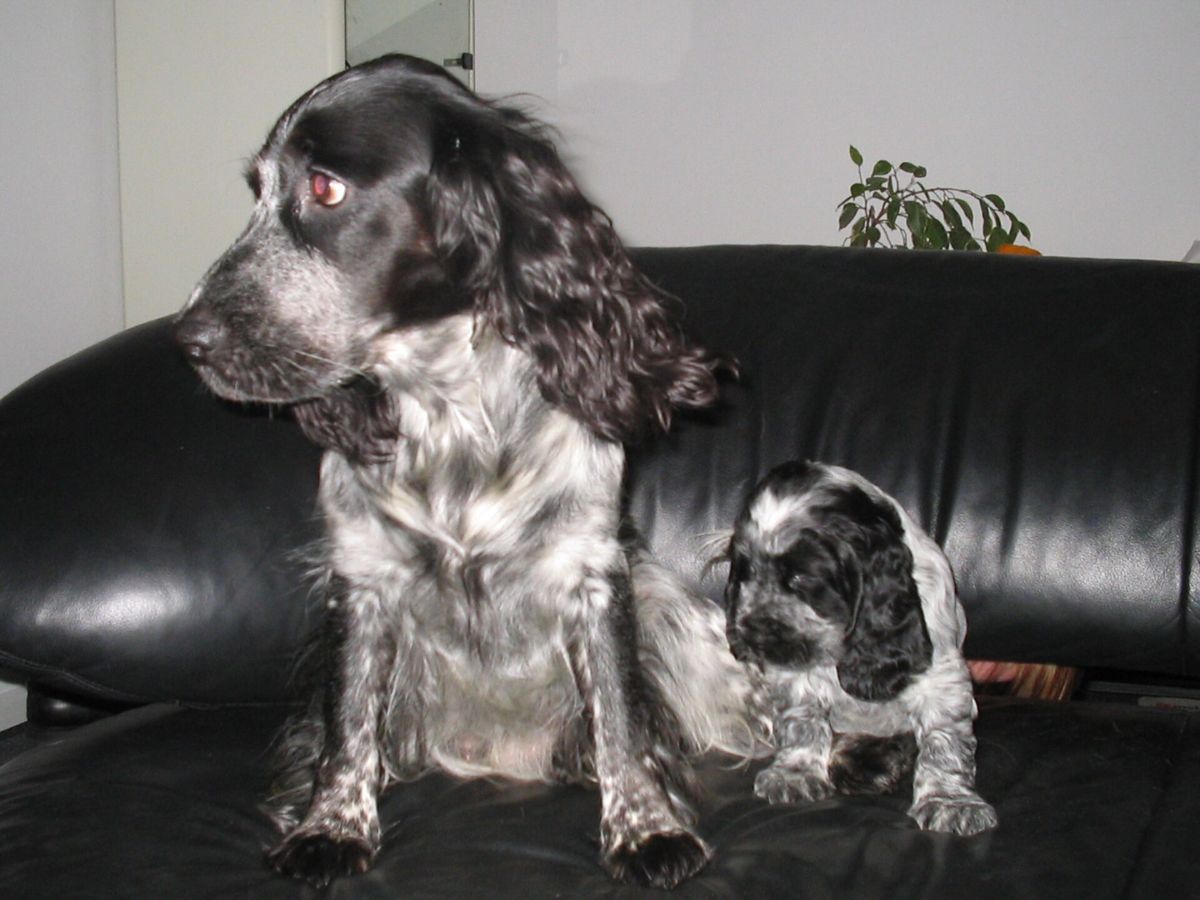
| Roans | Coloured hairs evenly intermingled with white, giving a speckled or blended look | Blue roan, liver roan, orange roan, lemon roan |
| With tan | Any of the above with tan points on the eyebrows, muzzle, chest and legs | Black and tan, blue roan and tan, black, white and tan |
Solid colours
Black
Solid black English Cockers have a deep, glossy coat and are one of the most popular colours. They may show a little white on the chest.
Golden and red
Golden ranges from pale lemon through to deep red. Solid red and golden cockers are especially popular as family pets and are often what people picture when they think of a cocker spaniel. The shade can deepen or lighten with age and season.
Liver
Liver is the breed term for chocolate brown. Liver dogs have brown noses, lips and eye rims to match, and their eyes are often a lighter hazel.
Black and tan, liver and tan
Tan points appear in the same places as on a Dobermann: over the eyes, on the cheeks and muzzle, on the chest, on the legs and under the tail.

Parti-colours
Parti-colours have clear, distinct patches of colour on a white background. Black and white, liver and white, orange and white and lemon and white are all seen, and any of them can have tan markings, which makes a tricolour such as black, white and tan. The amount of white varies a great deal from dog to dog; some are mostly white with a few patches, others mostly coloured with white on the face and chest.
Roans
Roans are the signature colour of the English Cocker. In a roan, coloured and white hairs are mixed together over the white areas of the coat, so the dog looks speckled or blended rather than patched. The roan colour is named after the base colour mixed with the white:
- Blue roan: black mixed with white, giving a smoky blue-grey look.
- Liver roan: brown mixed with white.
- Orange roan: orange mixed with white.
- Lemon roan: pale yellow mixed with white.
- Roan and tan: any roan with tan points, for example blue roan and tan.
Roan puppies are often born looking almost white with coloured patches, and the roaning appears and deepens over the first weeks and months. Many owners are surprised by how much a roan puppy changes as it grows.

Do colours change as puppies grow?
Yes, often. Roaning develops over the first months, golden puppies can darken or lighten, and coats can look different after the puppy coat is replaced by the adult coat. Clipping can also make a coat look lighter or darker, because the undercoat may be a different shade from the longer feathering. Ask the breeder what the parents looked like as puppies and as adults if you want an idea of how a puppy may turn out.
Does colour affect temperament or health?
There is a lot of folklore about cocker colours, including the long-standing claim that solid-coloured cockers are more prone to behaviour problems than parti-colours. Studies have reported differences between colour groups, but temperament depends far more on breeding, early socialisation and training than on colour. Choose a puppy based on the health and temperament of the parents, not on coat colour alone.
One genuine colour-related issue is deafness. As in many breeds, congenital deafness is linked to extensive white in the coat, so many breeders of parti-colours and roans have puppies hearing-tested (BAER tested). Ask about this if you are buying a puppy with a lot of white. See our health guide for other recommended tests.
Grooming different colours
Colour makes little difference to grooming, but a few practical points help. Dark coats can fade or turn reddish in strong sun; light coats show tear stains and mud more; roans can look patchy straight after clipping until the coat grows back. A good brush and comb and regular trims keep any colour looking its best. Our grooming guide explains the full routine.
English Cocker colours vs American Cocker colours
American Cocker Spaniels are grouped differently, into black, ASCOB (any solid colour other than black) and parti-colours, and roans are far less common in the breed. If you are trying to tell the two breeds apart, head shape and size are more reliable clues than colour. See English vs American Cocker Spaniel.
Frequently asked questions
What is the most common English Cocker colour?
Solid golden or red, solid black and blue roan are among the colours seen most often, though popularity varies by country and by show or working lines.
What is a blue roan cocker spaniel?
A dog with black and white hairs mixed together over the white areas of the coat, which looks blue-grey from a distance. Many blue roans also have tan markings.
Is a tricolour cocker spaniel rare?
No. Tricolours, such as black, white and tan, are a recognised and fairly common colour combination.
Should I choose a puppy by colour?
Colour is a fine way to choose between equally healthy, well-bred puppies, but health testing and the temperament of the parents matter far more.
Featured photo: M.Minderhoud, via Wikimedia Commons, CC BY-SA 3.0
Leave a Reply