Updated November 2026. English Cocker Spaniel Guide is an independent site, not affiliated with any breed club or kennel club. Some links are affiliate links: as an Amazon Associate we earn from qualifying purchases.
English Cocker Spaniels love their food, and many are experts at convincing their owners they are starving. Feeding a cocker well means choosing a complete diet, getting portion sizes right for its age and activity, keeping treats under control, and making mealtimes work for a dog with very long ears. This guide covers the essentials. For specific advice on your dog’s diet, especially if it has health conditions, talk to your veterinarian.
Choosing a food
There is no single best food for every cocker. What matters most is that the diet is complete and balanced for your dog’s life stage, that your dog does well on it, and that you can feed the right amount consistently. Look for:
- A statement that the food is complete and balanced for your dog’s life stage (puppy, adult or all life stages), often referencing AAFCO nutrient profiles in North America
- A manufacturer that employs qualified nutritionists and does feeding trials or quality testing
- A food your dog digests well, with good stool quality, energy and coat condition
Kibble, wet food, fresh-cooked commercial diets and raw diets all have supporters. If you are interested in home-cooked or raw feeding, work with your vet or a veterinary nutritionist, because it is easy to create deficiencies and raw diets carry food safety risks for pets and people.
A note on grain-free diets
Grain-free diets became popular in recent years. In North America, regulators and veterinary cardiologists have investigated a possible link between some diets, particularly certain grain-free and legume-rich formulas, and a heart condition called dilated cardiomyopathy (DCM) in dogs of breeds not typically prone to it. The picture is not fully understood. Unless your dog has a diagnosed reason to avoid grains, many vets suggest choosing a well-formulated diet that includes grains. Ask your vet about current advice.
How much should an English Cocker eat?
Feeding guides on food packages are a starting point, but individual needs vary widely with age, activity, neutering and metabolism. A typical adult English Cocker weighs about 26 to 34 lb (12 to 15 kg). As a rough illustration, a moderately active, neutered adult of about 30 lb (13.6 kg) might need somewhere in the region of 750 to 1,000 calories a day, while a very active working cocker may need considerably more, and a quiet senior less. Use these figures only as a guide, and adjust based on body condition.
| Life stage | Meals per day | Notes |
|---|---|---|
| 8 to 12 weeks | 4 | Small, regular meals of puppy food |
| 3 to 6 months | 3 | Continue puppy food; adjust as the puppy grows |
| 6 to 12 months | 2 | Transition to adult food around 12 months, or as advised by your vet |
| Adult | 2 | Measure portions; adjust for activity |
| Senior | 2 | May need fewer calories; ask your vet about senior diets |
Body condition: the best guide
Weigh your cocker regularly and learn to body-condition score. At a healthy weight, you should be able to feel the ribs easily under a thin layer of fat without pressing, see a waist when looking down from above, and see a slight tuck-up behind the ribs from the side. A cocker’s feathering can hide extra weight, so use your hands, not just your eyes. If your dog is gaining, reduce portions by around 10 percent and recheck in a few weeks.
Treats and training rewards
Treats should make up no more than about 10 percent of your dog’s daily calories. Use small, soft training treats broken into tiny pieces, use part of your dog’s daily kibble for training, and reduce meal size on heavy training days. Many vegetables, such as carrot, green beans and cucumber, make good low-calorie snacks.
Foods that are dangerous for dogs
- Chocolate, coffee and caffeine
- Grapes, raisins, currants and sultanas
- Onions, garlic, leeks and chives
- Xylitol (in sugar-free gum, some peanut butters and baked goods)
- Macadamia nuts
- Alcohol
- Cooked bones, which can splinter
- Fatty scraps, which can trigger pancreatitis
If your dog eats something toxic, contact your vet or an animal poison control service immediately.
Mealtimes and long ears
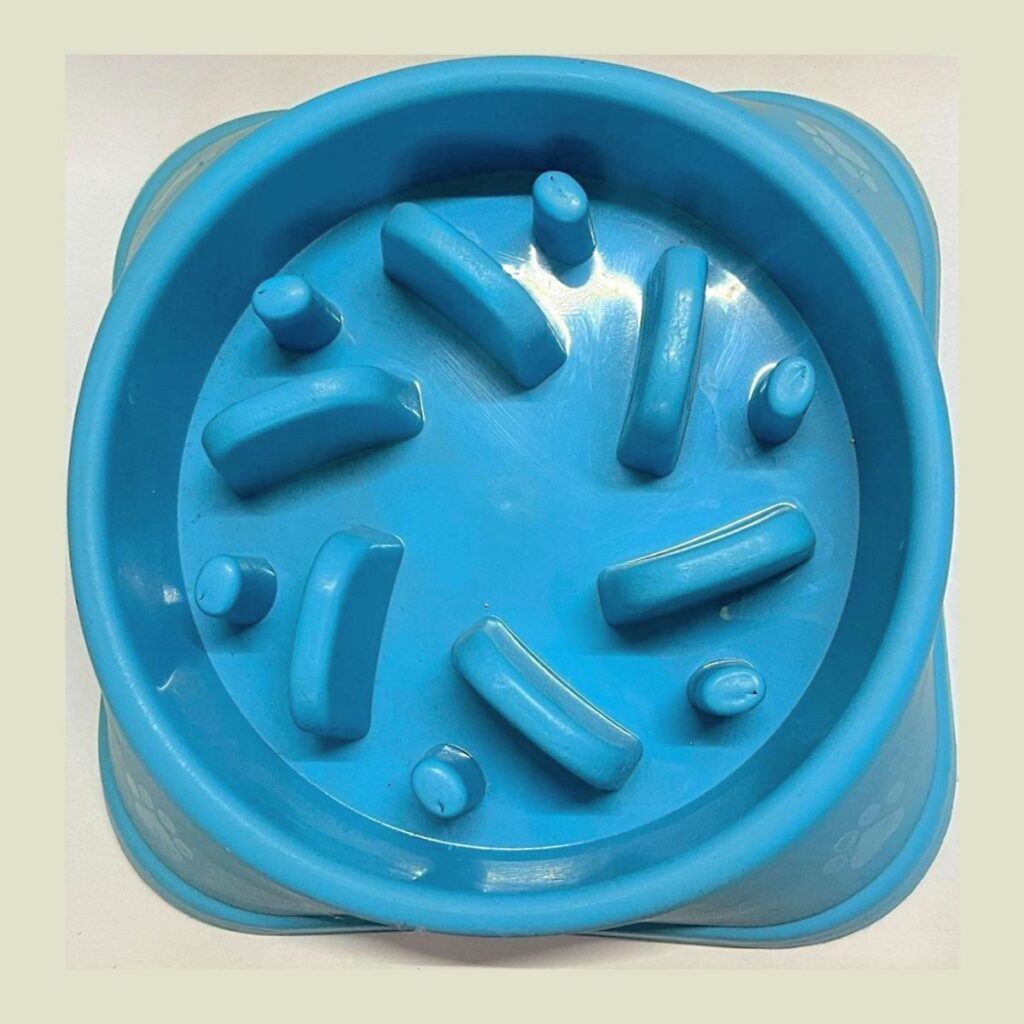
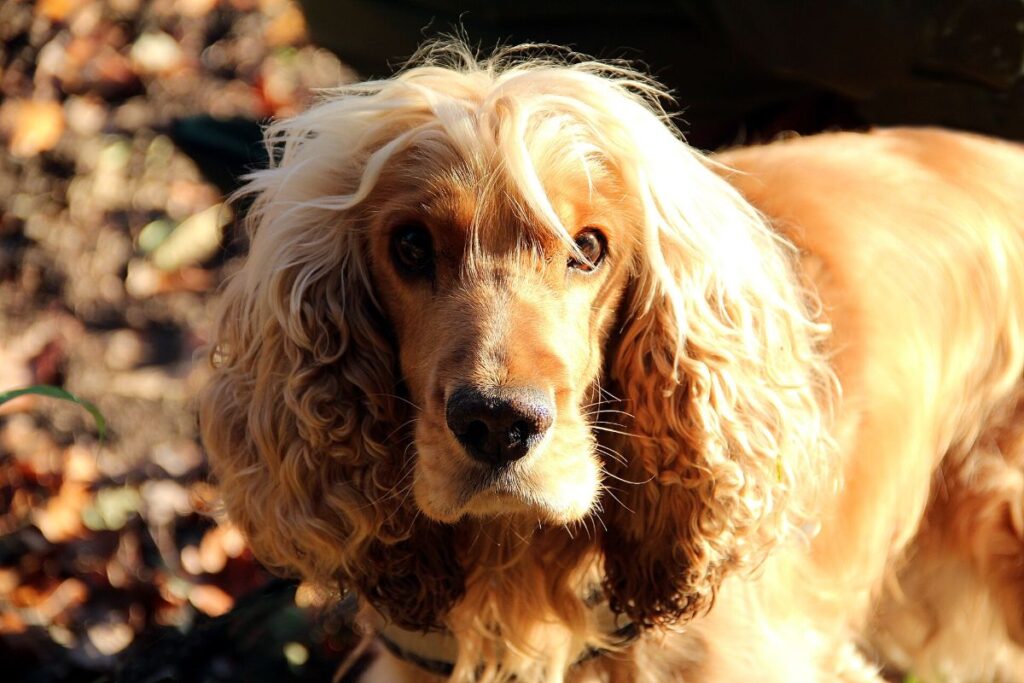
Long ears dangle into bowls, getting soaked in water and coated in food, which leads to matted feathering and can contribute to ear problems. A narrow, deep spaniel bowl keeps the ears outside while your dog eats and drinks. Fast eaters do well with a slow feeder or puzzle feeder, which turns meals into enrichment and slows gulping.
Feeding routine tips
- Feed at regular times and pick up uneaten food after 15 to 20 minutes.
- Measure every meal with a cup or, better, a kitchen scale.
- Change foods gradually over about a week to avoid stomach upsets.
- Provide fresh water at all times.
- Avoid heavy exercise immediately before and after big meals.
- Keep bins and counters clear; cockers are determined scavengers.
Feeding working and very active cockers
A cocker that works in the field, competes in dog sports or runs for hours a day burns far more energy than a family pet. Many owners of working dogs feed a performance diet with higher protein and fat during the working season and reduce portions in the off-season. Feed the main meal after work rather than before, offer water regularly during long days, and carry a small snack for very long outings. Watch weight closely as activity changes through the year, and ask your vet whether a performance food is appropriate for your dog.
Frequently asked questions
How many times a day should I feed my English Cocker?
Most adults do well on two meals a day. Puppies need three or four smaller meals.
Why is my cocker always hungry?
Cockers are food-motivated by nature. If your dog is at a healthy weight and eating a complete diet, begging is usually habit rather than hunger. If appetite changes suddenly, see your vet.
Should my cocker eat grain-free food?
Most dogs do not need grain-free food. Ask your vet about current research on diet and heart health before choosing one.
Can English Cockers eat fruit and vegetables?
Many are safe in moderation, such as apple slices without seeds, carrots, blueberries and green beans. Avoid grapes, raisins, onions and garlic.
Featured photo: Tyne & Wear Archives & Museums, via Wikimedia Commons, No restrictions
Leave a Reply