Updated November 2026. English Cocker Spaniel Guide is an independent site, not affiliated with any breed club or kennel club. Some links are affiliate links: as an Amazon Associate we earn from qualifying purchases.
A reliable recall is the key to giving an English Cocker Spaniel the off-lead freedom it loves. It is also one of the hardest things to teach the breed, because a cocker’s nose is constantly pulling it toward rabbits, birds and fascinating smells. The good news is that cockers are clever, food-loving and eager to work with their people, so with the right approach they can learn an excellent recall. This step-by-step guide shows you how.
Why recall is tricky for spaniels
Spaniels were bred to hunt within gunshot range of their handler, find scent and flush game. That means they are naturally inclined to stay reasonably close, which helps, but they are also highly motivated by scent and movement. A cocker on a hot scent trail can become so absorbed that it genuinely does not hear you. Recall training is about making coming back to you more rewarding than anything else, and practising until it becomes a habit.
What you need
- High-value training treats, such as soft, smelly pieces your dog loves
- A treat pouch so rewards are always within reach
- A long line of around 10 to 15 metres for safe practice
- A well-fitted harness to attach the long line to (never to a collar)
- A favourite toy, ideally one used only for recall games
- Optionally, a gundog whistle for a consistent recall signal
Step-by-step recall training
Step 1: Charge the recall cue
Choose a cue you will use only for recall, such as “Come!” or a whistle pattern. At home, with no distractions, say the cue and immediately give your dog a delicious treat. Repeat many times over several days so the cue predicts something wonderful.
Step 2: Recall indoors
When your dog is a few steps away and not too distracted, give the cue in a happy voice. Reward generously when it reaches you, take gentle hold of the collar or harness, then release it with an “okay” so it does not learn that coming back always ends the fun.
Step 3: Recall in the garden
Practise in a secure garden, then add mild distractions such as a toy on the ground or a family member walking around. Keep sessions short and successful.
Step 4: Long line outdoors
Attach a long line to the harness and practise in quiet outdoor places. Let your dog explore, call it back occasionally, reward, and send it off to sniff again. The line stops your dog from learning that it can ignore you and run off. Never use the line to drag your dog in; it is a safety net, not a tool for reeling.
Step 5: Add distance and distraction gradually
Slowly practise in more distracting places: near other dogs, in fields with scent, around people. If your dog fails to respond, you are moving too fast; go back to an easier setting.
Step 6: Off-lead in safe areas
Only let your dog off-lead where it is legal and safe, once it reliably responds on the long line in similar conditions. Keep rewarding recalls for life, not just during training.
Golden rules of recall
- Never call your dog to punish it or for something it dislikes, such as bath time or leaving the park.
- Always make coming back worth it: food, play or praise.
- Call once, clearly. Repeating the cue teaches your dog to ignore the first few.
- Practise “check-ins”: reward your dog whenever it chooses to look at you or come near you on walks.
- Avoid letting your dog rehearse running off; use the long line until recall is solid.
- Keep training fun and short, and end on a success.
Using a whistle
Many spaniel owners use a gundog whistle for recall. A whistle sounds the same whoever blows it, carries further than a voice, and does not betray your frustration. Teach a whistle recall exactly like a verbal cue: whistle, then reward, many times at home before using it outdoors. A common pattern is a series of short pips for “come”.
Troubleshooting
My dog comes back but will not let me catch it
Practise collar grabs at home with treats, reward close to your body, and frequently release your dog after recalling it so being caught does not mean the end of fun.
My dog ignores me when it finds a scent
Call before your dog becomes fully absorbed, practise in less tempting places, and use the long line. Teach a strong “leave it” and play search games where you control access to scent.
My dog chases birds
Gundogs find birds irresistible. Keep your dog on the long line where birds congregate and reward calmness and attention when birds fly up. Some owners teach a “stop” whistle, a skill used by gundog trainers.
Recall for working cockers
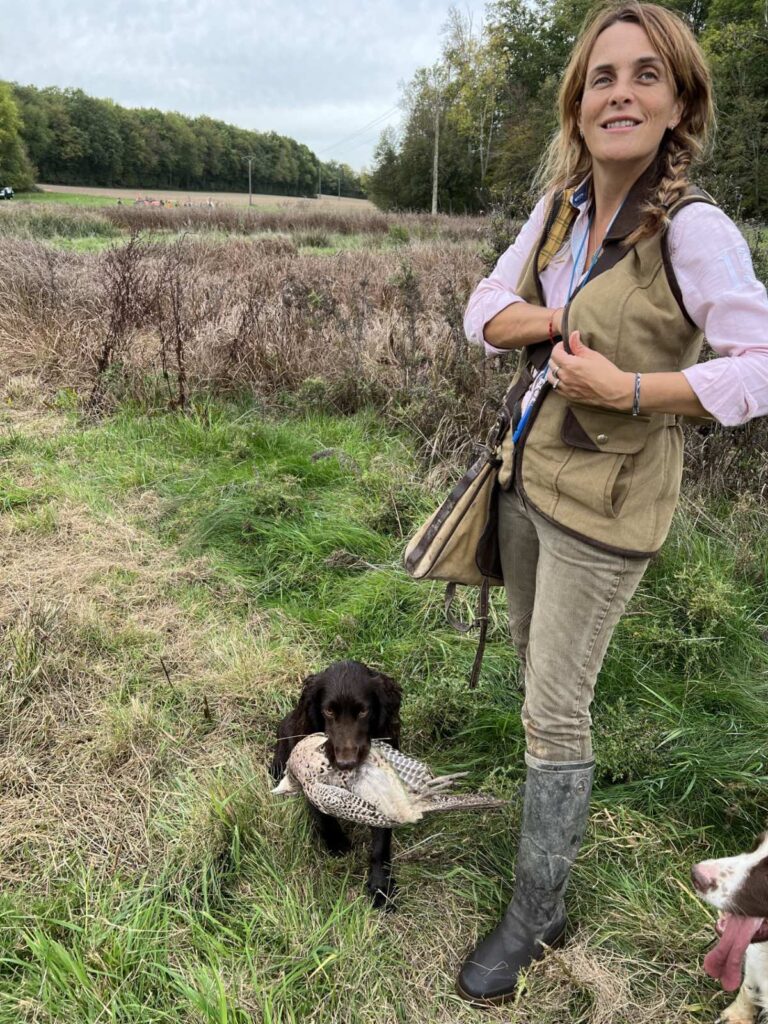
Working-bred cockers are especially driven, and many owners benefit from gundog training classes, where trainers teach quartering, stop whistles and steadiness alongside recall. Channelling the dog’s instincts into structured work often improves recall dramatically. See our guide to field work.
Frequently asked questions
At what age should I start recall training?
From the day your puppy comes home. Young puppies naturally follow you, which makes early recall games easy and rewarding.
How long does it take to train a reliable recall?
It varies, but expect months of consistent practice, with continued reinforcement throughout your dog’s life.
Should I use an e-collar for recall?
We recommend reward-based methods. Cockers are sensitive dogs that learn well with positive reinforcement, and aversive tools can create fear and stress.
How long should a recall long line be?
Around 10 to 15 metres suits most training. Use it with a harness and gloves, and keep the line from tangling around legs.
Featured photo: No machine-readable author provided. Kessa Ligerro~commonswiki assumed (based on, via Wikimedia Commons, CC BY-SA 3.0
Leave a Reply