Updated November 2026. English Cocker Spaniel Guide is an independent site, not affiliated with any breed club or kennel club. Some links are affiliate links: as an Amazon Associate we earn from qualifying purchases.
Look at a show-ring English Cocker Spaniel and a cocker working a hedgerow, and you might not believe they are the same breed. Over roughly a century, English Cockers have been bred along two increasingly separate paths: show lines, selected for looks and movement in conformation shows, and working lines, selected for performance in the field. Both are genuine English Cockers, and both can make wonderful companions, but they differ in appearance, energy and needs. Choosing the right type for your lifestyle is one of the most important decisions you will make.
Quick comparison
| Show-bred English Cocker | Working-bred English Cocker | |
|---|---|---|
| Selected for | Conformation to the breed standard, movement, temperament | Hunting ability: drive, nose, stamina, retrieving, biddability |
| Build | Heavier bone, deeper chest, more substance | Lighter, leaner, often leggier |
| Head | Classic domed head with defined stop and longer ears | Often flatter skull, shorter ears, varied appearance |
| Coat | More profuse coat and feathering | Shorter, lighter coat that sheds burrs more easily |
| Energy | Active but often easier to settle | Very high drive; needs lots of exercise and mental work |
| Best for | Active families and companion homes | Very active owners, gundog work, dog sports |
Show-bred English Cockers
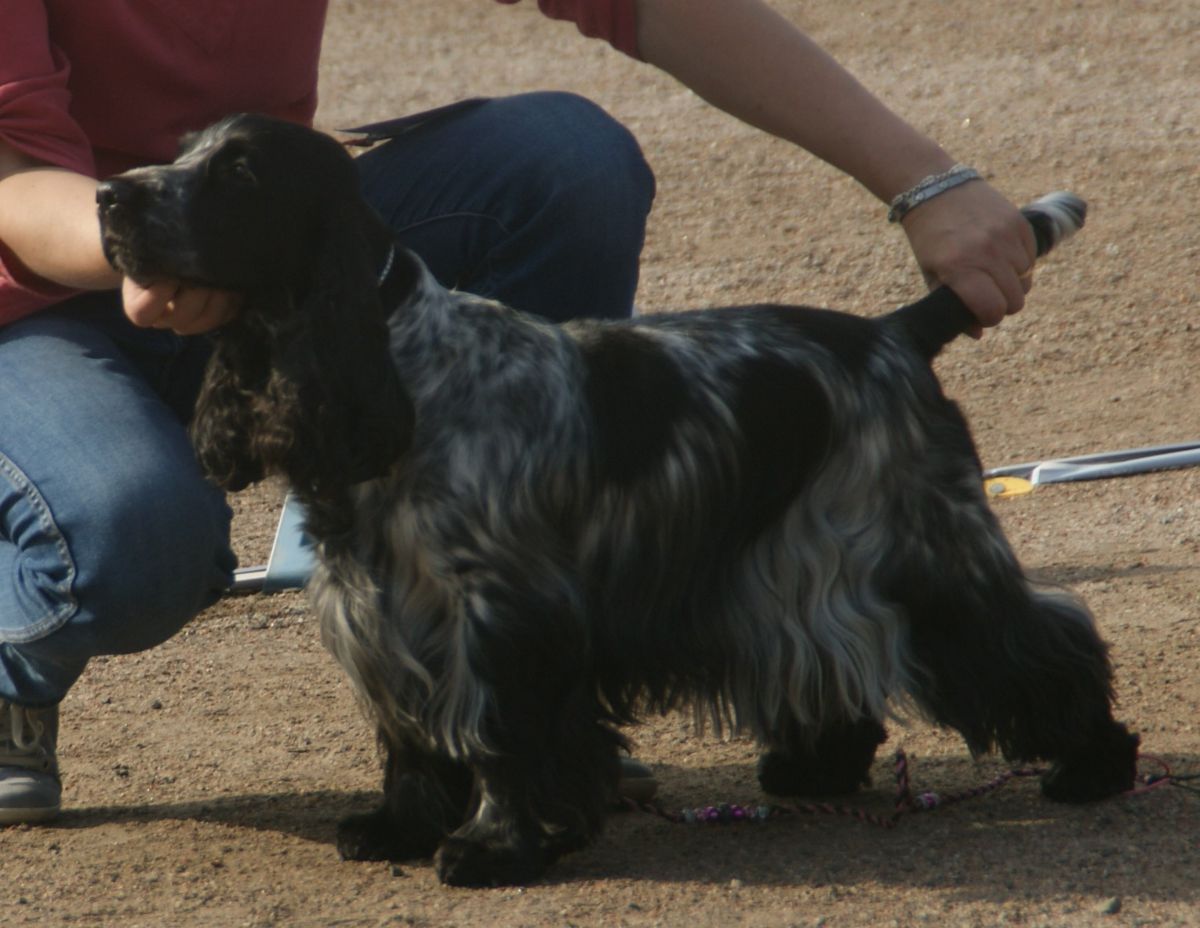
Show-line dogs are bred by breeders who compete in conformation shows, where dogs are judged against the written breed standard for structure, movement, coat and temperament. They tend to have more coat, a more uniform appearance, and the classic cocker head and expression. Most show-bred cockers are lively and love walks and games, but they are generally easier to settle in the house and more content with an hour or so of exercise a day.
Their fuller coat needs more grooming: regular brushing, trimming of the ears, feet and feathering, and a professional groom or careful home trim every six to eight weeks. See our grooming guide.
Working-bred English Cockers
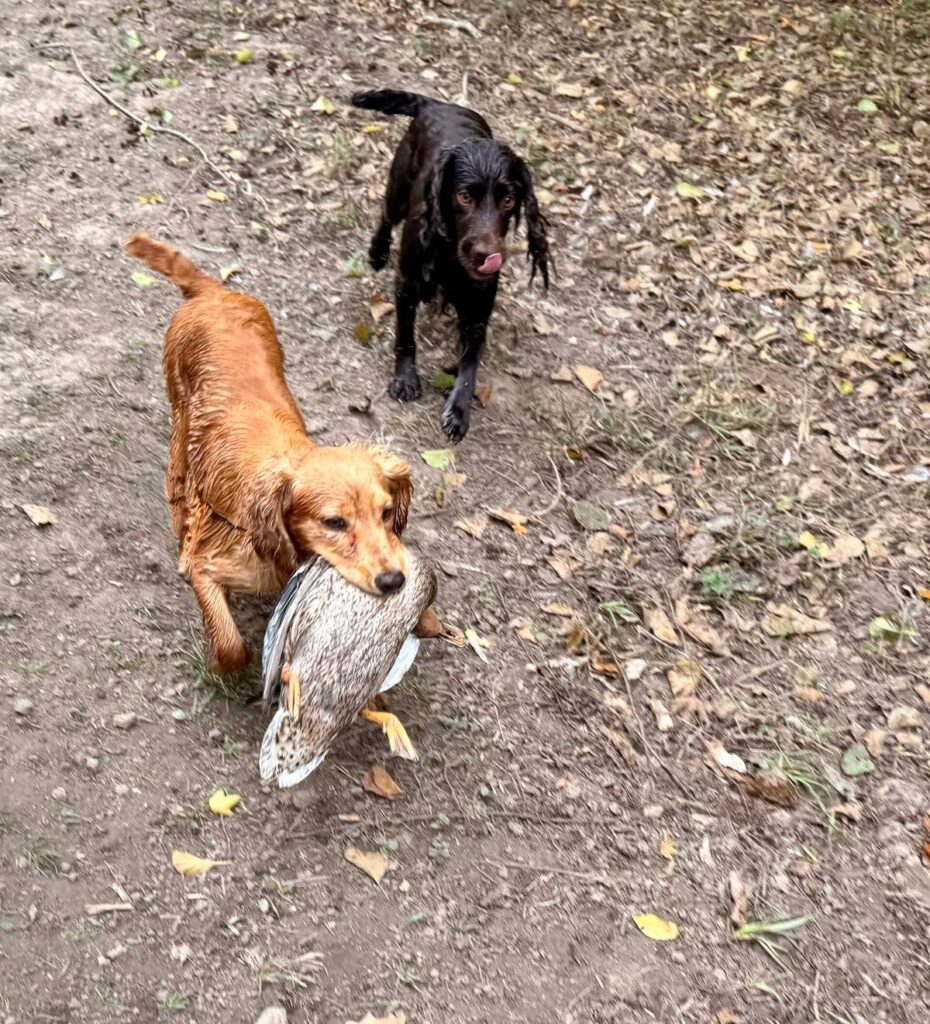
Working cockers, often just called “working cockers”, are bred from dogs that hunt, compete in spaniel field trials and work as gundogs. Breeders select for drive, nose, stamina, a soft mouth for retrieving and willingness to work with a handler. Looks vary a lot, and many working cockers are smaller and lighter than show dogs, with shorter coats and a busier, more intense way of moving.
A working cocker’s brain is always switched on. Many are happiest with a job to do, whether that is gundog work, scent work, agility, flyball or simply structured retrieving and searching games. Without enough physical and mental exercise, a working cocker can become frustrated, noisy or destructive. They are also exceptionally rewarding to train for people who enjoy it.
Temperament differences
Both types should be friendly, merry and affectionate. Working cockers are typically more driven, quicker to react and more focused on scent and birds, so a reliable recall takes dedicated work. Show-bred cockers often have a softer “off switch” in the house. These are generalisations; individuals vary, and good breeding and early socialisation matter as much as the line.
Health
Responsible breeders of both types use the same core health tests, including DNA tests for prcd-PRA, familial nephropathy and adult-onset neuropathy, hip evaluations and eye examinations. Working cockers may be less prone to some coat-related issues, and their shorter ears can be a little easier to keep healthy, but they still need regular ear care. Whichever type you choose, ask for health test results; see our health guide.
Which type suits you?
- Choose a show-bred cocker if you want an affectionate family companion, enjoy daily walks and some training, and are happy to keep up with grooming.
- Choose a working-bred cocker if you hunt, want to compete in dog sports, or love long days outdoors and plenty of training, and can provide several hours of activity and mental work a day.
- Not sure? Meet adult dogs from both types, talk to breeders and owners, and be honest about how much time you can give.
Gundog work and field trials
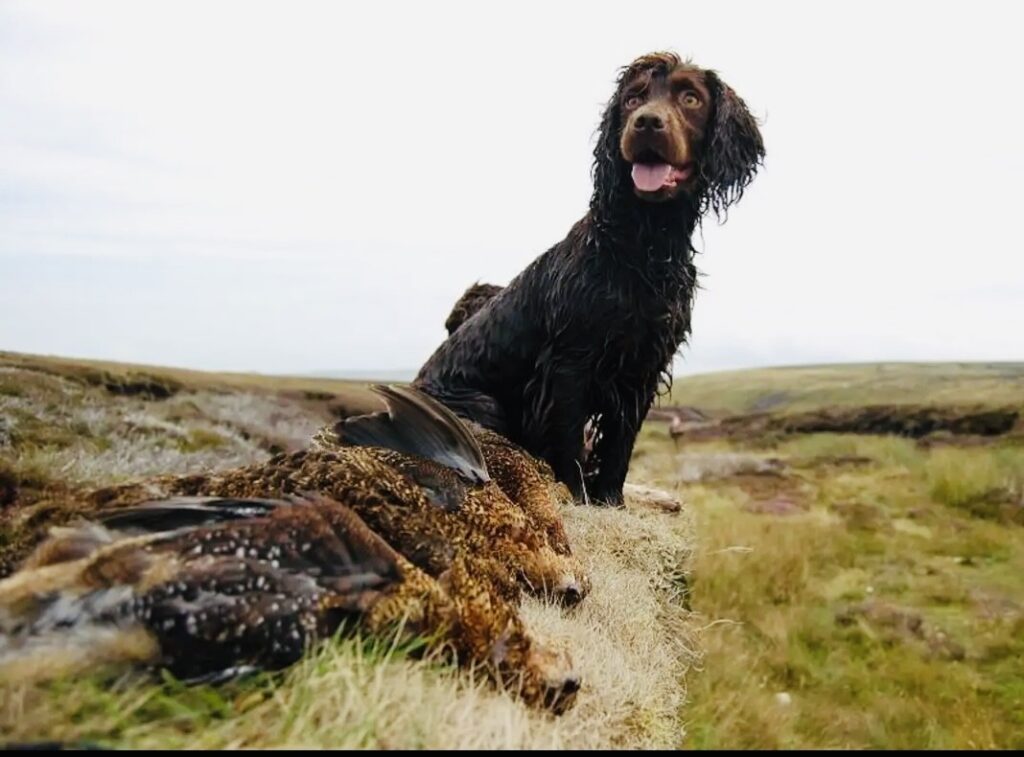
If you want to work your cocker in the field, a working-bred dog from proven hunting lines gives you the best start. Spaniels are trained to quarter ground in front of the handler, flush game, stop to flush and retrieve to hand. Joining a gundog club or training group is the best way to learn. Our guide to field work with an English Cocker explains how to get started, including at non-hunting events such as working tests.
Can a show-bred cocker work?
Many show-bred cockers retain strong instincts and enjoy hunting, scent work and retrieving, and some breeders actively aim for dual-purpose dogs. At a high competitive level, though, field trials are dominated by working-bred dogs. For fun, training and companionship in the field, a keen show-bred cocker can do very well.
Grooming and coat care compared
Working cockers usually need less coat care day to day, but feathering still picks up burrs, seeds and mud, so check them after every outing. Many owners of working cockers keep the feet, ears and belly trimmed short for practicality. Show-bred cockers need regular brushing with a slicker brush and comb and more frequent trimming. Both types benefit from a drying coat after wet walks.
Frequently asked questions
Are working cockers good family pets?
They can be, in the right home. They need a lot of exercise, training and mental stimulation, so they suit very active families.
Do show and working cockers look different?
Often, yes. Show dogs tend to be heavier with more coat and a classic head; working dogs are usually lighter with shorter coats and more variable looks.
Which is easier to train?
Both are trainable and eager to please. Working cockers are often more focused and responsive but also more driven, which can make them more challenging for first-time owners.
Can show and working cockers be bred together?
Some breeders cross lines, but most keep them separate to preserve the qualities they are selecting for.
Featured photo: Canarian, via Wikimedia Commons, CC BY-SA 4.0
Leave a Reply