Blog

  • The Best Chew Toys for Spaniels (2026)

    The Best Chew Toys for Spaniels (2026)

    Updated November 2026. English Cocker Spaniel Guide is an independent site, not affiliated with any breed club or kennel club. Some links are affiliate links: as an Amazon Associate we earn from qualifying purchases.

    Spaniels are gundogs, bred to carry things in their mouths, and most English Cockers love to hold, carry and chew. A puppy going through teething will chew almost anything it can reach, and many adult cockers chew to relax or when they are bored. Giving your dog safe, durable things to chew protects your shoes and furniture, and it satisfies a genuine need rather than fighting it.

    Below are the chew and play toys we would buy from Amazon.ca for a cocker, followed by a guide to choosing safe chews and what to avoid.
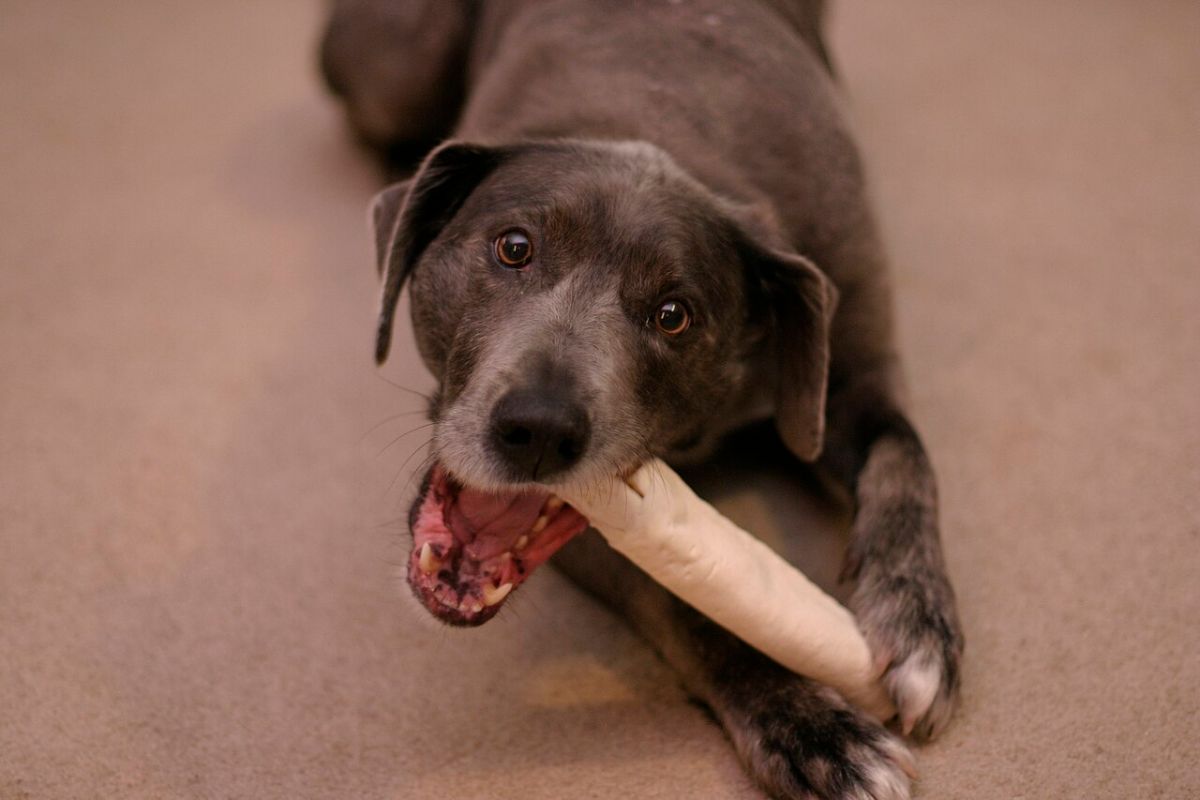
    A dog with a chew toy
    A dog with a chew toy. Our pick: Benebone chew toys on Amazon.ca. Photo: Phlashphoenixluvr17, via Wikimedia Commons, CC BY-SA 4.0

    Quick picks

    These are our picks from Amazon.ca, chosen on design, materials, suitability for a medium-sized spaniel, and the volume and consistency of buyer reviews. We have not lab-tested them ourselves.

    The best chew toys for spaniels

    1. Benebone Chew Toy 4-Pack: best long-lasting

    Benebone chews are made from tough nylon with real flavour baked in, and their curved shape lets a dog hold the chew between its paws at an angle that is comfortable for a medium-sized dog. A multi-pack gives you different shapes to rotate so your cocker does not get bored.

    • Good for: adult dogs that chew a lot, settling time
    • Watch for: choose the right size for your dog and replace the chew when it becomes worn or sharp; not ideal for very young puppies

    Check the Benebone Chew Toy 4-Pack on Amazon.ca →

    2. KONG Classic: best stuffable

    The KONG is the most useful toy a spaniel owner can have. Its hollow rubber shape can be stuffed with kibble, wet food or a little dog-safe peanut butter, then frozen to last longer. It keeps a puppy busy in its crate, helps adult dogs settle when left alone, and bounces unpredictably for games.

    • Good for: crate time, alone time, puppies and adults
    • Watch for: buy the right size so it cannot be swallowed; medium suits most cockers

    Check the KONG Classic on Amazon.ca →

    3. Chuckit! Ball: best fetch toy

    Retrieving is in a cocker’s blood. Chuckit! balls are made from tough rubber, float in water and are a safer size and shape than tennis balls, whose fuzzy covers can wear down teeth. They are perfect for beach and field games.

    • Good for: fetch, swimming, retrieving games
    • Watch for: use a ball for play, not as an unsupervised chew; limit repetitive ball-chasing in young dogs

    Check the Chuckit! Ball on Amazon.ca →
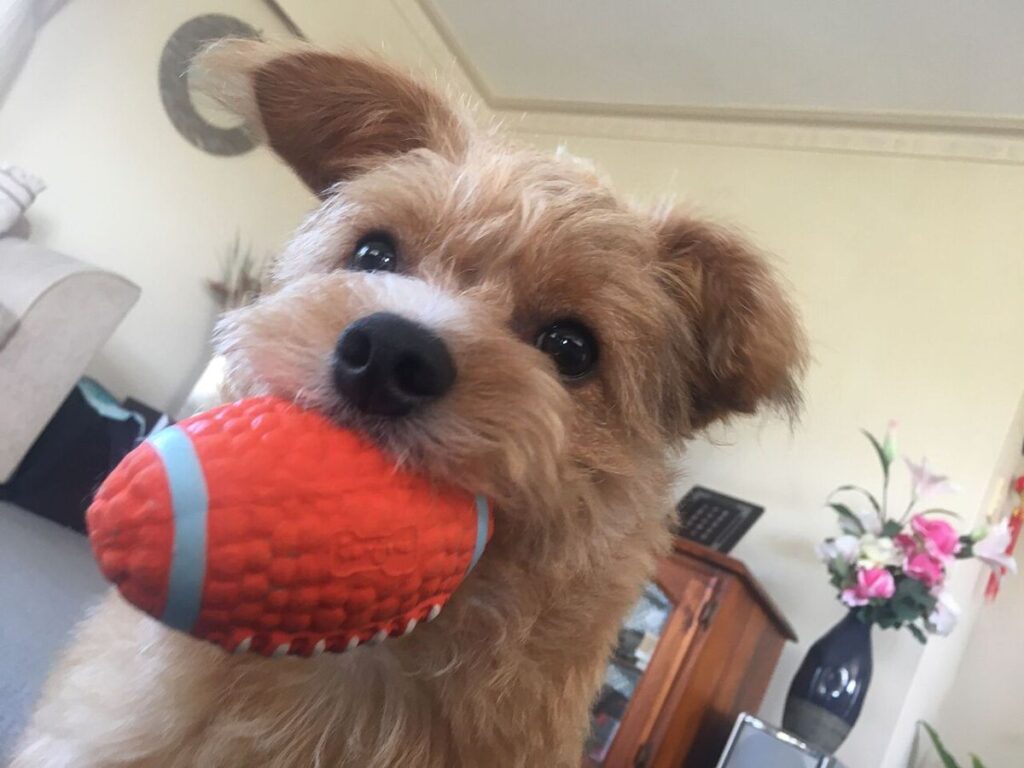
    A dog with a toy ball
    A dog with a toy ball. Our pick: KONG Classic on Amazon.ca. Photo: Funkiestfarter, via Wikimedia Commons, CC BY-SA 4.0

    Comparison

    ToyUseDurabilityBest for
    BeneboneChewHighStrong adult chewers
    KONG ClassicStuff and chewHighPuppies, alone time
    Chuckit! ballFetchMediumRetrieving, swimming

    Choosing a safe chew for a cocker

    • Size: The chew should be too big to swallow whole, and longer than your dog’s mouth is wide.
    • Hardness: A good test is whether you can press a fingernail into it. Very hard items such as antlers, hooves and cooked bones can crack teeth.
    • Condition: Throw away any chew that has broken into pieces, become small enough to swallow or developed sharp edges.
    • Supervision: Watch your dog with any new chew until you know how it uses it.

    Chewing and teething puppies

    Cocker puppies teethe from around three to six months old, and their gums can be sore. Softer rubber toys, a frozen KONG or a cold, damp knotted cloth can help. Puppy teeth and jaws are not ready for very hard nylon chews. Redirect your puppy from furniture or hands to a toy every time, and praise it for chewing the right thing. Our puppy checklist covers everything else you need for the first weeks.

    Chews to avoid

    Avoid cooked bones of any kind, which can splinter, and be cautious with rawhide, which can swell and cause blockages if swallowed in large pieces. Very hard chews such as antlers and some compressed bones are a common cause of broken teeth in dogs. Tennis balls are fine for supervised play but are not designed as chews. If your cocker swallows something it should not have, or seems to be in pain, contact your vet straight away.

    Chewing as an outlet for boredom

    A cocker that suddenly starts chewing furniture is often telling you it needs more to do. Make sure it is getting enough exercise, add some puzzle toys and scent games, and offer a stuffed KONG or chew at times when it is most likely to look for trouble, such as when you are working or cooking. Rotating toys so that a different selection comes out each day also keeps them interesting.

    Cleaning toys

    Rubber toys like KONGs should be washed after every use with food, with a bottle brush to reach inside. Most can go in the top rack of a dishwasher. Rinse fetch toys after a day at the beach or in a pond. Nylon chews can be scrubbed with warm soapy water.

    Frequently asked questions

    What are the safest chew toys for cocker spaniels?

    Durable rubber toys such as a KONG, and appropriately sized nylon chews that are replaced when worn, are a good starting point. Always supervise.

    How do I stop my cocker chewing furniture?

    Provide plenty of appropriate chews, manage the environment while your dog is young, and increase exercise and mental stimulation.

    Are tennis balls bad for dogs?

    Tennis balls are fine for supervised fetch, but their felt is abrasive and can wear teeth if a dog chews them for long periods.

    What size KONG does an English Cocker need?

    A medium suits most adults. Puppies may start with a puppy KONG in a small or medium size.

    Featured photo: Shane Adams, via Wikimedia Commons, CC BY 2.0
  • The Best Dog Puzzle Toys for Spaniels (2026)

    The Best Dog Puzzle Toys for Spaniels (2026)

    Updated November 2026. English Cocker Spaniel Guide is an independent site, not affiliated with any breed club or kennel club. Some links are affiliate links: as an Amazon Associate we earn from qualifying purchases.

    English Cocker Spaniels are clever, busy dogs with a nose that never switches off. Physical exercise matters, but mental work tires a spaniel out just as effectively, and on a rainy day, after surgery or when you simply cannot get out for a long walk, a puzzle toy can be the difference between a calm dog and one that redecorates the kitchen. Feeding part of a meal from a puzzle also slows down cockers that gulp their food.

    Here are three puzzle and enrichment toys from Amazon.ca that suit a spaniel, from a beginner treat dispenser to a lick mat that helps anxious dogs settle, plus ideas for home-made nose games.

    A dog puzzle feeder
    A dog puzzle feeder. Our pick: Amazon Basics puzzle toy on Amazon.ca. Photo: ELTORO.VET, via Wikimedia Commons, CC0

    Quick picks

    These are our picks from Amazon.ca, chosen on design, materials, suitability for a medium-sized spaniel, and the volume and consistency of buyer reviews. We have not lab-tested them ourselves.

    The best puzzle toys for spaniels

    1. Amazon Basics Treat Dispenser Puzzle: best for beginners

    A simple sliding and lifting puzzle where your dog uncovers treats hidden under lids and compartments. It is a good first puzzle because most dogs solve it quickly, which builds confidence and teaches them that pushing and nosing at a puzzle pays off.

    • Good for: first puzzle, puppies, older dogs
    • Watch for: supervise use; a determined chewer may try to eat the lids

    Check the Amazon Basics Treat Dispenser Puzzle on Amazon.ca →

    2. FOXMM Interactive Dog Puzzle: best step-up

    Once your cocker has worked out the basics, a puzzle with more moving parts keeps the challenge going. This interactive board combines sliders, flaps and spinners, so your dog has to use different movements to reach each reward.

    • Good for: clever dogs, rainy days, mental stimulation
    • Watch for: pick up the puzzle after use so it does not become a chew toy

    Check the FOXMM Interactive Dog Puzzle on Amazon.ca →

    3. LICKIMAT: best calming

    A flexible mat with a textured surface you spread with wet food, plain yoghurt or a smear of dog-safe peanut butter. Licking is naturally calming for dogs, so a lick mat is useful during grooming, nail trims, thunderstorms or when you leave the house. You can freeze it to make it last longer.

    • Good for: anxious dogs, grooming sessions, hot days
    • Watch for: not a chew toy; take it away when the food is finished

    Check the LICKIMAT on Amazon.ca →

    A golden cocker spaniel
    A golden cocker spaniel. Our pick: LICKIMAT on Amazon.ca. Photo: G.dallorto, via Wikimedia Commons, Attribution

    Comparison

    ToyDifficultyBest forDishwasher-friendly?
    Amazon Basics puzzleEasyBeginnersCheck listing
    FOXMM puzzleMediumExperienced dogsCheck listing
    LICKIMATEasyCalming, groomingYes, top rack for most

    Why spaniels need mental work

    Cockers were bred to hunt all day, searching for game by scent and working closely with a handler. A pet spaniel still has that drive, and if it is not given something to do with it, it will find its own entertainment. Ten minutes of puzzle or scent work can tire a cocker as much as a much longer walk. Combine it with the physical exercise in our exercise guide for a calmer, happier dog.

    How to introduce a puzzle toy

    1. Start with the easiest setting and let your dog watch you load the treats.
    2. Leave some lids open so the first few rewards are easy.
    3. Praise and encourage, but do not solve the puzzle for your dog.
    4. Increase the difficulty only when your dog finishes the puzzle quickly and confidently.
    5. Always supervise, and put puzzles away after use.

    Home-made nose games

    • Find it: Ask your dog to wait, hide a treat in the next room, then send it to search. Make the hides harder over time.
    • Snuffle box: Scatter kibble in a cardboard box full of scrunched paper and let your dog forage.
    • Towel roll: Roll treats inside an old towel and let your dog unroll it.
    • Scatter feeding: Throw part of a meal onto the lawn and let your cocker hunt for it. This is ideal for dogs that eat too fast.

    Scent games tap straight into what spaniels love doing most and are a gentle introduction to field and gundog-style work.

    Using food from the daily allowance

    Puzzles are a great way to make food last longer, but the calories still count. Use part of your dog’s normal meal in the puzzle rather than adding extra treats, and adjust portions if you use high-calorie fillings in a lick mat. English Cockers put on weight easily, and our feeding guide explains how to keep them lean.

    Puzzles for older dogs

    Mental games are especially useful as your cocker slows down. Older spaniels may not manage long walks, but they still need something to think about, and gentle puzzles and scent games help keep their minds sharp. See our guide to the senior English Cocker for more ideas.

    Signs your spaniel needs more mental stimulation

    A bored cocker usually tells you. Common signs include chewing furniture or shoes, digging, barking at nothing, stealing items and racing around the house in the evening. These behaviours are often put down to a lack of walks, but many spaniels that get plenty of physical exercise still need more for their brains to do. If you see them, try adding two short puzzle or scent sessions a day for a week and see whether your dog settles more easily.

    Frequently asked questions

    Are puzzle toys good for cocker spaniels?

    Yes. Cockers are intelligent, scent-driven dogs and puzzle toys give them a satisfying job to do indoors.

    How long should a dog play with a puzzle?

    Ten to fifteen minutes is plenty for most dogs. Stop while your dog is still enjoying it.

    Can a puppy use a puzzle toy?

    Yes, start with very easy puzzles and lick mats, and always supervise so your puppy does not chew the pieces.

    What can I put on a lick mat?

    Wet dog food, plain yoghurt, mashed banana or a little dog-safe peanut butter without xylitol. Freeze it for a longer-lasting challenge.

    Featured photo: ELTORO.VET, via Wikimedia Commons, CC0

  • The Best Dog Training Treats for Cocker Spaniels (2026)

    The Best Dog Training Treats for Cocker Spaniels (2026)

    Updated November 2026. English Cocker Spaniel Guide is an independent site, not affiliated with any breed club or kennel club. Some links are affiliate links: as an Amazon Associate we earn from qualifying purchases.

    English Cocker Spaniels are famously food-motivated, and that is great news for training. A cocker will work hard for a tiny piece of something tasty, which makes reward-based training fast and enjoyable. The catch is that the breed also gains weight easily, so the best training treats are small, soft, smelly enough to compete with a rabbit trail, and low in calories per piece.

    Here are the treats and the treat pouch we would choose from Amazon.ca, followed by advice on how many treats to use, how to adjust meals, and when to swap food for toys or praise.

    A jar of dog treats
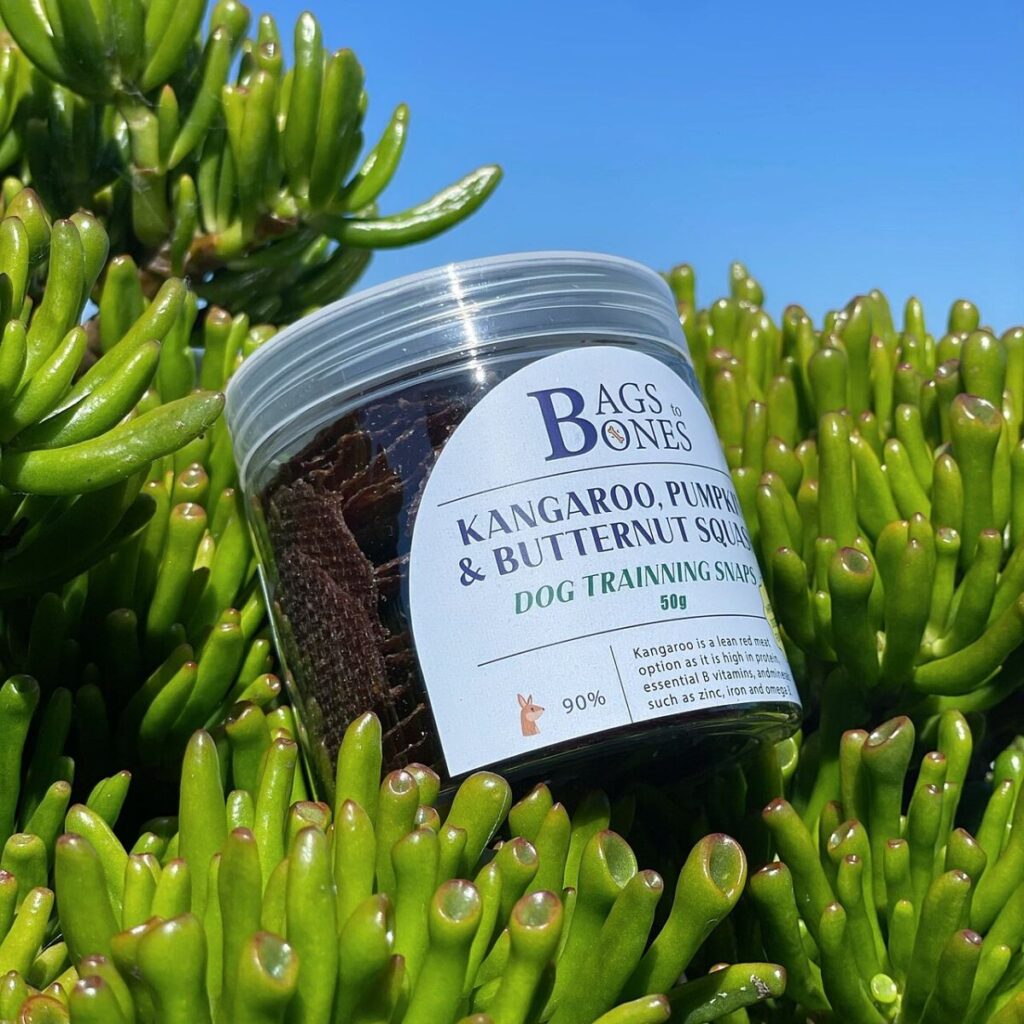
    A jar of dog treats. Our pick: Crumps Mini Trainers on Amazon.ca. Photo: Bagstobones, via Wikimedia Commons, CC BY-SA 4.0

    Quick picks

    These are our picks from Amazon.ca, chosen on design, materials, suitability for a medium-sized spaniel, and the volume and consistency of buyer reviews. We have not lab-tested them ourselves.

    The best training treats for cocker spaniels

    1. Crumps’ Naturals Mini Trainers: best low-calorie

    Tiny freeze-dried liver pieces with a strong smell that spaniels find irresistible and very few calories per treat. They are crunchy but break easily into even smaller pieces, so one bag lasts a long time. Their high value makes them ideal for recall and for training in distracting places.

    • Good for: recall, high-distraction training, weight-conscious dogs
    • Watch for: freeze-dried liver crumbles in a pocket; keep it in a pouch

    Check the Crumps’ Naturals Mini Trainers on Amazon.ca →

    2. Zuke’s Mini Naturals: best soft treat

    Small, soft training treats that a dog can swallow quickly without stopping to chew, which keeps a training session flowing. They are a popular choice with trainers for exactly that reason, and the soft texture suits puppies with new teeth.

    • Good for: puppy training, fast-paced sessions, clicker training
    • Watch for: count them: soft treats are easy to overfeed

    Check the Zuke’s Mini Naturals on Amazon.ca →

    3. Mighty Paw Treat Pouch: best pouch

    A good treat pouch makes a real difference to your timing. This one clips to a belt or waistband, opens and closes with one hand, and has space for poo bags and keys. Being able to reward within a second of your dog doing the right thing is what makes training work.

    • Good for: every walk and training session
    • Watch for: wash it regularly, as soft treats leave residue

    Check the Mighty Paw Treat Pouch on Amazon.ca →

    A cocker spaniel with its owner
    A cocker spaniel with its owner. Our pick: Zuke’s Mini Naturals on Amazon.ca. Photo: Vaneska88, via Wikimedia Commons, CC BY-SA 4.0

    Comparison

    ProductTypeTextureBest for
    Crumps’ Mini TrainersFreeze-dried liverCrunchy, breakableHigh-value recall
    Zuke’s Mini NaturalsSoft training treatSoftPuppies, fast sessions
    Mighty PawTreat pouchn/aCarrying treats on walks

    What makes a good training treat?

    • Small. Pea-sized or smaller. You want your dog to swallow and look back at you, not chew for ten seconds.
    • Smelly and tasty. The more distracting the place, the higher the value of reward you need.
    • Low in calories. Dozens of rewards add up quickly, especially for a breed prone to weight gain.
    • Easy to carry. Treats that do not crumble or go greasy in a pouch are much easier to use.

    How many treats is too many?

    As a general rule, treats should make up no more than about 10 percent of your dog’s daily calories. On a heavy training day, reduce the size of meals to compensate, or use part of your dog’s normal kibble as rewards for easy tasks at home and save the high-value treats for outdoors. Check your dog’s body condition regularly: you should be able to feel the ribs easily under a light covering. Our feeding guide explains portions and body condition scoring.

    Using treats for training a spaniel

    Use treats to teach a new behaviour, then gradually make rewards less predictable once your dog understands what you are asking. For a cocker, a reward does not have to be food: a quick game with a ball, a chance to sniff, or being sent to find a hidden toy can all work well once your dog knows the basics. Food is still the fastest way to build a reliable recall, so keep the best treats for that. Read our recall training guide for a step-by-step plan.

    Treats for puppies

    Puppies have small stomachs and are still adjusting to their food, so introduce new treats one at a time and keep the pieces tiny. Soft treats are easier for puppies to eat quickly. During house training, have a treat ready every time you take your puppy outside so you can reward it the moment it toilets in the right spot.

    Safety tips

    • Never use cooked bones, grapes, raisins, chocolate, onions or anything containing xylitol as treats; these are dangerous for dogs.
    • Supervise chewy treats, and choose sizes appropriate for a medium dog.
    • If your dog has a sensitive stomach or allergies, choose single-ingredient treats and talk to your vet.
    • Always keep fresh water available.

    High-value versus everyday rewards

    It helps to think of treats in tiers. Everyday rewards, such as a piece of kibble or a low-value biscuit, are fine for sit, down and other easy tasks in the kitchen. Medium-value treats suit walks and new places. High-value rewards, like freeze-dried liver, cheese or a little cooked chicken, are reserved for recall and for the most distracting situations. Spaniels quickly learn what you have in your pocket, so mixing tiers keeps them guessing and keeps the best rewards special.

    Frequently asked questions

    What are the best treats for training a cocker spaniel?

    Small, soft or easily broken treats with a strong smell, such as freeze-dried liver or soft mini training treats.

    Can I use kibble as training treats?

    Yes, for easy tasks at home. Many dogs need something more exciting when training outdoors.

    How do I stop my spaniel getting fat from treats?

    Use tiny pieces, count treats as part of the daily allowance, and reduce meals slightly on heavy training days.

    When can I stop using treats?

    You can fade food rewards gradually once a behaviour is reliable, but occasional rewards keep recall strong for life.

    Featured photo: https://www.flickr.com/photos/pbump/with/5637773582/, via Wikimedia Commons, CC BY-SA 2.0

  • The Best Long Line for Recall Training a Spaniel (2026)

    The Best Long Line for Recall Training a Spaniel (2026)

    Updated November 2026. English Cocker Spaniel Guide is an independent site, not affiliated with any breed club or kennel club. Some links are affiliate links: as an Amazon Associate we earn from qualifying purchases.

    A long line is the single most useful tool for teaching a spaniel to come back. English Cockers were bred to hunt within gun range, quartering a field with their noses down, and a young dog that has never been taught otherwise will happily follow a rabbit trail for half a mile. A long line gives your dog the feeling of freedom while making sure it cannot practise running off, and that is what builds a reliable recall.

    A long line is simply a lightweight lead, usually 5 to 15 metres long, that you clip to a harness and let trail on the ground. Below are two we recommend from Amazon.ca, followed by how to use one safely and a simple training plan.

    Walking a dog on a lead
    Walking a dog on a lead. Our pick: AmaGood long line on Amazon.ca. Photo: Jorge Royan, via Wikimedia Commons, CC BY-SA 3.0

    Quick picks

    These are our picks from Amazon.ca, chosen on design, materials, suitability for a medium-sized spaniel, and the volume and consistency of buyer reviews. We have not lab-tested them ourselves.

    The best long lines for spaniels

    1. AmaGood Long Training Lead: best overall

    A flat nylon long line available in several lengths, with a padded handle and a sturdy clip. Nylon is light enough for a medium-sized dog to drag without being slowed down, and the range of lengths means you can start with a shorter line in the park and move to a longer one in open fields.

    • Good for: recall training, parks and beaches, first long line
    • Watch for: nylon soaks up water and mud and can burn your hands if a dog takes off; wear gloves

    Check the AmaGood Long Training Lead on Amazon.ca →

    2. Wolfone Waterproof Long Line: best for wet walks

    A coated, waterproof line that does not absorb water, so it stays light and is easy to wipe clean after a wet walk or a swim. For a spaniel that heads straight for every puddle and stream, a coated line is much more pleasant to handle than soggy webbing.

    • Good for: wet weather, swimming dogs, muddy fields
    • Watch for: coated lines can be slippery in wet hands; hold the handle or tie a knot near your end

    Check the Wolfone Waterproof Long Line on Amazon.ca →

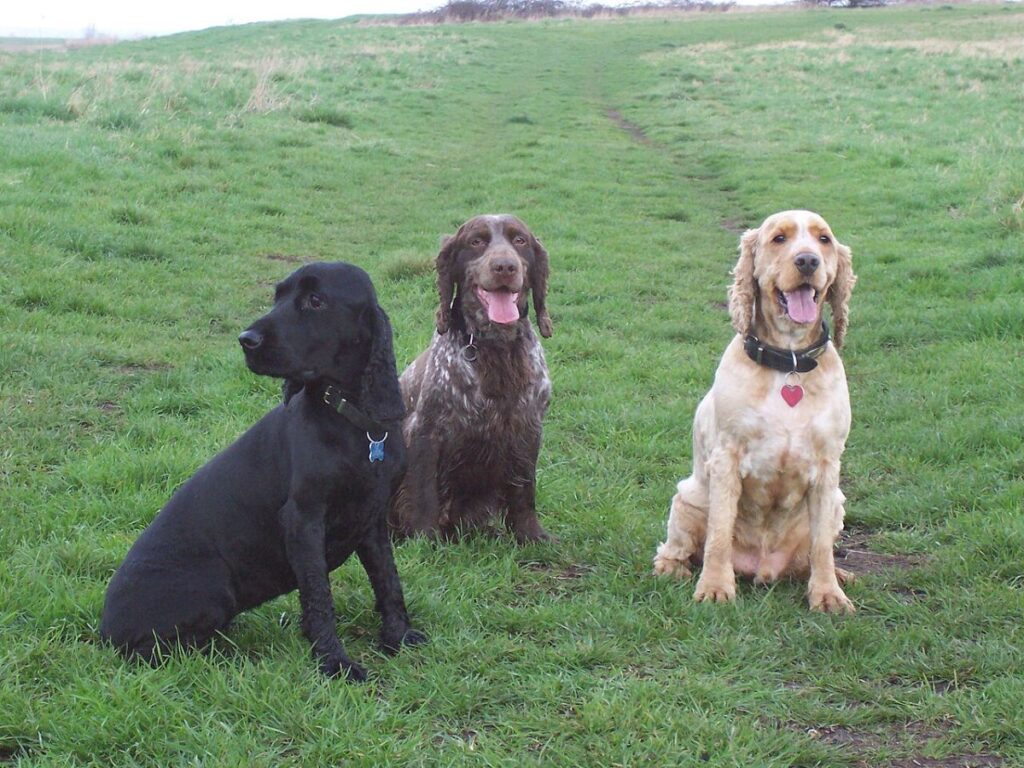
    Three spaniels on grass
    Three spaniels on grass. Our pick: Wolfone waterproof long line on Amazon.ca. Photo: Angus Farquhar, via Wikimedia Commons, CC BY-SA 2.0

    Comparison

    Long lineMaterialGets heavy when wet?Best for
    AmaGoodNylon webbingYesGeneral recall training
    WolfoneWaterproof coatedNoWet and muddy walks

    What length long line do you need?

    A 5-metre line is easy to manage in a park and is a good first line for a puppy. A 10-metre line gives more freedom and suits most recall training in fields. Lines of 15 metres or more are useful for advanced work and gundog training, but they tangle easily and take practice to handle. For most English Cocker owners, a 10-metre line is the best all-rounder.

    How to use a long line safely

    • Always attach a long line to a well-fitted harness, never to a collar or head collar. See our harness guide.
    • Let the line trail on the ground and only pick it up when you need to. Stand on it if your dog is about to bolt.
    • Wear gloves, especially with nylon lines, and never wrap the line around your hand or fingers.
    • Keep the line away from other dogs and people’s legs, and avoid using one near roads or in dense woodland where it can snag.
    • Check the line and clip regularly for fraying.

    A simple long line recall plan

    1. Start in a quiet, boring place. Let your dog wander on the line and call it back in a happy voice, rewarding with a high-value treat or a game.
    2. Call only when you think your dog will come. If it does not, gently reel in the line and reward anyway when it reaches you, so it never learns that ignoring you works.
    3. Practise lots of short recalls on every walk, then release your dog to go back to sniffing. Recall should not always mean the fun is over.
    4. Gradually add distractions: other dogs at a distance, birds, then fields where rabbits have been.
    5. Only when your dog comes back reliably on the line in distracting places should you try short periods off lead in a safe area.

    Our full recall training guide covers whistle training, which suits spaniels particularly well because a whistle sounds the same whoever blows it and carries a long way across a field.

    How long will I need a long line?

    Expect to use a long line for months rather than weeks with a young cocker, and to go back to it whenever recall slips, such as during adolescence or in a new place with lots of wildlife. Many owners of working cockers keep a long line in the car permanently. That is not a failure; it is good management of a dog bred to hunt. Pair line work with plenty of exercise and nose games so your spaniel has an outlet for that drive.

    Frequently asked questions

    How long should a long line be for a cocker spaniel?

    A 10-metre line suits most training. Start with 5 metres for a puppy or a busy park.

    Can I use a retractable lead instead?

    Retractable leads are not a good substitute. They teach dogs that pulling extends the lead, and the thin cord can cause injuries.

    Should a long line go on a collar or harness?

    Always a harness. A dog hitting the end of a long line at speed on a collar can injure its neck.

    When can I let my spaniel off lead?

    When it comes back reliably on the long line in a range of distracting places, and only in safe, enclosed or quiet areas at first.

    Featured photo: Feeuwai Nalmchonri Lami, via Wikimedia Commons, CC BY-SA 4.0

  • The Best Harness for a Cocker Spaniel (2026)

    The Best Harness for a Cocker Spaniel (2026)

    Updated November 2026. English Cocker Spaniel Guide is an independent site, not affiliated with any breed club or kennel club. Some links are affiliate links: as an Amazon Associate we earn from qualifying purchases.

    English Cocker Spaniels are bred to follow their noses, and a cocker that has caught an interesting scent will pull hard on the lead. A flat collar puts all of that force on the throat, which is uncomfortable and, in a dog that pulls constantly, can contribute to coughing and neck strain. A well-fitted harness spreads the load across the chest and shoulders and gives you far better control of a bouncy young spaniel.

    There are two main types worth considering: a padded, Y-front everyday harness that leaves the shoulders free to move, and a front-clip training harness that turns your dog gently towards you when it pulls. Here are the three we would buy on Amazon.ca for a cocker, and how to fit one properly.

    A cocker spaniel in a harness
    A cocker spaniel in a harness. Our pick: rabbitgoo dog harness on Amazon.ca. Photo: Jean-Pol GRANDMONT, via Wikimedia Commons, CC BY 4.0

    Quick picks

    These are our picks from Amazon.ca, chosen on design, materials, suitability for a medium-sized spaniel, and the volume and consistency of buyer reviews. We have not lab-tested them ourselves.

    The best harnesses for cocker spaniels

    1. rabbitgoo No-Pull Dog Harness: best everyday

    A padded harness with four adjustment points, a front clip and a back clip, and a handle on top. The adjustability is what makes it work for spaniels, which have a deep chest and a fairly narrow waist. Reflective stitching helps on dark winter walks, and the handle is useful for steadying a dog over stiles or into the car.

    • Good for: daily walks, hiking, dogs with a deep chest
    • Watch for: size carefully; most adult English Cockers take a medium

    Check the rabbitgoo No-Pull Dog Harness on Amazon.ca →

    2. PetSafe Easy Walk Harness: best for pullers

    The Easy Walk is a front-clip harness designed by a vet behaviourist. When your dog pulls, the lead attachment on the chest turns it gently to the side so it cannot lean its full weight into the walk. It is lightweight and quick to put on, and it is the harness many trainers recommend while you teach loose-lead walking.

    • Good for: strong pullers, lead training, young dogs
    • Watch for: the strap across the front can rub some dogs; check fit and use it as a training tool rather than forever

    Check the PetSafe Easy Walk Harness on Amazon.ca →

    3. Annchwool No-Pull Harness: best value

    A soft, padded vest-style harness with front and back attachment points at a modest price. It is easy to slip over the head and buckle, which suits wriggly puppies, and it comes in a range of sizes you can move through as your dog grows.

    • Good for: puppies, budget buyers, a spare harness
    • Watch for: vest styles can be warm in summer and restrict shoulder movement more than a Y-front design

    Check the Annchwool No-Pull Harness on Amazon.ca →

    A cocker spaniel walking in a harness
    A cocker spaniel walking in a harness. Our pick: PetSafe Easy Walk Harness on Amazon.ca. Photo: Jean-Pol GRANDMONT, via Wikimedia Commons, CC BY 4.0

    Comparison

    HarnessStyleClipsBest for
    rabbitgooPadded Y-frontFront and backEveryday walks
    PetSafe Easy WalkFront-clip trainingFrontPullers
    AnnchwoolPadded vestFront and backPuppies, value

    How to fit a harness on a cocker spaniel

    1. Measure the widest part of the chest just behind the front legs and the neck where a collar would sit, then check the size chart.
    2. Adjust the neck so the harness sits low on the chest bone, not across the throat.
    3. Tighten the chest strap until you can slide two fingers under it, and no more.
    4. Watch your dog walk: the straps should not cross the point of the shoulder or rub in the armpit.
    5. Check the fit again after a few walks and as your puppy grows, and check for rubbing on the hair behind the front legs.

    Harness or collar?

    Your dog should still wear a flat collar with an ID tag, since that is a legal requirement in many places and the fastest way for a finder to contact you. For walking, the harness is the better attachment point for most spaniels. If you are working on recall, clip a long line to the back of the harness, never to a collar, so a sudden stop does not jolt the neck. Our recall training guide and long line picks explain how.

    Teaching loose-lead walking

    A harness gives you control, but it does not teach manners on its own. The most effective method for spaniels is simple: stop when the lead goes tight, and move forward the moment it goes slack. Reward your dog with a small training treat when it is walking beside you. Short, frequent sessions in a boring place work far better than trying to train on the way to a field full of rabbits. Expect it to take weeks rather than days with a keen young cocker.

    Harness care and safety

    • Rinse mud off after walks and let the harness dry fully before the next use.
    • Check buckles and stitching regularly, especially on a dog that rolls or swims.
    • Take the harness off at home and in the crate so it cannot catch on anything.
    • Brush the coat under the straps; feathering behind the front legs can matt where the harness rubs.

    Frequently asked questions

    What size harness does an English Cocker need?

    Most adults take a medium, but chest measurements vary between show and working lines, so always measure your own dog.

    Are no-pull harnesses cruel?

    A well-fitted front-clip harness is not cruel. It simply redirects your dog when it pulls. Avoid any design that tightens painfully.

    Can a puppy wear a harness?

    Yes. Introducing a lightweight harness early, with lots of treats, makes it easier for your puppy to accept one as it grows.

    Should my dog wear a harness all the time?

    No. Take it off at home so the coat can breathe and the straps do not rub.

    Featured photo: Kreuzschnabel, via Wikimedia Commons, CC BY-SA 3.0

  • The Best Dog Bed for a Cocker Spaniel (2026)

    The Best Dog Bed for a Cocker Spaniel (2026)

    Updated November 2026. English Cocker Spaniel Guide is an independent site, not affiliated with any breed club or kennel club. Some links are affiliate links: as an Amazon Associate we earn from qualifying purchases.

    English Cocker Spaniels work hard and rest hard. After a long walk or a morning in the field, most will sleep for hours, and they love to curl up somewhere soft with a raised edge to rest their chin on. A good bed protects joints as your dog ages, keeps it off cold floors, and gives it a place of its own that is not your sofa.

    Because cockers come home wet and muddy, the best bed for the breed is also easy to wash. Below are three beds available on Amazon.ca that suit a 12 to 15 kg spaniel, plus advice on sizing, orthopaedic support and keeping the bed clean.

    A dog sleeping on a bed
    A dog sleeping on a bed. Our pick: EHEYCIGA dog bed on Amazon.ca. Photo: Usernet123u, via Wikimedia Commons, CC BY-SA 4.0

    Quick picks

    These are our picks from Amazon.ca, chosen on design, materials, suitability for a medium-sized spaniel, and the volume and consistency of buyer reviews. We have not lab-tested them ourselves.

    The best dog beds for cocker spaniels

    1. EHEYCIGA Orthopaedic Bolster Bed: best bolster bed

    A rectangular bed with a supportive foam base and raised bolsters on three sides. Spaniels like to lean against an edge, and this style suits dogs that sleep curled up as well as those that sprawl. The cover is removable for washing, which matters with a dog that loves puddles.

    • Good for: everyday use, dogs that like to lean on a side
    • Watch for: choose the medium size for most adult English Cockers

    Check the EHEYCIGA Orthopaedic Bolster Bed on Amazon.ca →

    2. Bedsure SupportMax Orthopaedic Bed: best orthopaedic

    A thicker, egg-crate or memory-style foam base designed to spread your dog’s weight and take pressure off hips and elbows. This is the bed we would choose for an older cocker or a dog with any joint stiffness, and it fits neatly into a large crate.

    • Good for: senior dogs, dogs with stiff joints, crate use
    • Watch for: orthopaedic foam is firm; some young dogs prefer a softer nest

    Check the Bedsure SupportMax Orthopaedic Bed on Amazon.ca →

    3. COZY KISS Calming Donut Bed: best calming bed

    A round, plush donut bed with a raised rim that lets a dog burrow and tuck its nose in. Anxious or noise-sensitive spaniels often settle faster in this kind of nest, and it is a cosy choice for a puppy’s first weeks at home.

    • Good for: puppies, anxious dogs, curlers
    • Watch for: long plush can hold mud and hair; wash it regularly and check washing instructions

    Check the COZY KISS Calming Donut Bed on Amazon.ca →

    A cocker spaniel sleeping
    A cocker spaniel sleeping. Our pick: Bedsure SupportMax bed on Amazon.ca. Photo: Jean-Pol GRANDMONT, via Wikimedia Commons, CC BY 4.0

    Comparison

    BedStyleBest forWashable cover
    EHEYCIGABolsterEveryday useYes
    Bedsure SupportMaxOrthopaedicSeniors and cratesYes
    COZY KISSDonutAnxious dogs, puppiesCheck listing

    What size bed does an English Cocker need?

    Measure your dog lying stretched out from nose to tail and add 15 to 20 cm. For most English Cockers that means a medium bed of roughly 75 to 90 cm long. If you plan to use the bed inside a crate, check the crate’s internal dimensions first; a 30-inch crate takes a bed of about 76 by 48 cm. Our guide to the best crate for cocker spaniels covers crate sizing.

    Orthopaedic or standard?

    A young, healthy cocker will sleep happily on almost anything soft. Orthopaedic foam becomes more important as your dog ages, if it is a heavy working dog that puts a lot of strain on its joints, or if your vet has mentioned hip dysplasia or arthritis. Supporting joints with a good bed is one of the simplest things you can do for a senior spaniel. A thin, flat cushion on a hard floor gives very little support, however soft it feels to your hand.

    Beds for puppies

    Puppies chew, and they have accidents. For the first few months, many owners use cheap, washable vet bedding in the crate and save the good bed for later. If you buy a proper bed straight away, choose one with a removable, washable cover and keep a spare cover so you are never without one. Supervise early use so your puppy learns not to pull the stuffing out; offering a proper chew toy in the bed helps.

    Keeping a spaniel bed clean

    • Wash the cover every week or two, and immediately after a muddy day.
    • Vacuum the base between washes to lift hair and grit.
    • Towel and dry your dog before it goes to bed after a wet walk; a drying coat makes this easy.
    • Use a pet-safe, unscented detergent so the bed does not irritate sensitive skin.
    • Replace foam that has flattened permanently, as it no longer supports joints.

    Where to put the bed

    Spaniels like to be near their people, so a quiet corner of the room the family uses most is usually better than a utility room. Keep the bed out of draughts and away from direct heat. Many owners keep a second bed in the bedroom or home office so the dog can settle wherever the family is.

    Frequently asked questions

    Do cocker spaniels need an orthopaedic bed?

    Not always, but it is a good choice for older dogs, very active working dogs and any dog with joint problems.

    What shape bed do spaniels prefer?

    Most cockers like a raised edge to lean on or rest their head against, so bolster and donut beds are popular.

    How often should I wash my dog’s bed?

    Every one to two weeks for most dogs, and immediately if it gets muddy or wet. Spaniels that swim may need more frequent washing.

    Can I put a dog bed in a crate?

    Yes, as long as it fits the floor of the crate without bunching up and your puppy is not chewing it.

    Featured photo: Tomwsulcer, via Wikimedia Commons, CC0

  • The Best Crate for an English Cocker Spaniel (2026)

    The Best Crate for an English Cocker Spaniel (2026)

    Updated November 2026. English Cocker Spaniel Guide is an independent site, not affiliated with any breed club or kennel club. Some links are affiliate links: as an Amazon Associate we earn from qualifying purchases.

    A crate is one of the most useful things you can buy for an English Cocker Spaniel puppy. Used kindly, it gives your dog a safe den to sleep in, speeds up house training, keeps a curious puppy away from electrical cables and shoes when you cannot watch, and makes travel and vet stays far less stressful later in life. Most adult cockers that were crate trained as puppies happily take themselves off to their crate for a nap with the door open.

    The key is buying the right size. English Cockers typically stand around 38 to 41 cm at the shoulder and weigh roughly 12 to 15 kg, which puts them comfortably in a 30-inch (medium) crate. Below are two crates from Amazon.ca we would choose, followed by sizing advice and a crate training plan.

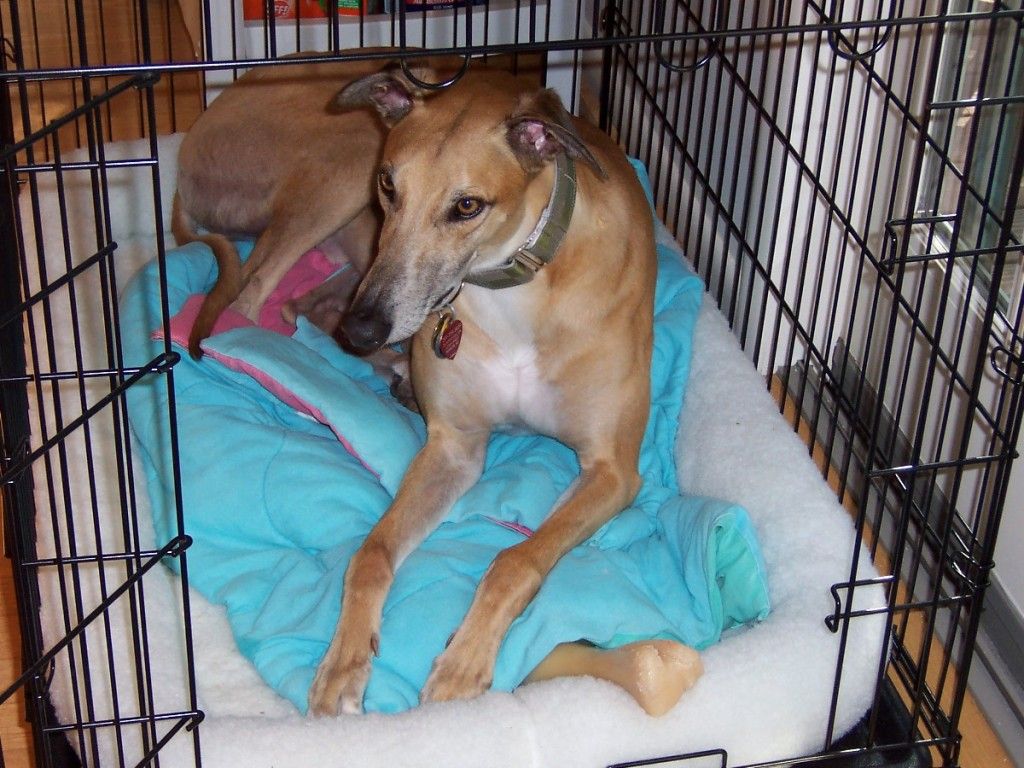
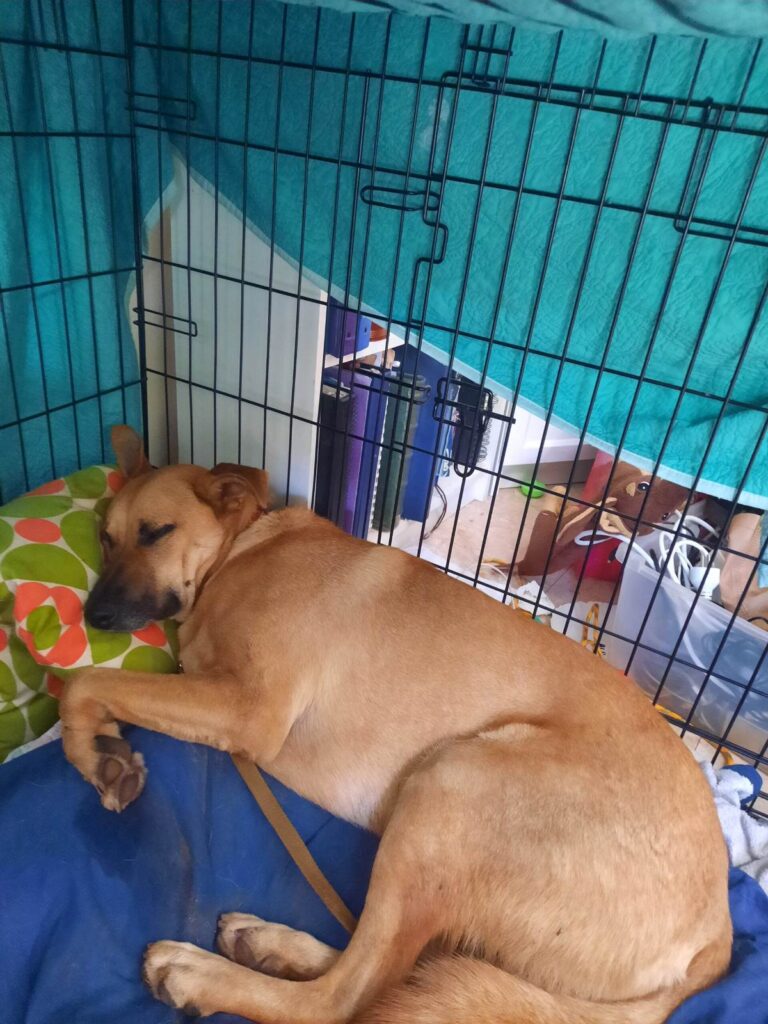
    A dog sleeping in a crate
    A dog sleeping in a crate. Our pick: MidWest 30-inch crate on Amazon.ca. Photo: IsraeliEditor54, via Wikimedia Commons, CC0

    Quick picks

    These are our picks from Amazon.ca, chosen on design, materials, suitability for a medium-sized spaniel, and the volume and consistency of buyer reviews. We have not lab-tested them ourselves.

    The best crates for cocker spaniels

    1. MidWest iCrate 30-inch: best overall

    The MidWest iCrate is the crate most trainers recommend for medium breeds, and the 30-inch size fits an adult English Cocker well. It comes with a divider panel, which is the feature that matters most for a puppy: you can make the space smaller during house training and move the panel back as your puppy grows, so one crate lasts a lifetime. It folds flat for the car, has a removable plastic tray for easy cleaning, and comes with a carry handle.

    • Good for: puppies, house training, home and travel
    • Watch for: some dogs chew the plastic tray edges; supervise early on

    Check the MidWest iCrate 30-inch on Amazon.ca →

    2. Amazon Basics folding metal crate: best value

    A simple, sturdy wire crate at a lower price. Choose the 30-inch size for an adult cocker. It folds quickly for storage and the wire sides give good airflow and visibility, which many spaniels prefer to a closed crate because they can see what is going on.

    • Good for: budget buyers, a second crate for the car or a relative’s house
    • Watch for: check which size and door configuration you are ordering

    Check the Amazon Basics folding metal crate on Amazon.ca →

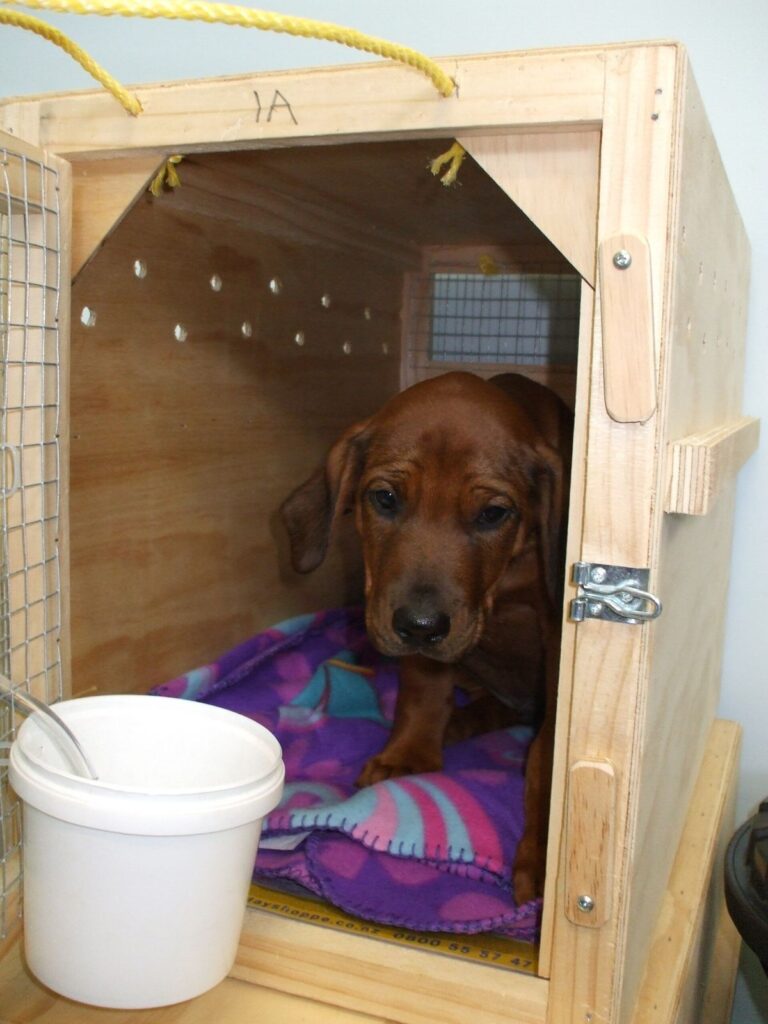
    A dog in a wooden crate
    A dog in a wooden crate. Our pick: Amazon Basics folding crate on Amazon.ca. Photo: Chachacha369, via Wikimedia Commons, CC BY-SA 3.0

    Comparison

    CrateSize for adult cockerDividerFolds flat
    MidWest iCrate30 inchYesYes
    Amazon Basics30 inchDepends on modelYes

    What size crate does an English Cocker need?

    Your dog should be able to stand up without ducking, turn around easily and lie flat on its side with its legs stretched out. For most English Cockers that means a crate about 30 inches long. Working-type cockers are often a little smaller and lighter, while some show-bred males are bigger; if your dog is at the top of the range, measure from nose to base of tail and add 10 cm.

    For a puppy, a crate that is too big defeats the purpose during house training, because a puppy will happily sleep at one end and toilet at the other. That is why a divider panel is worth having. Start with a space just big enough to lie down in and extend it as your puppy grows. Our house training guide explains how crate time fits into a toilet routine.

    How to crate train a cocker spaniel puppy

    1. Put the crate somewhere your puppy can see and hear the family, such as a corner of the kitchen.
    2. Add a washable bed or vet bedding and a safe chew. See our picks for the best dog bed.
    3. Throw treats into the crate and let your puppy walk in and out with the door open. Feed meals in the crate.
    4. Close the door for a few seconds while your puppy eats or chews, then open it before there is any fuss.
    5. Gradually build up the time, staying in the room at first, then leaving for short periods.
    6. Use the crate for naps and overnight, with a toilet break last thing at night and first thing in the morning.

    How long can a cocker stay in a crate?

    A young puppy needs toilet breaks every couple of hours in the day and may need one in the night at first. Adult dogs can sleep in their crate overnight, but daytime crating should be limited to a few hours at a time. English Cockers are active, sociable dogs bred to work alongside people, and a dog left for long stretches will become bored and frustrated. If you work long hours, a dog walker or daycare is a better answer than a longer crate stay. Read our exercise guide for how much activity they really need.

    Crate mistakes to avoid

    • Never use the crate as a punishment. It should always be a good place to be.
    • Do not leave collars or harnesses on in the crate, as they can catch on the wire.
    • Avoid releasing your puppy while it is crying; wait for a moment of quiet so it learns calm gets the door open.
    • Keep the crate out of direct sun and away from radiators.

    Wire or plastic crate?

    Wire crates fold flat, offer good ventilation and let your dog see out, which suits most spaniels at home. Covering three sides with a blanket creates a den feel for dogs that like more privacy. Plastic airline-style crates are better for air travel and feel more enclosed, but they are bulkier and hotter in summer. For car travel, a crash-tested crate or harness is the safest option; see our guide to car seat covers and car travel.

    Frequently asked questions

    What size crate for an English Cocker puppy?

    Buy the adult size (about 30 inches) with a divider panel and use the divider to keep the space small while your puppy is house training.

    Should I put a crate in the bedroom?

    Many owners find a puppy settles faster at night with the crate next to the bed for the first week or two. You can move it gradually to its permanent spot.

    Do cocker spaniels like crates?

    Most do when they are introduced slowly and the crate is linked with food, chews and rest. Many adults choose to nap in theirs with the door open.

    Should I cover my dog’s crate?

    A light cover over the top and three sides helps some dogs settle. Make sure there is plenty of airflow and that your dog cannot pull the fabric in and chew it.

    Featured photo: Chaoticfluffy, via Wikimedia Commons, CC BY-SA 3.0

  • Spaniel Bowls and Snoods: Keeping Cocker Ears Clean (2026)

    Spaniel Bowls and Snoods: Keeping Cocker Ears Clean (2026)

    Updated November 2026. English Cocker Spaniel Guide is an independent site, not affiliated with any breed club or kennel club. Some links are affiliate links: as an Amazon Associate we earn from qualifying purchases.

    Anyone who has lived with an English Cocker knows the sight: long, feathered ears trailing through the water bowl, dipped in wet food and then wiped across the kitchen floor. Soggy ears are not just messy. Food and moisture caught in the ear feathering lead to matts, smells and, if the inner flap stays damp, a higher risk of ear infections, which are already one of the most common problems in the breed.

    Spaniel bowls and snoods solve the problem in two different ways. A spaniel bowl is tall and narrow so the ears fall outside the rim. A snood is a soft tube of fabric that holds the ears back on the head while your dog eats. Here are the options we would choose from Amazon.ca, and how to get your cocker to accept them.

    A black cocker spaniel
    A black cocker spaniel. Our pick: Trixie Long-ear Bowl on Amazon.ca. Photo: Smib1975, via Wikimedia Commons, CC BY-SA 4.0

    Quick picks

    These are our picks from Amazon.ca, chosen on design, materials, suitability for a medium-sized spaniel, and the volume and consistency of buyer reviews. We have not lab-tested them ourselves.

    The best bowls and snoods for long-eared spaniels

    1. Trixie Long-ear Stainless Steel Bowl: best spaniel bowl

    The classic tapered spaniel bowl. The sides slope inward so the opening is narrower than the base, which lets a cocker’s muzzle in while the ears hang down outside the rim. Stainless steel is easy to sterilise, does not hold smells like plastic, and the weighted shape is hard to push around the floor.

    • Good for: water and dry food, dogs that splash
    • Watch for: very small puppies may need a smaller size until their muzzle reaches the bottom comfortably

    Check the Trixie Long-ear Stainless Steel Bowl on Amazon.ca →

    2. Flipo Ear Clear Bowl Set: best bowl set

    If you would like matching food and water bowls designed around long ears, the Ear Clear set gives you both. The raised, narrow design keeps the feathering out of the dish and the bowls clean up quickly in the dishwasher.

    • Good for: owners who want a matched pair, wet food feeders
    • Watch for: check the capacity against how much your dog drinks in a day

    Check the Flipo Ear Clear Bowl Set on Amazon.ca →

    3. Happy Hoodie: best snood

    The Happy Hoodie is a soft, stretchy band that slides over the head and holds the ears flat against the neck. It is widely used by groomers during drying because it muffles the noise of a dryer, and it doubles as an excellent snood at meal times. It works with any bowl you already own.

    • Good for: wet or raw food, drying after baths, noise-sensitive dogs
    • Watch for: introduce it slowly with treats; do not leave it on an unsupervised dog

    Check the Happy Hoodie on Amazon.ca →

    A cocker spaniel portrait
    A cocker spaniel portrait. Our pick: Happy Hoodie on Amazon.ca. Photo: Fabrizia Benedetto, via Wikimedia Commons, CC BY-SA 4.0

    Comparison

    ProductTypeMaterialWorks with
    Trixie Long-earSpaniel bowlStainless steelWater and dry food
    Flipo Ear ClearBowl setRaised narrow bowlsFood and water
    Happy HoodieSnoodSoft stretch fabricAny bowl

    Spaniel bowl or snood: which is better?

    For water, a spaniel bowl is the simplest answer because it works all day without you doing anything. Cockers drink often and drip a surprising amount, and a narrow bowl reduces the wet-ear problem to almost nothing. For meals, especially wet food, raw food or anything with gravy, a snood is more reliable. Even a well-shaped bowl will not stop ears swinging forward when a dog dives into its dinner.

    Many owners end up using both: a stainless spaniel bowl for water and a snood that goes on for each meal and comes off afterwards. That combination keeps the ear feathering clean between baths and cuts down on brushing time.

    How to get your cocker used to a snood

    1. Show your dog the snood and reward it for sniffing it.
    2. Slip it over the nose and straight off again, rewarding each time. Repeat until your dog pushes its head in.
    3. Slide it back over the ears for a second or two, then remove it and reward.
    4. Build up the time it stays on, then put it on just before you put the food bowl down so the snood predicts dinner.
    5. Take it off as soon as the meal is finished and check the ears are dry.

    Most cockers accept a snood within a few days if it always comes with something good. If your dog paws at it, go back a step and keep the sessions shorter.

    Keeping ears clean around meal times

    Even with the right bowl, check the ear tips once a day. Wipe away any food with a damp cloth and comb the feathering through so nothing dries into a knot. Some owners keep the ear feathering slightly shorter at the tips, which you can do yourself with a pair of thinning shears (see our grooming scissors guide). If you notice a sour smell, redness or head shaking, read our ear care guide and speak to your vet.

    Raised bowls and slow feeders

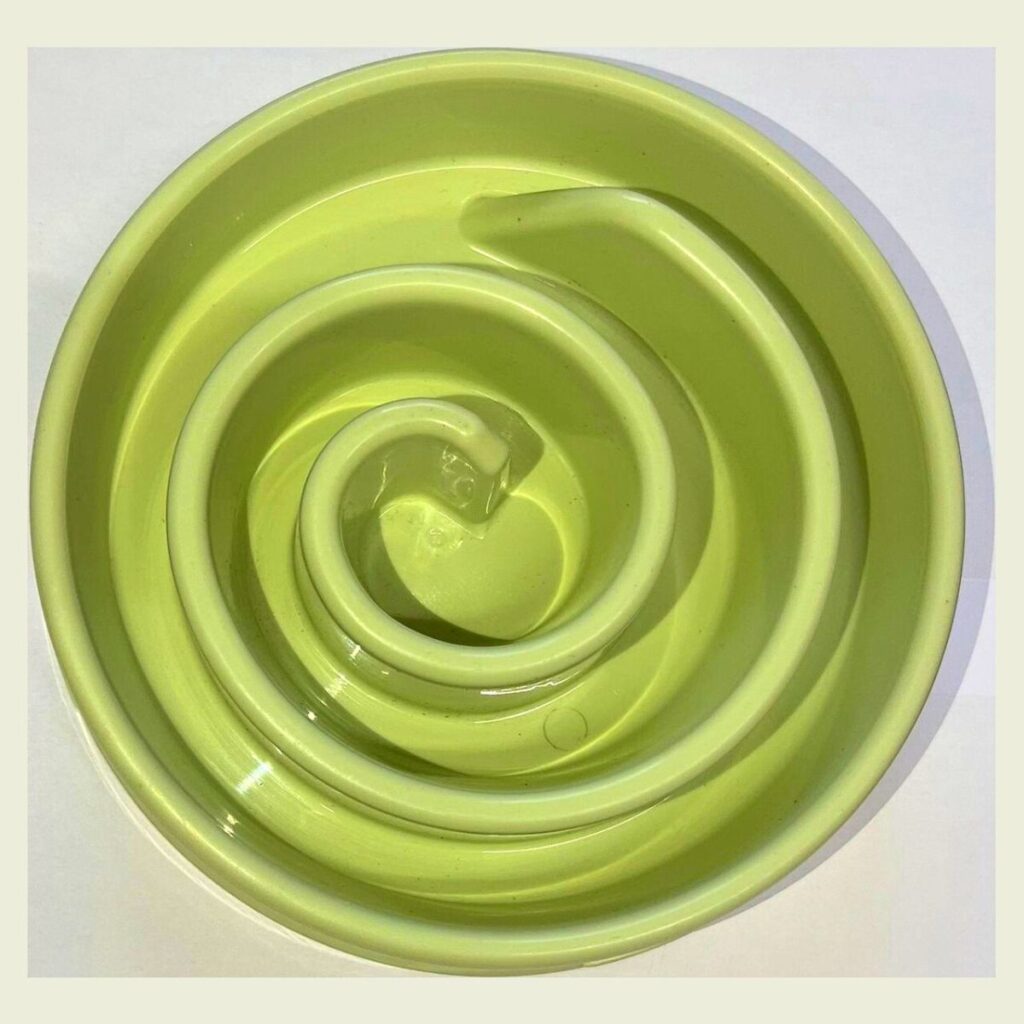
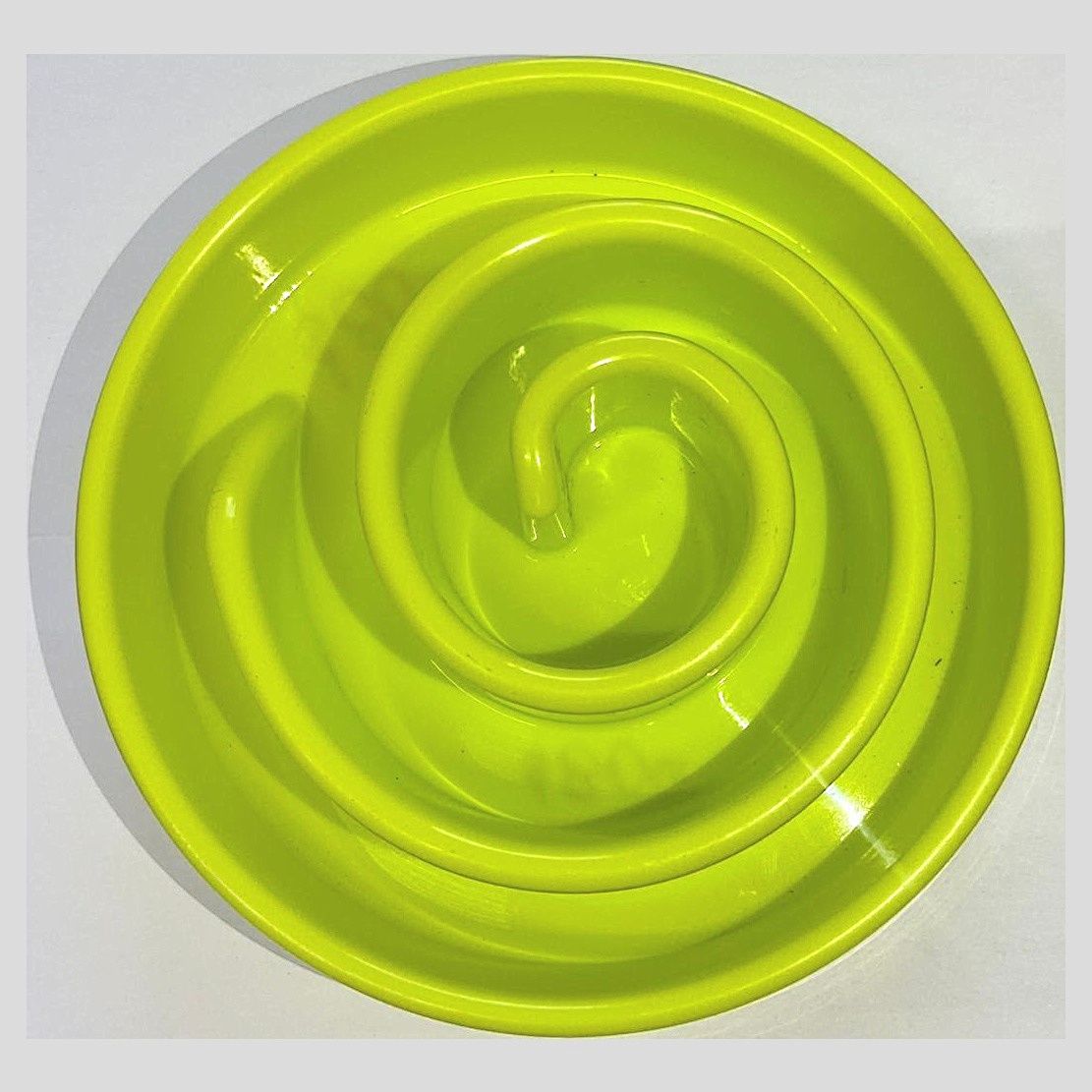
    Some English Cockers bolt their food. If your dog finishes its meal in seconds, a slow feeder bowl or a puzzle feeder slows things down, but most slow feeders are wide and shallow, so pair one with a snood. Raised feeders are a personal choice for a medium-sized dog; there is no strong evidence that a cocker needs one, and if your dog has any history of bloat or swallowing problems, ask your vet before changing how it eats.

    Cleaning and safety

    Wash food bowls after every meal and water bowls at least daily. Stainless steel and ceramic are easier to keep hygienic than plastic, which scratches and can harbour bacteria. Check any snood regularly for stretched elastic or holes, wash it with your dog’s bedding, and never leave a snood on a dog that is unsupervised or in a crate.

    Frequently asked questions

    Why are spaniel bowls shaped that way?

    The narrow top and wider base let a dog’s muzzle reach the water or food while the long ears hang outside the rim instead of dipping in.

    Can cocker spaniels wear a snood all day?

    No. A snood is for meals and drying. Take it off afterwards so the ears can breathe and so it cannot get caught on anything.

    Will a spaniel bowl stop my dog splashing?

    It reduces splashing a lot because the opening is smaller, but a keen drinker will still drip. A mat under the bowl helps.

    What size spaniel bowl does an English Cocker need?

    A medium bowl suits most adults. Puppies may need a smaller size so they can reach the bottom easily.

    Got a fast eater? Compare the best slow feeder dog bowls, including an insert that fits many existing bowls.

    Featured photo: Flickr user eschipul (Ed Schipul), via Wikimedia Commons, CC BY-SA 2.0

  • The Best Dog Shampoo for Cocker Spaniels (2026)

    The Best Dog Shampoo for Cocker Spaniels (2026)

    Updated November 2026. English Cocker Spaniel Guide is an independent site, not affiliated with any breed club or kennel club. Some links are affiliate links: as an Amazon Associate we earn from qualifying purchases.

    A cocker spaniel coat is a mix of silky body hair, longer feathering on the legs and chest, and heavy, hair-covered ears. That combination traps mud, burrs, pond water and the smells of whatever your dog has rolled in, so most English Cockers need a proper bath every four to six weeks, and more often in a wet season. The shampoo you choose matters more than people expect: a harsh, high-pH or heavily perfumed product strips natural oils, leaves the feathering dry and static, and can set off itching in dogs with sensitive skin.

    Below are three shampoos available on Amazon.ca that suit a spaniel coat, followed by a step-by-step bathing routine, advice on conditioner, and the mistakes that lead to matts and hot spots. If you are new to coat care, read our full grooming guide first.

    A cocker spaniel in a garden
    A cocker spaniel in a garden. Our pick: Wahl Oatmeal Shampoo on Amazon.ca. Photo: Jean-Pol GRANDMONT, via Wikimedia Commons, CC BY 4.0

    Quick picks

    These are our picks from Amazon.ca, chosen on design, materials, suitability for a medium-sized spaniel, and the volume and consistency of buyer reviews. We have not lab-tested them ourselves.

    The best shampoos for cocker spaniels

    1. Wahl Oatmeal Formula Shampoo: best for sensitive skin

    Colloidal oatmeal is one of the most useful ingredients for spaniels that scratch after a bath. Wahl’s oatmeal formula is concentrated, so a small amount diluted in a cup of warm water goes a long way through a thick coat, and it rinses out cleanly from the feathering. It has a light scent rather than a heavy perfume.

    • Good for: dogs with dry or itchy skin, frequent bathers
    • Watch for: it is a concentrate, so dilute it or you will use far more than you need

    Check the Wahl Oatmeal Formula Shampoo on Amazon.ca →

    2. Earth Rated Dog Shampoo: best everyday shampoo

    Earth Rated is a gentle, plant-based shampoo with a mild fragrance that suits regular bathing between grooms. It lathers well on a damp coat, does not leave the ears feeling greasy, and works for puppies who are just getting used to the bath.

    • Good for: routine baths, puppies, owners who dislike strong scents
    • Watch for: not a medicated product, so it will not treat a skin infection

    Check the Earth Rated Dog Shampoo on Amazon.ca →

    3. Veterinary Formula Clinical Care: best value

    For a dog that comes home muddy every weekend, a larger bottle at a lower price per bath makes sense. Veterinary Formula’s Clinical Care line is widely used by groomers and owners, and is easy to rinse from long ear and leg feathering.

    • Good for: working and field cockers, multi-dog homes
    • Watch for: check the specific variety before you buy, as the line includes medicated formulas that are meant for vet-advised use

    Check the Veterinary Formula Clinical Care on Amazon.ca →

    A red cocker spaniel close-up
    A red cocker spaniel close-up. Our pick: Earth Rated Dog Shampoo on Amazon.ca. Photo: localpups, via Wikimedia Commons, CC BY 2.0
    Comparison

    ShampooBest forScentConcentrate?
    Wahl OatmealItchy, dry skinLightYes
    Earth RatedEveryday baths, puppiesMildNo
    Veterinary FormulaFrequent muddy bathsVaries by formulaNo

    What to look for in a spaniel shampoo

    • Made for dogs. Human shampoo is formulated for a more acidic skin and can leave a dog’s skin dry and flaky.
    • Gentle cleansers. Oatmeal, aloe and coconut-derived cleansers are kind to skin that is bathed every few weeks.
    • Light fragrance. A heavy perfume can irritate sensitive dogs and does not stop the coat smelling once it gets wet again.
    • Easy rinsing. Residue left in the dense hair behind the ears and in the armpits is a common cause of itching.

    How to bath an English Cocker Spaniel

    1. Brush the whole coat first and remove any tangles. Water tightens a knot into a felted matt that is much harder to remove.
    2. Put a cotton ball loosely in each ear opening to keep water out of the canal, and remove it afterwards.
    3. Wet the coat right through to the skin with lukewarm water. The undercoat on a cocker sheds water well, so this takes longer than you think.
    4. Apply diluted shampoo and work it in with your fingers in the direction of hair growth, paying attention to the chest, feet, under the ears and the back end.
    5. Rinse until the water runs clear, then rinse again. Most post-bath itching comes from shampoo left in the coat.
    6. Apply a dog conditioner to the ears and leg feathering if your dog’s coat tangles easily, then rinse.
    7. Squeeze out excess water, towel dry and finish with a dryer on a cool setting, brushing as you go. See our guide to drying coats and towels.

    How often should you wash a cocker?

    Every four to six weeks suits most pet English Cockers. Show dogs may be bathed before every event, and working dogs that swim in ponds or roll in fox mess may need a quick wash far more often. If you need to bath frequently, choose the gentlest product you can and use conditioner on the feathering. In between, a damp towel and a good brush deal with most dirt, and a rinse with plain water after a swim stops pond smells setting in.

    Shampoo mistakes to avoid

    Bathing a matted dog is the most common mistake, followed closely by not rinsing enough. Using a strong flea or medicated shampoo without a reason is another: medicated products are useful when your vet prescribes them for a skin condition, but they can dry out healthy skin with regular use. Finally, do not leave a cocker to air dry in a cold room with wet ears. Damp, warm ear canals are a recipe for infection, so follow each bath with the routine in our ear care guide.

    When to call your vet

    If your cocker is still scratching, licking its feet or developing red patches a day or two after a bath with a gentle shampoo, the problem is unlikely to be the product. Allergies, yeast and ear infections are all common in spaniels and need a proper diagnosis. Your vet may recommend a medicated shampoo for a set period, which you should use exactly as directed.

    Frequently asked questions

    Can I use baby shampoo on my cocker spaniel?

    In an emergency, a mild baby shampoo will not harm most dogs, but it is not designed for canine skin. A dedicated dog shampoo is a better choice for regular use.

    Do cocker spaniels need conditioner?

    Not always, but a light conditioner on the ears and leg feathering makes brushing easier and reduces tangles, especially in show-trimmed coats.

    What shampoo is best for a cocker puppy?

    A gentle, low-fragrance shampoo labelled as suitable for puppies. Keep the first baths short and calm so your puppy learns that bath time is no big deal.

    How do I stop my spaniel smelling after a bath?

    Rinse thoroughly, dry the coat completely including the ears and armpits, and wash bedding at the same time. A damp coat that never fully dries is the usual cause of a lingering smell.

    Featured photo: Vaneska88, via Wikimedia Commons, CC BY-SA 4.0

  • The Best Dog Ear Cleaners for Cocker Spaniels (2026)

    The Best Dog Ear Cleaners for Cocker Spaniels (2026)

    Updated November 2026. English Cocker Spaniel Guide is an independent site, not affiliated with any breed club or kennel club. Some links are affiliate links: as an Amazon Associate we earn from qualifying purchases.

    If you share your life with an English Cocker Spaniel, ear cleaner is not optional. Those long, heavy ears trap warmth and moisture, and ear infections are one of the most common reasons cockers visit the vet. A good ear cleaner, used correctly, loosens wax and debris, helps dry the ear canal after swimming, and makes it easier to keep ears healthy between vet visits. This guide covers our picks on Amazon.ca, what to look for, and how to use an ear cleaner safely. It is general information; follow your vet’s advice, especially if your dog has an active infection.

    These are our picks from Amazon.ca, chosen on design, materials, suitability for a medium-sized spaniel, and the volume and consistency of buyer reviews. We have not lab-tested them ourselves.

    Quick picks

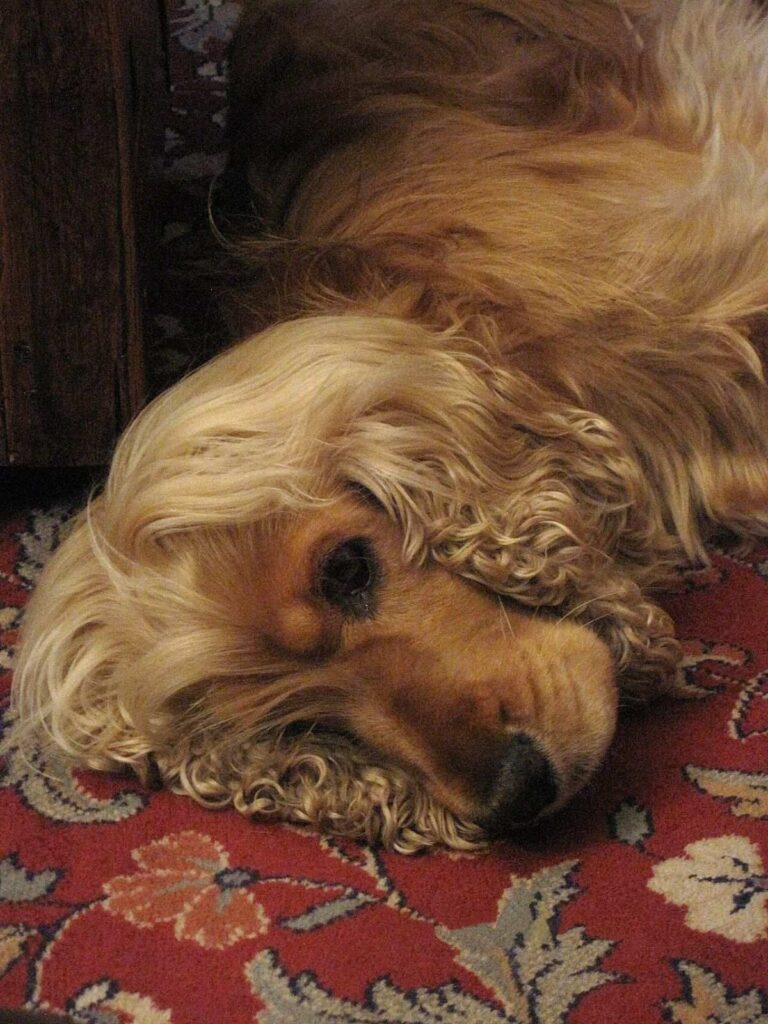
    A golden cocker spaniel's ears
    A golden cocker spaniel’s ears. Our pick: Virbac Epi-Otic Advanced on Amazon.ca. Photo: Jean-Pol GRANDMONT, via Wikimedia Commons, CC BY 4.0

    The best ear cleaners for cockers

    1. Virbac Epi-Otic Advanced Ear Cleanser: best overall

    Epi-Otic is a long-established ear cleanser from Virbac, a veterinary pharmaceutical company, and it is often recommended by vets for routine cleaning. It is designed to break down wax and debris and help dry the ear canal, which suits spaniels that swim. It has thousands of reviews on Amazon.ca.

    • Good for: routine cleaning, after swimming, waxy ears
    • Watch for: not a treatment for infections; see your vet if ears are red or painful

    Check the Virbac Epi-Otic Advanced Ear Cleanser on Amazon.ca →

    2. Earth Rated Dog Ear Cleaner: best gentle everyday cleaner

    Earth Rated is a Canadian pet care company best known for its poop bags. Its ear cleaner is one of the most popular on Amazon.ca, with tens of thousands of reviews, and is a good option for regular maintenance cleaning.

    • Good for: weekly maintenance
    • Watch for: check the ingredients if your dog has sensitive skin

    Check the Earth Rated Dog Ear Cleaner on Amazon.ca →

    3. Mighty Petz Dog Ear Cleaner: best value

    Mighty Petz’s cleaner is a well-reviewed, lower-cost option for routine cleaning, useful if you clean frequently or have more than one dog.

    • Good for: multi-dog homes, frequent cleaning
    • Watch for: as with any cleaner, stop if your dog shows irritation

    Check the Mighty Petz Dog Ear Cleaner on Amazon.ca →

    A red cocker spaniel portrait
    A red cocker spaniel portrait. Our pick: Earth Rated ear cleaner on Amazon.ca. Photo: Deerpeter, via Wikimedia Commons, CC BY-SA 4.0

    Comparison

    CleanerBest forNotes
    Virbac Epi-OticRoutine cleaning and dryingVeterinary brand
    Earth RatedGentle weekly maintenanceCanadian company
    Mighty PetzBudget, frequent useGood value

    What to look for in an ear cleaner

    • Designed for dogs: never use human products, alcohol or hydrogen peroxide unless your vet recommends them.
    • Gentle on the canal: avoid harsh ingredients that sting, especially if your dog’s ears are sensitive.
    • Drying action: helpful for swimming spaniels, as moisture encourages infection.
    • Vet recommendation: if your dog has frequent infections, your vet may prescribe a specific cleaner.
    • Easy applicator: a nozzle that fits comfortably at the ear opening makes cleaning easier.

    How to clean your cocker’s ears

    1. Check the ears first. If they are red, swollen, painful, smelly or have discharge, see your vet before cleaning; there may be an infection or a damaged eardrum.
    2. Lift the ear flap and fill the canal with cleaner according to the product label.
    3. Massage the base of the ear for 20 to 30 seconds to loosen debris.
    4. Let your dog shake its head.
    5. Wipe the visible parts of the ear with cotton wool or gauze. Never push cotton buds deep into the canal.
    6. Reward your dog and repeat on the other side.

    Most cockers benefit from weekly checks and cleaning when wax builds up or after swimming. Over-cleaning can irritate the ear, so follow your vet’s guidance on frequency. Our cocker ear care guide covers drying, trimming ear hair and recurring infections in detail.

    Signs you need a vet, not a cleaner

    • Head shaking, scratching or rubbing the ears
    • Redness, swelling or heat
    • Brown, yellow or bloody discharge
    • A strong or yeasty smell
    • Pain when the ears are touched
    • A swollen ear flap (possible haematoma)
    • Head tilt or loss of balance

    Ear infections need a proper diagnosis, because yeast, bacteria, mites and foreign bodies such as grass seeds are treated differently. Using a cleaner on an infected or ruptured ear can make things worse.

    Tips for healthy spaniel ears

    • Dry the ears thoroughly after swimming and bathing.
    • Trim the hair on the underside of the ear flap to improve airflow.
    • Use narrow spaniel bowls so ears stay out of food and water.
    • Check for grass seeds after walks in long grass.
    • Ask your vet about allergies if infections keep coming back.

    Cleaning ears after swimming and fieldwork

    Water and wet vegetation are the two biggest triggers for ear trouble in working and pet cockers alike. After a swim, a wet walk through long grass or a bath, the ear canal stays warm and damp under that heavy leather, which is exactly what yeast and bacteria like. A drying ear cleaner used the same day is the simplest prevention: fill the canal, massage the base for twenty to thirty seconds, let your dog shake, then wipe the visible folds with cotton pads. Never push cotton buds down the canal.

    Check the ears again the next morning. A faint waxy smell is normal; a sour or yeasty smell, dark brown discharge, redness or head shaking means it is time to see your vet rather than reach for another product. If your dog swims most days in summer, ask your vet whether a cleaner with a drying agent is suitable for regular use, because overcleaning can irritate a healthy ear.

    Frequently asked questions

    How often should I clean my cocker’s ears?

    Check weekly and clean when you see wax or debris and after swimming. Your vet can suggest a schedule for your dog.

    Can I use ear cleaner if my dog has an infection?

    Only if your vet advises it. Infections need diagnosis and specific treatment.

    Is it okay to use cotton buds?

    Do not push cotton buds into the ear canal; they can pack debris deeper or injure the ear. Use cotton wool or gauze on the visible parts only.

    Why does my dog shake its head after cleaning?

    Shaking helps bring loosened debris and cleaner out of the canal. It is normal.

    Featured photo: Jean-Pol GRANDMONT, via Wikimedia Commons, CC BY 4.0